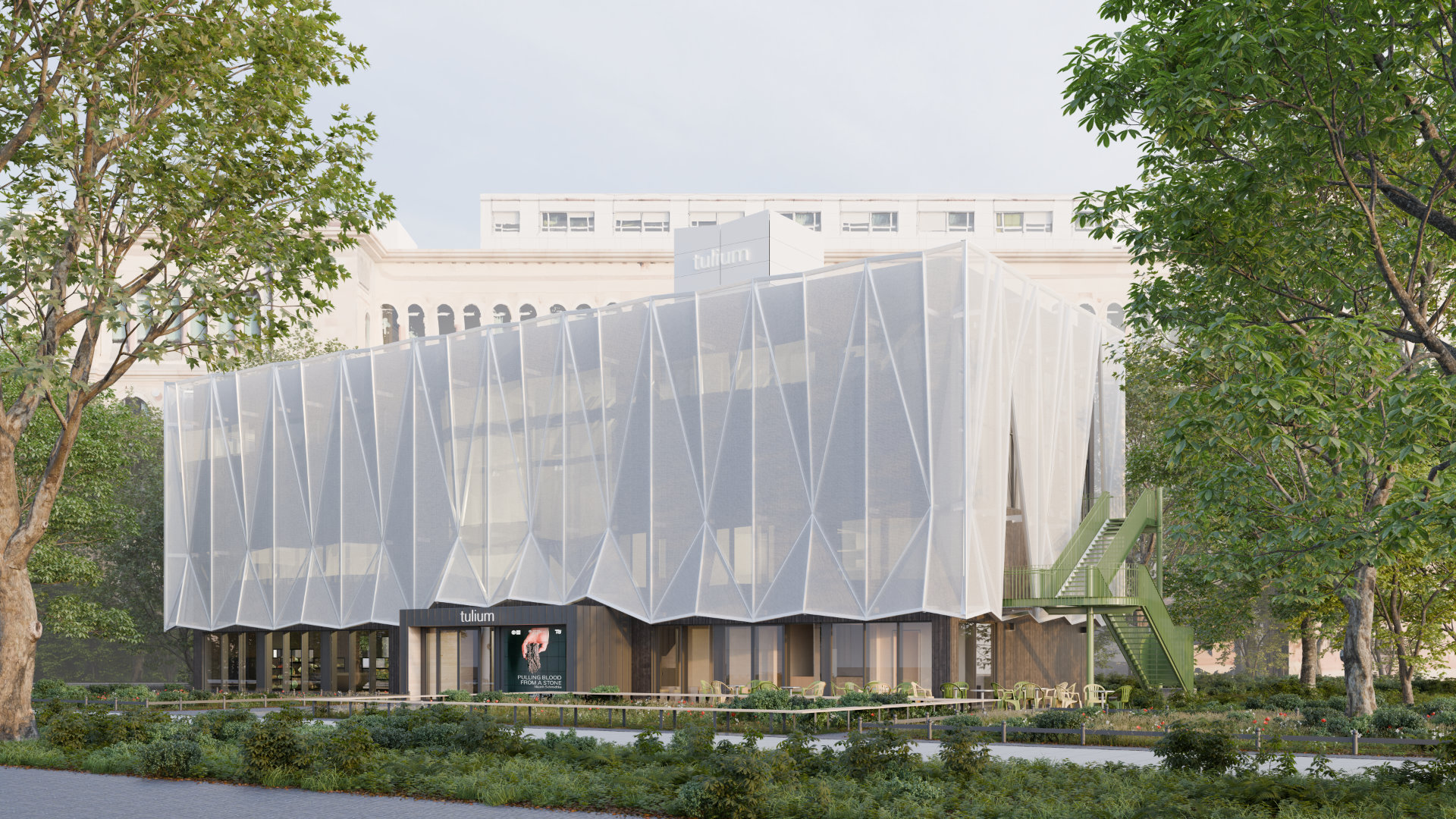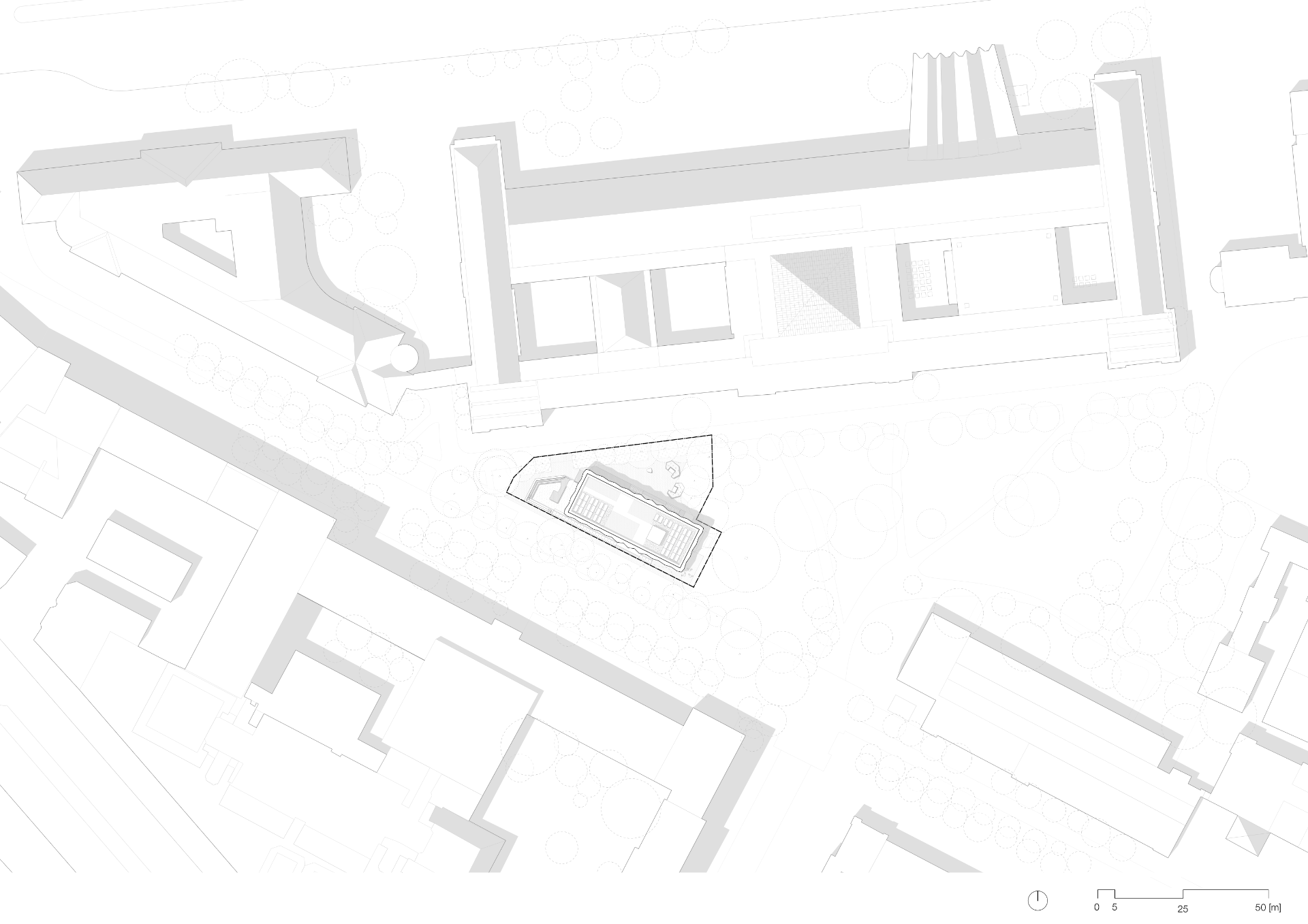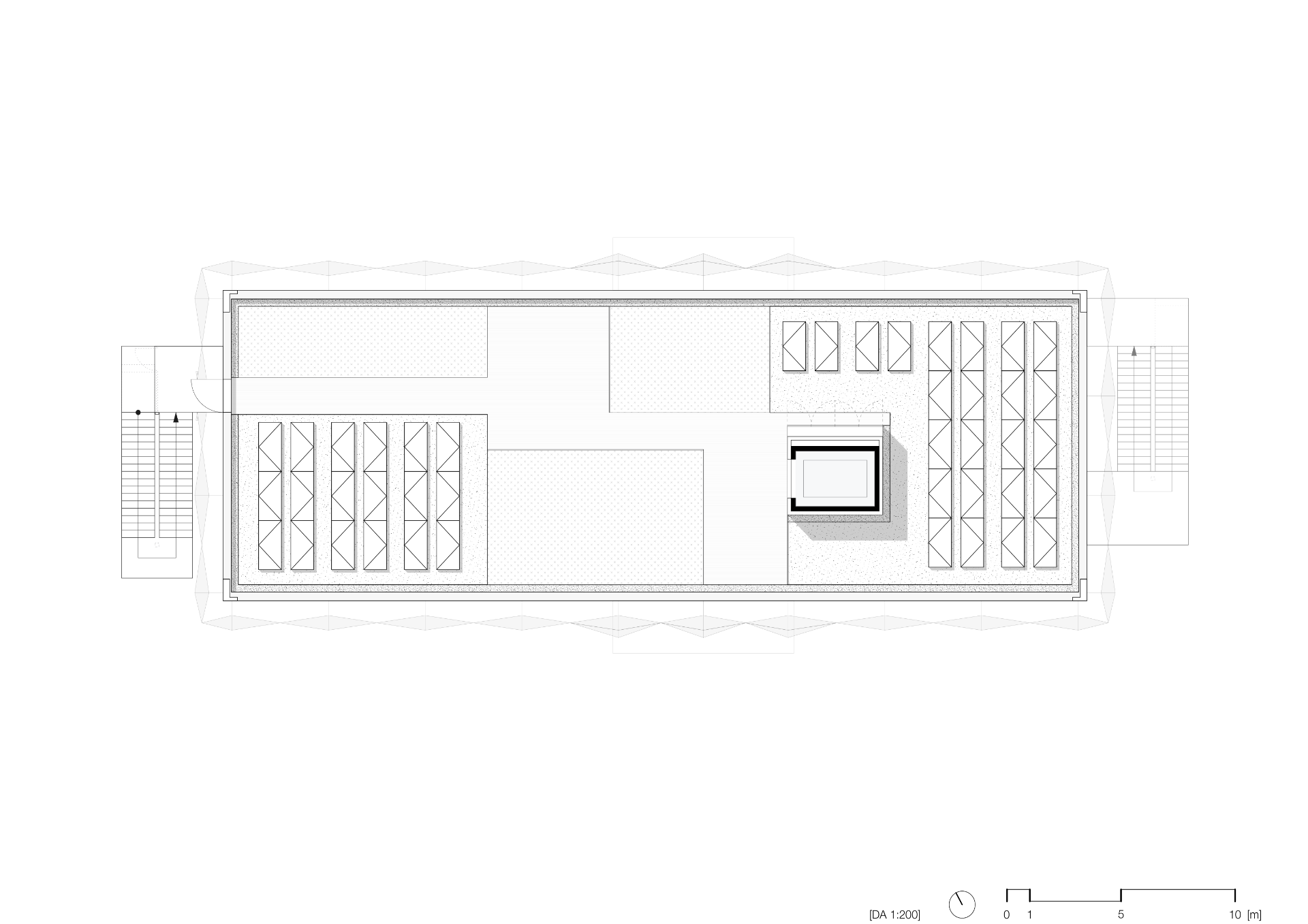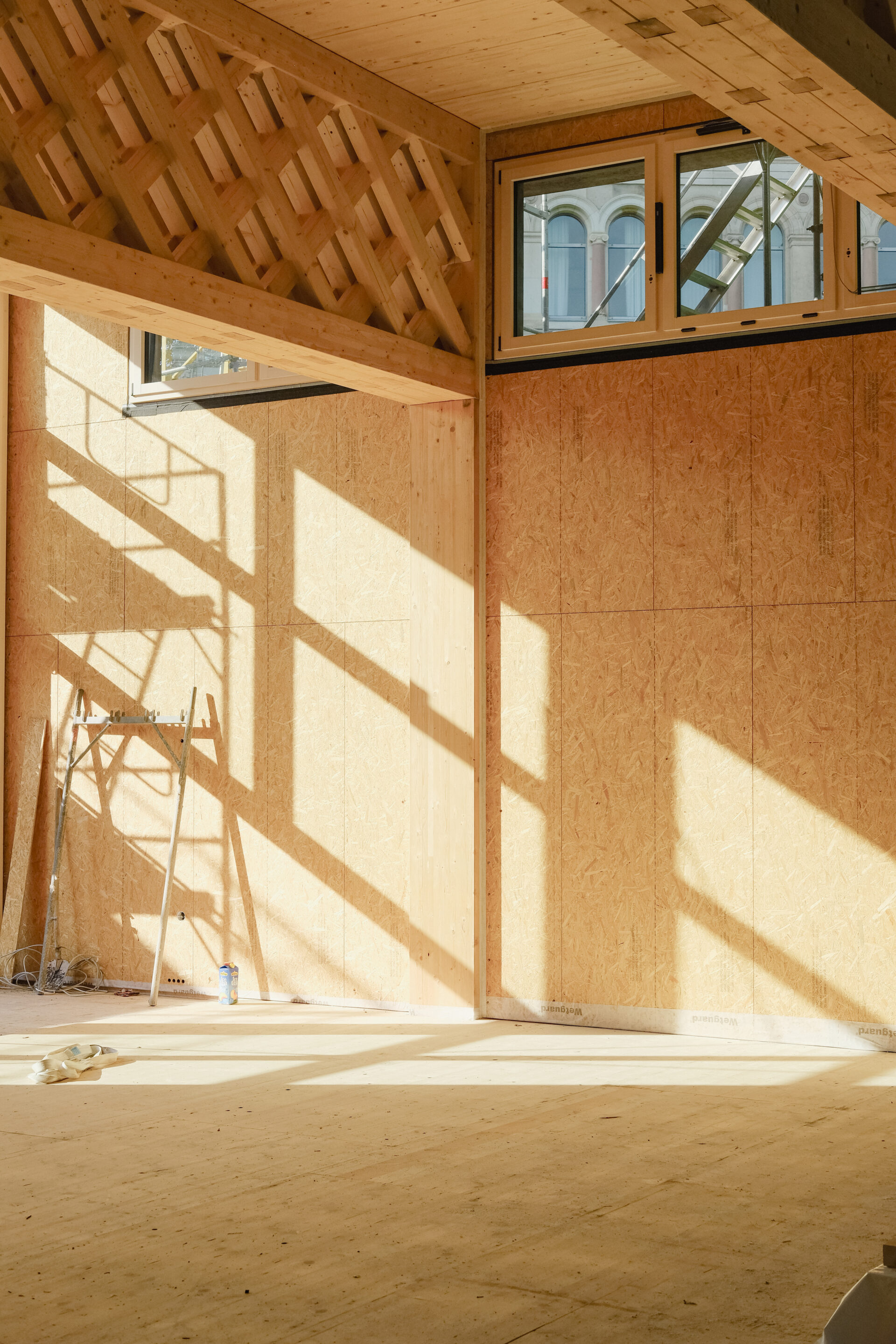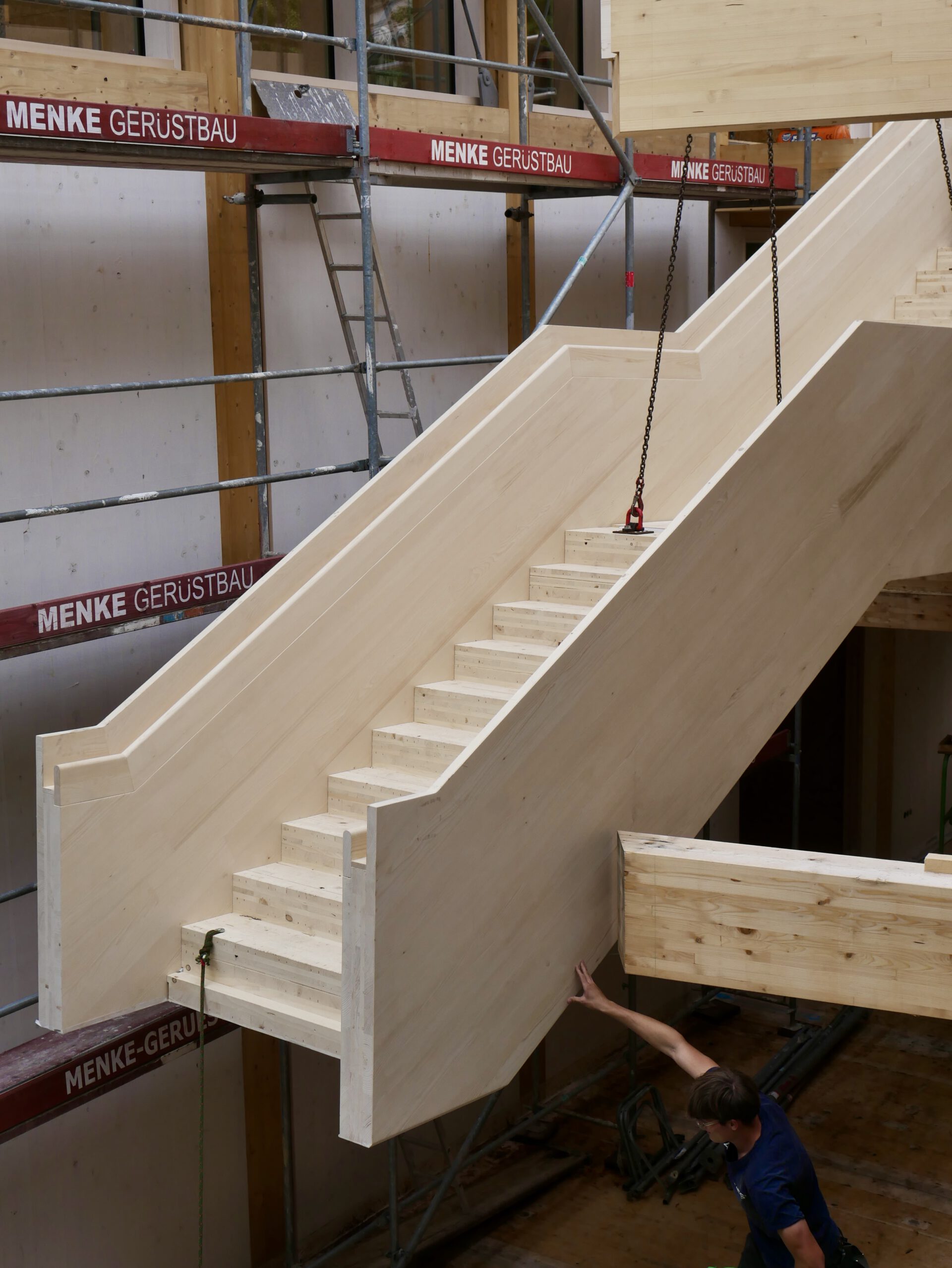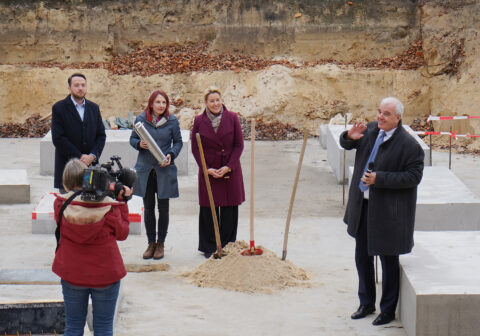


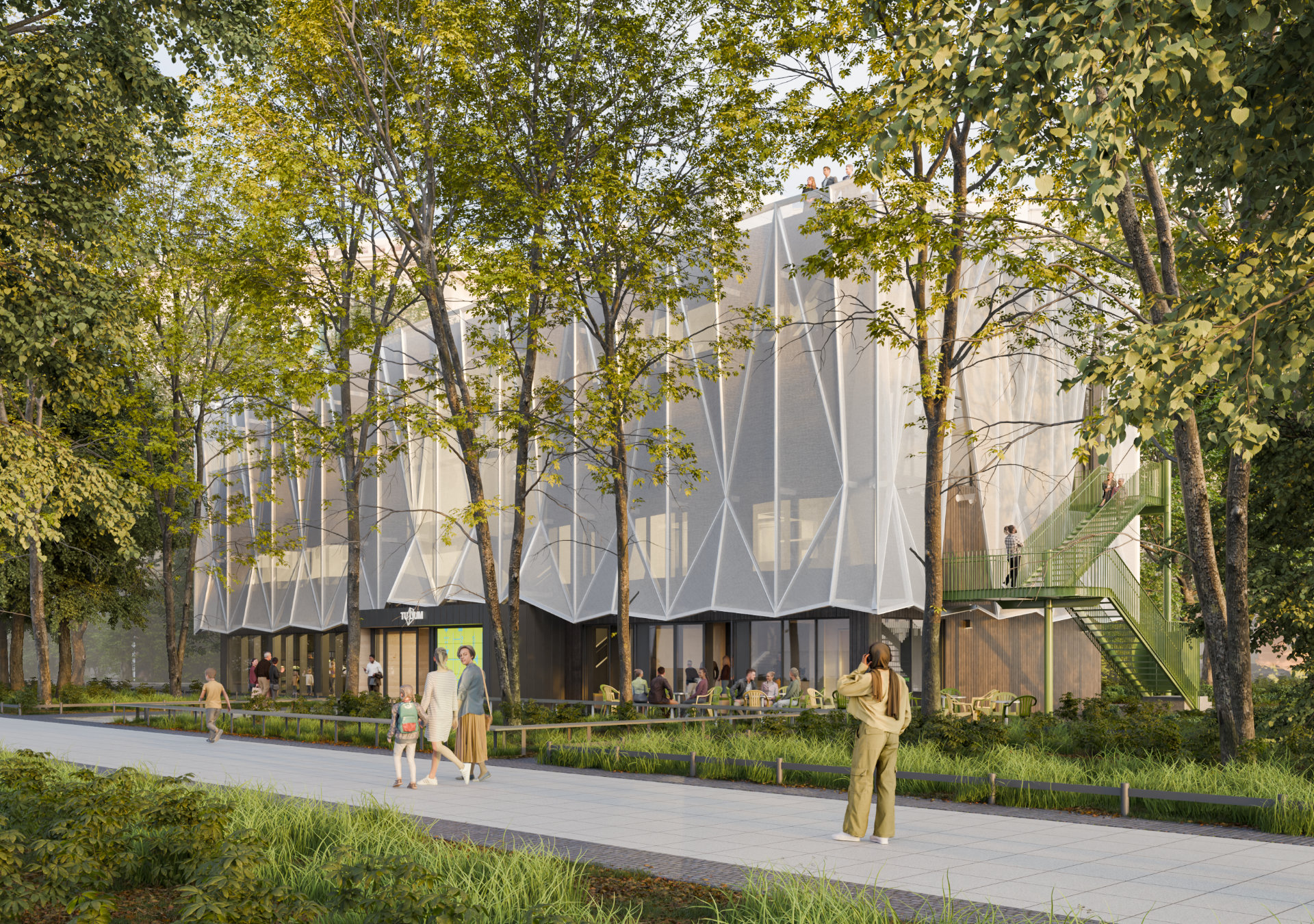
TULIUM is a museum pavilion on the TU Berlin campus – designed and built as a real world laboratory for climate-conscious construction. Developed through a transdisciplinary process within the university, it draws on reused and renewable building materials and explores new approaches to circular, adaptable construction practice. The project, a collaboration between Technische Universität Berlin and the Charlottenburg-Wilmersdorf district authority, connects the university and the city – programmatically, thematically, and spatially. TULIUM serves as a venue for exhibitions, events, and experiments, with a permanent focus on TU Berlin’s Mineralogical Collections, alongside changing exhibitions and a café. Construction is scheduled for completion in summer 2027.
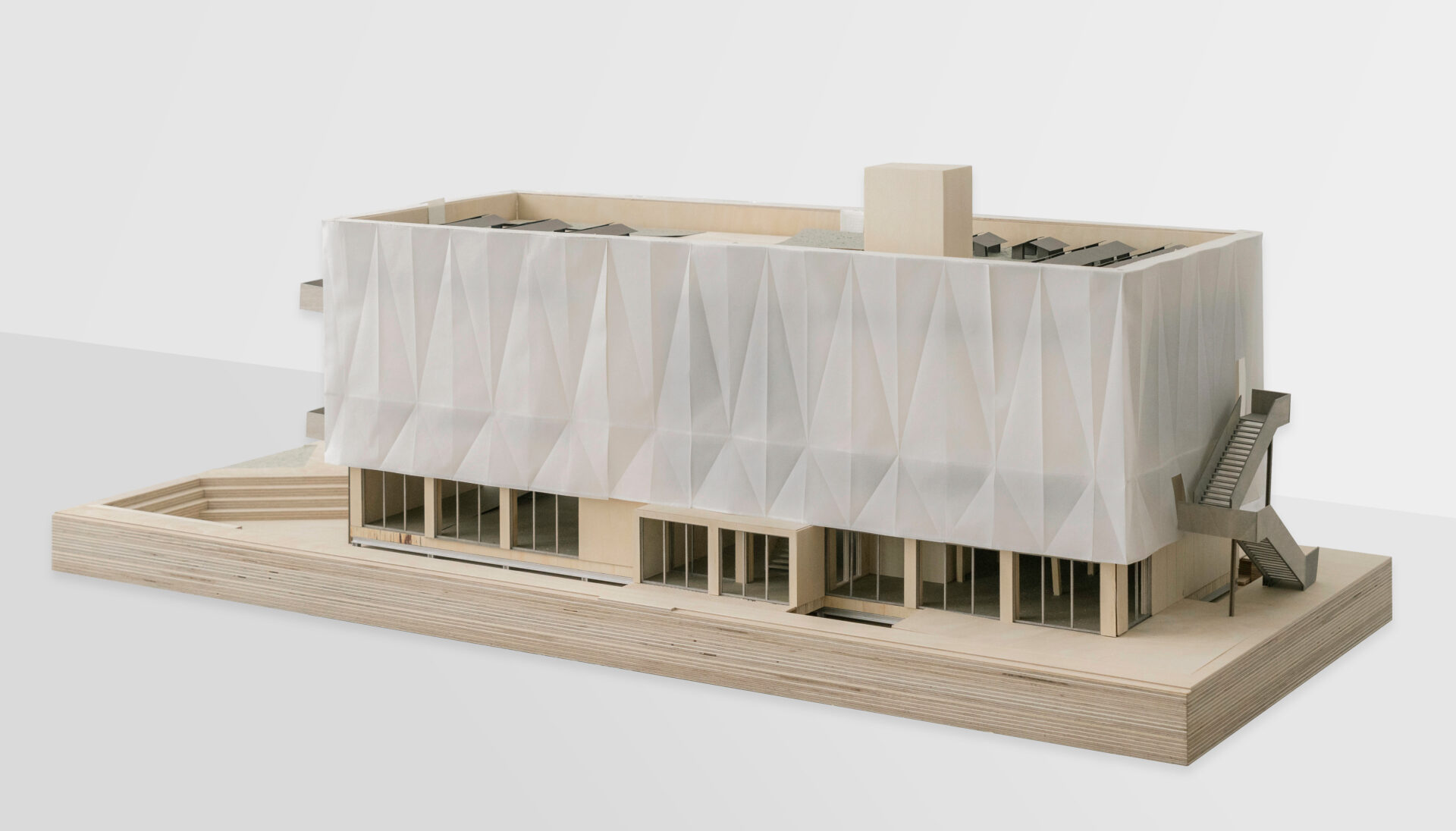
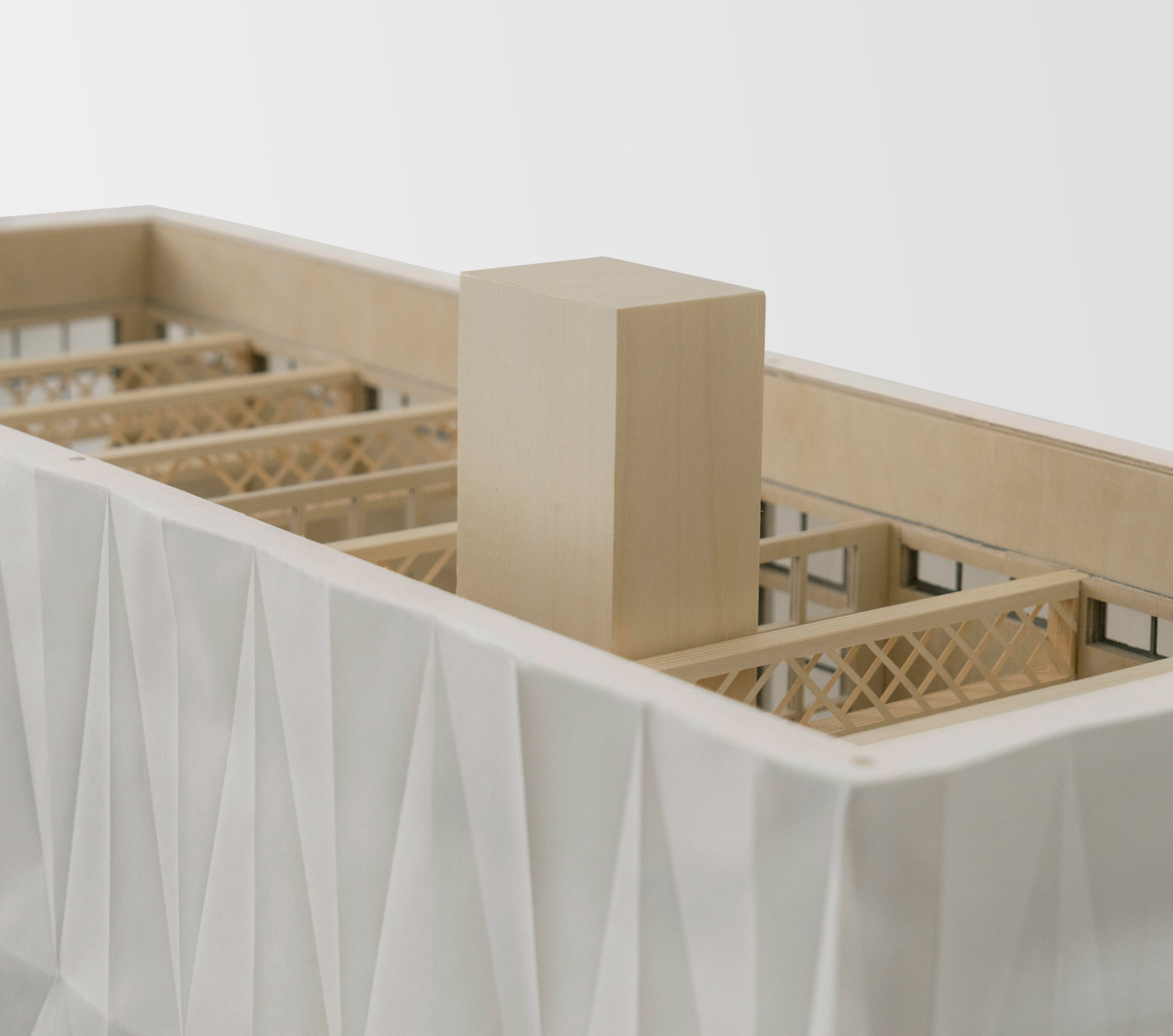
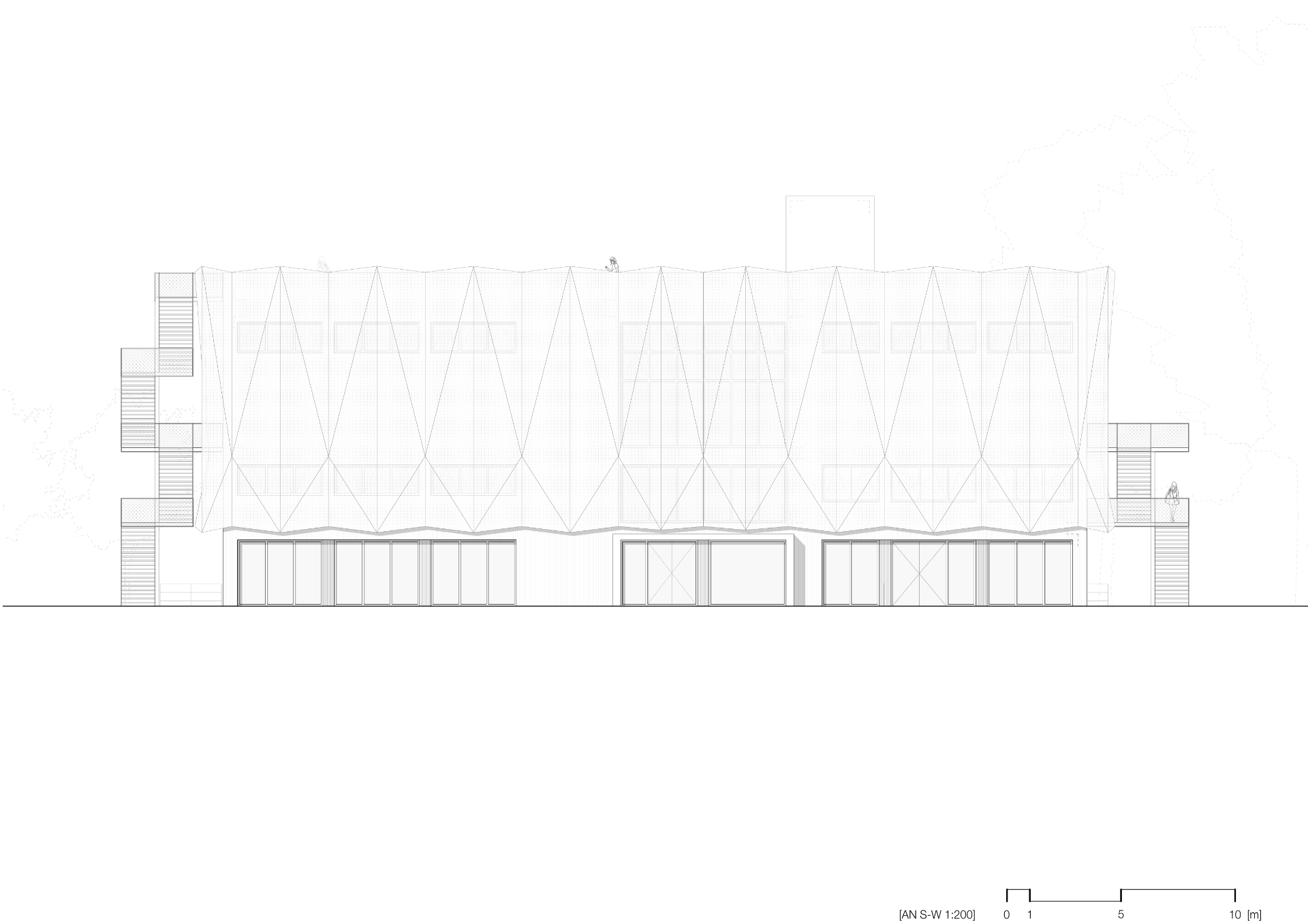
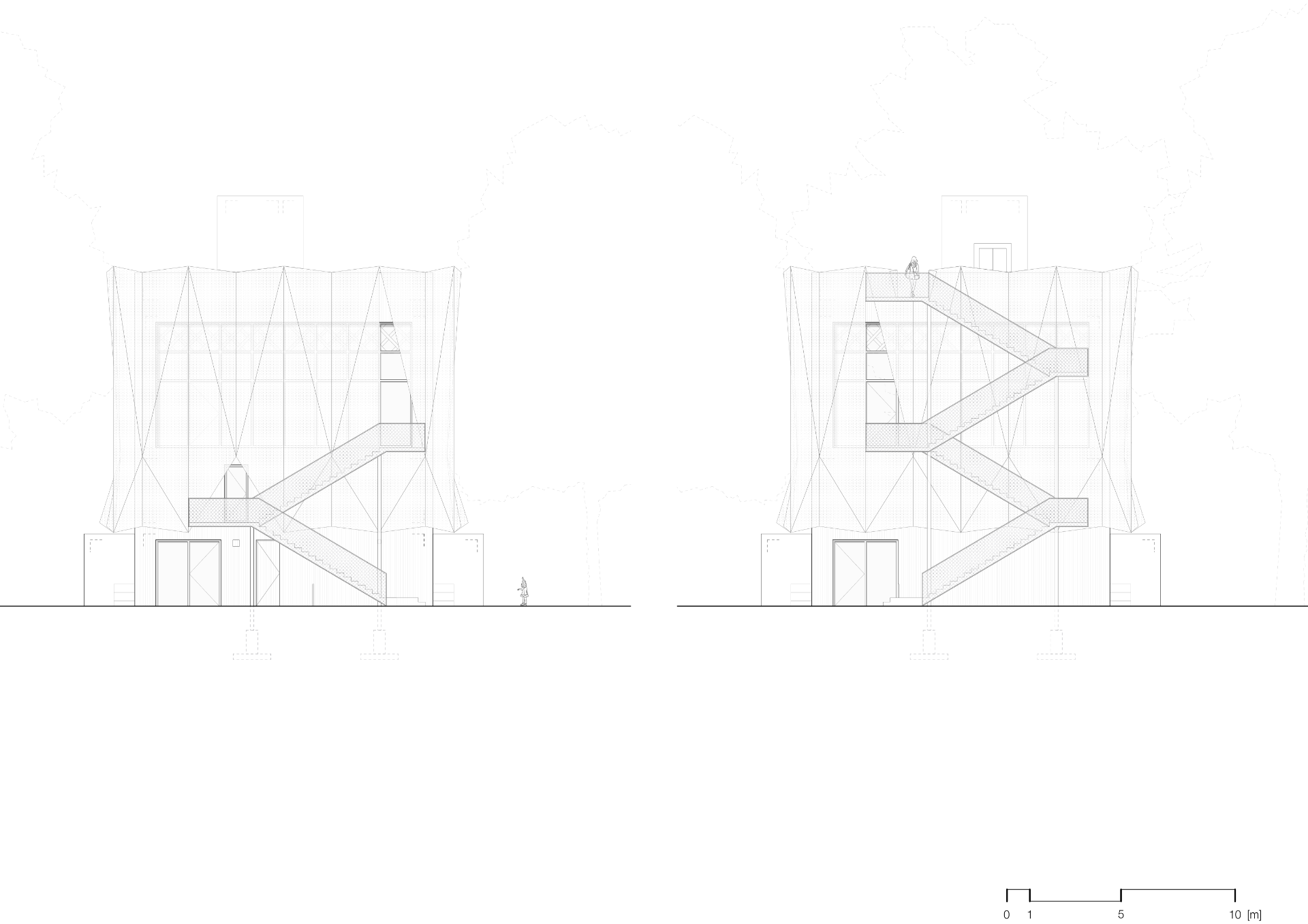
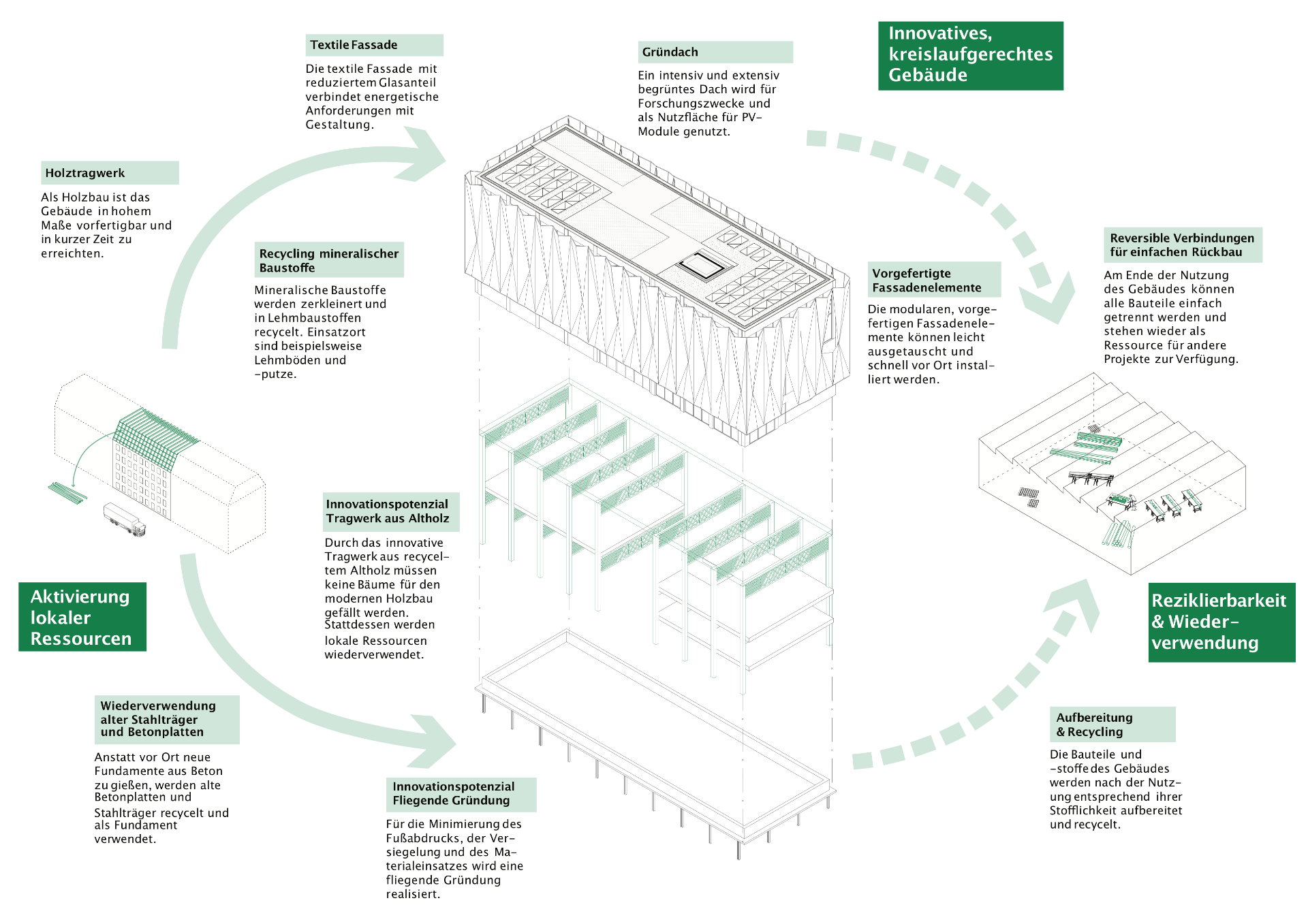
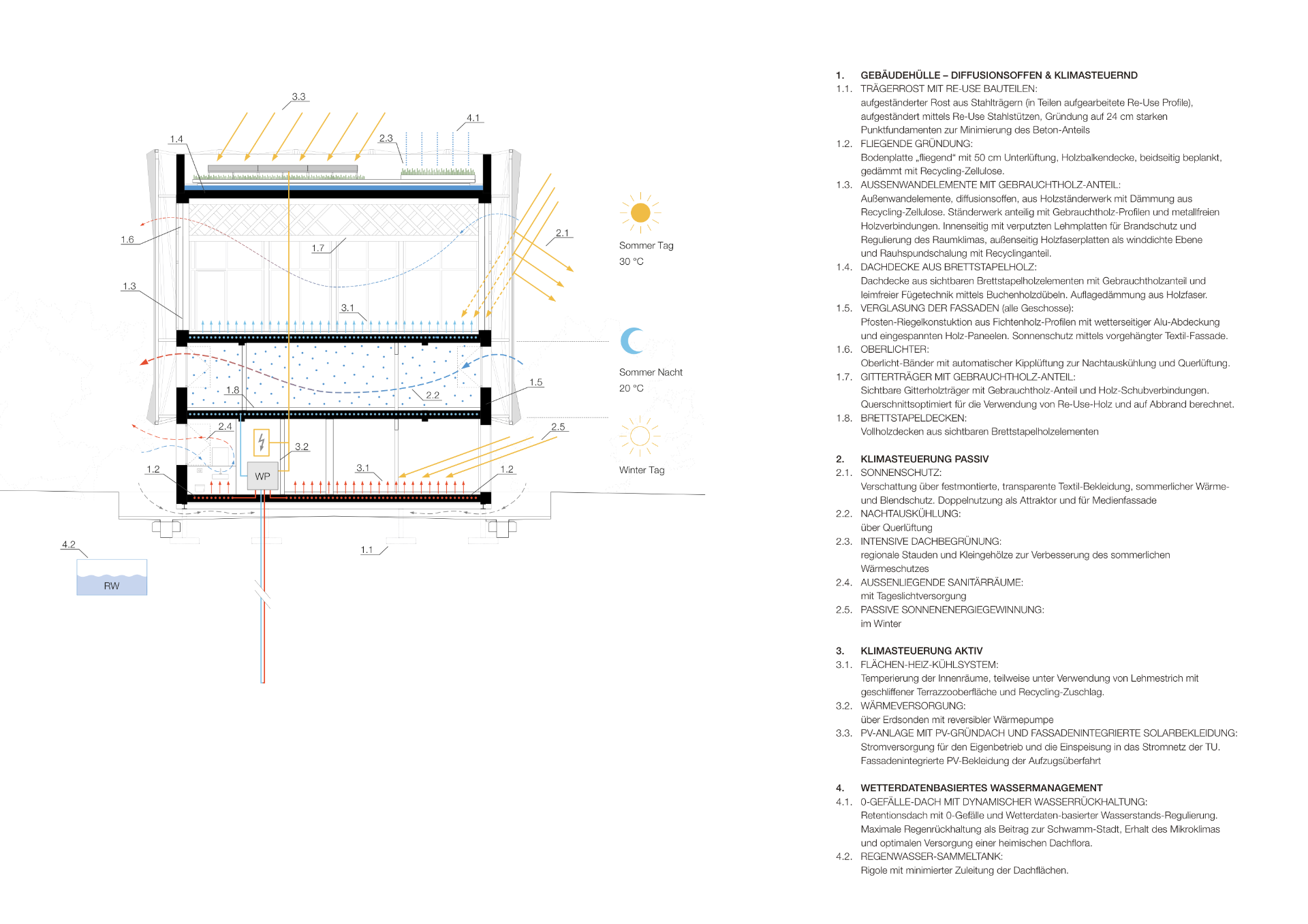
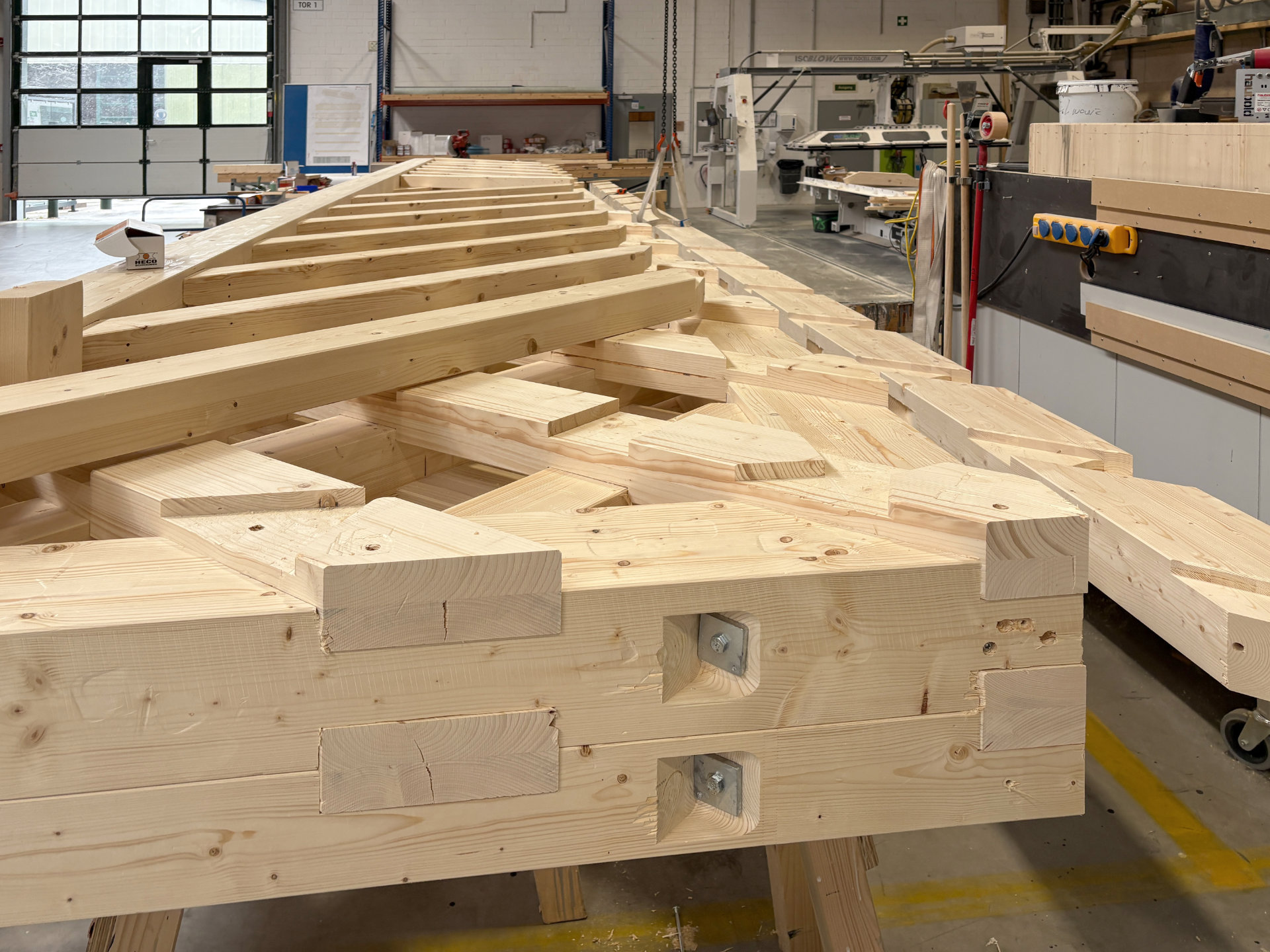
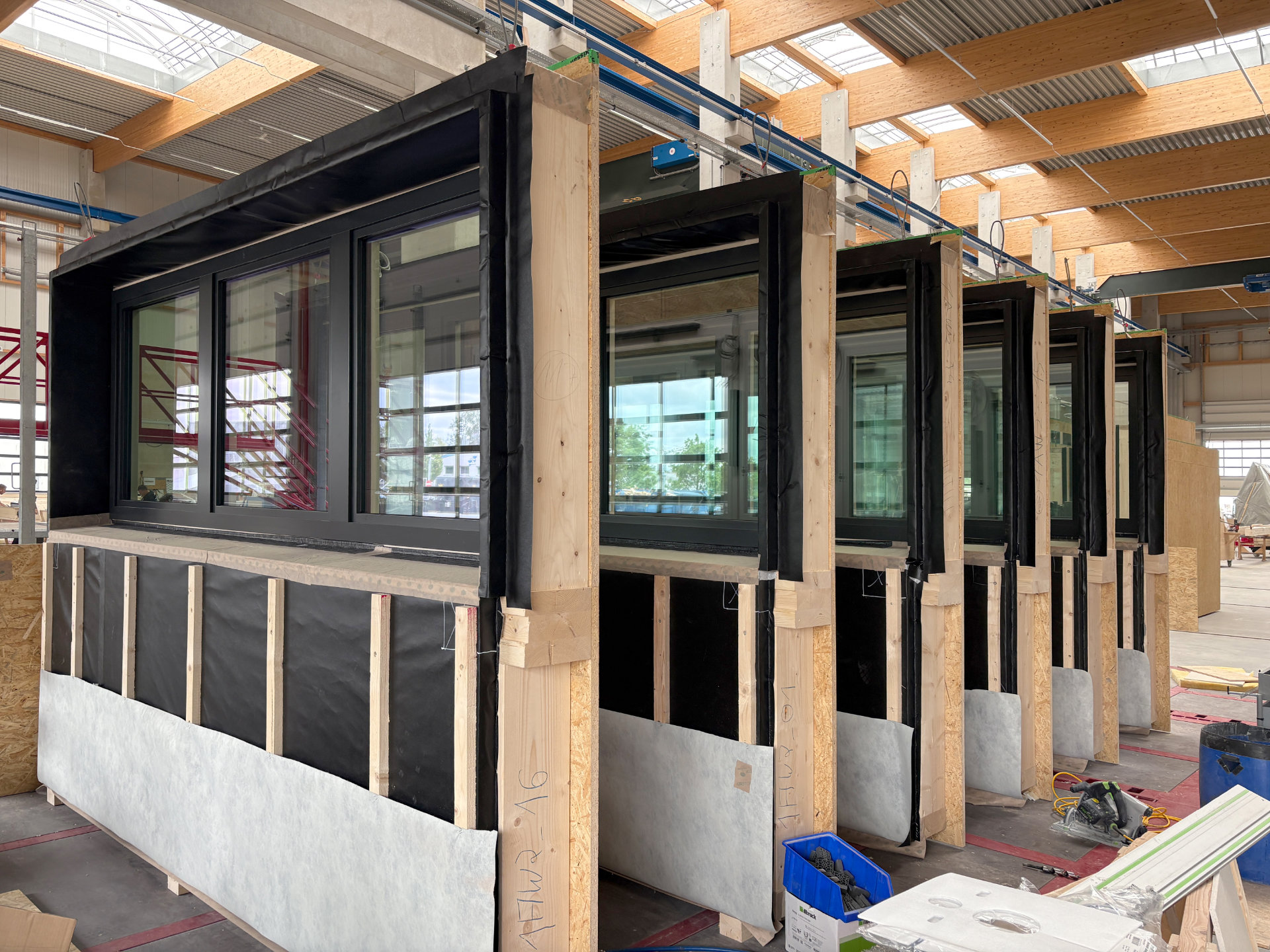
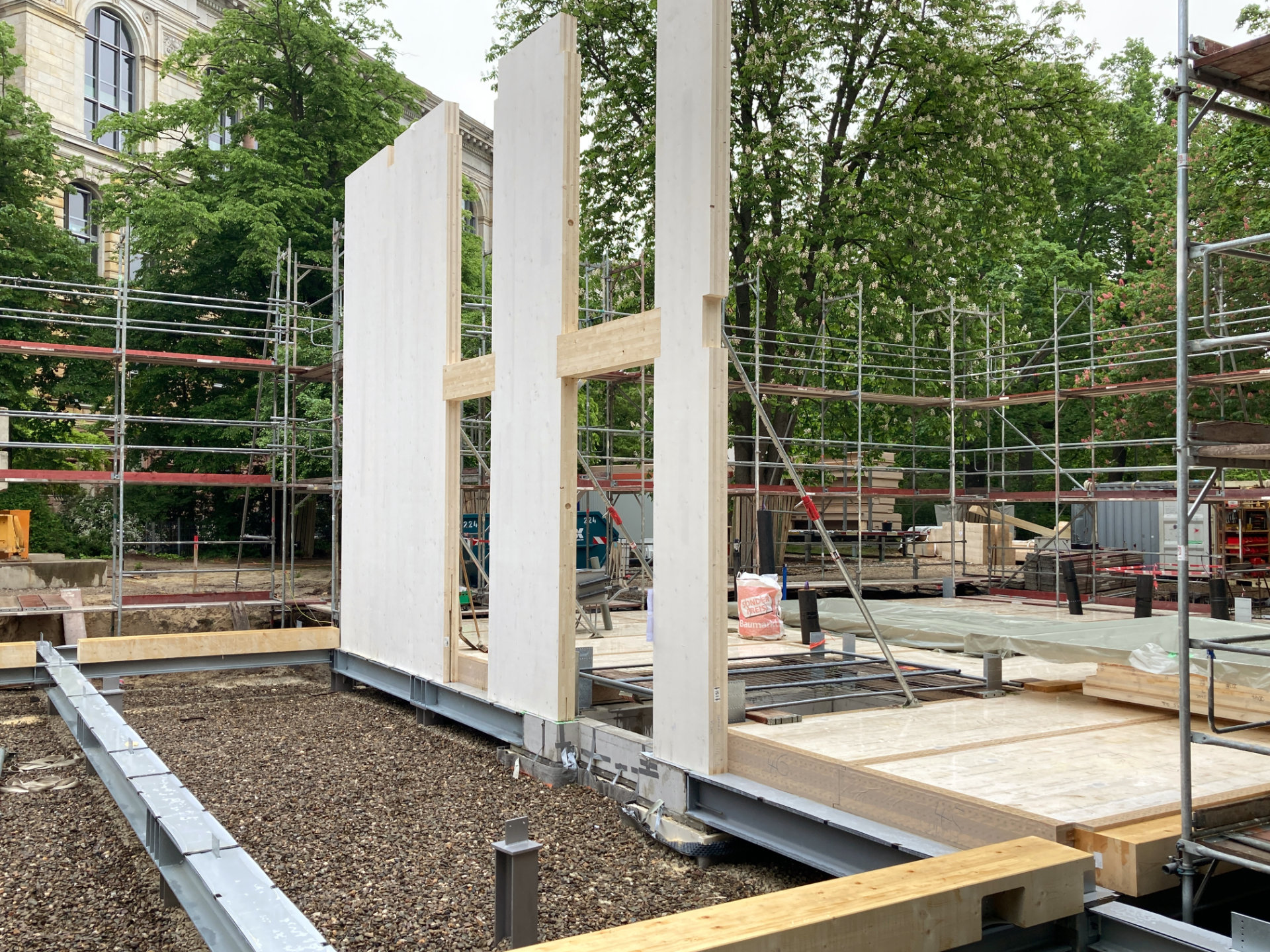
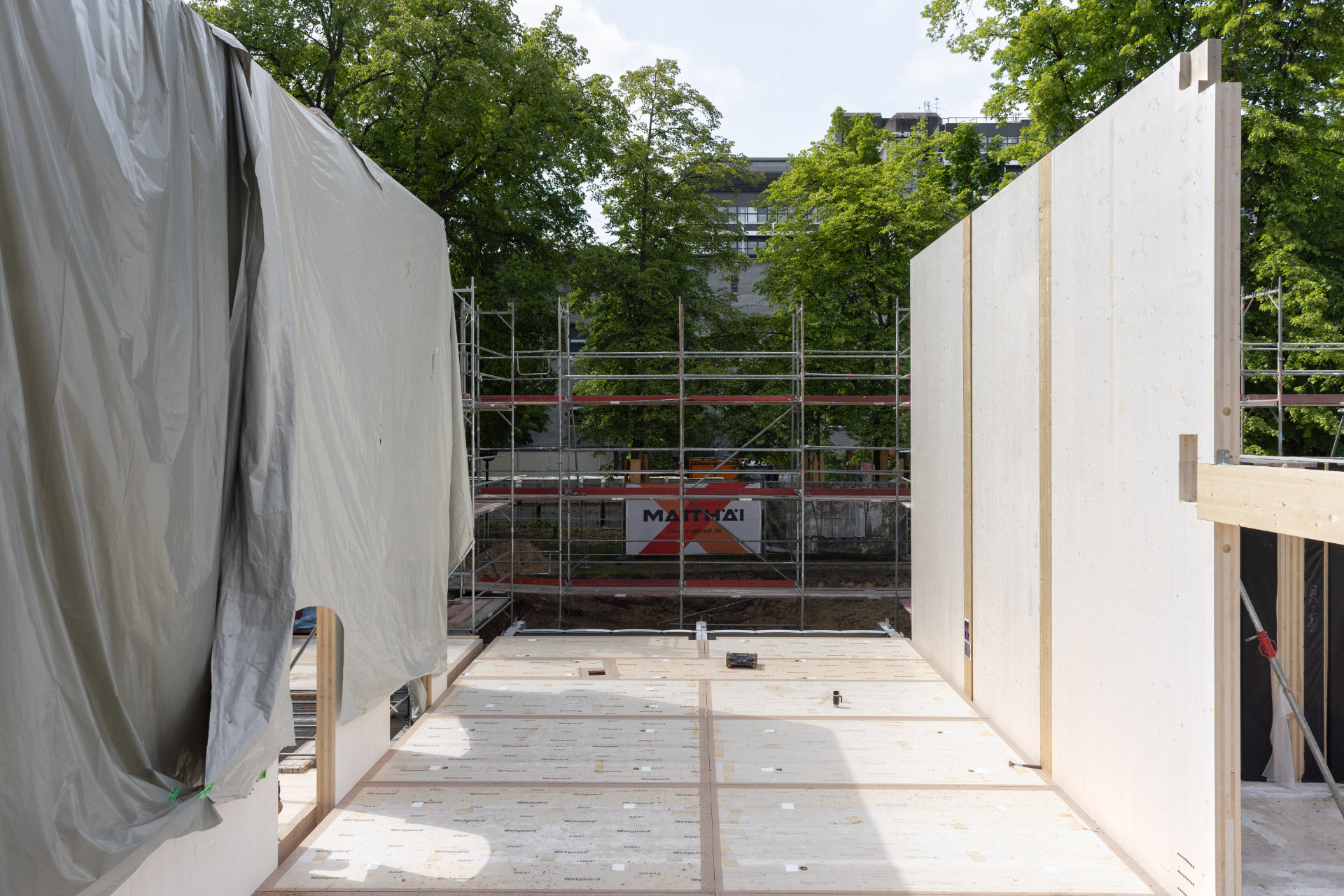
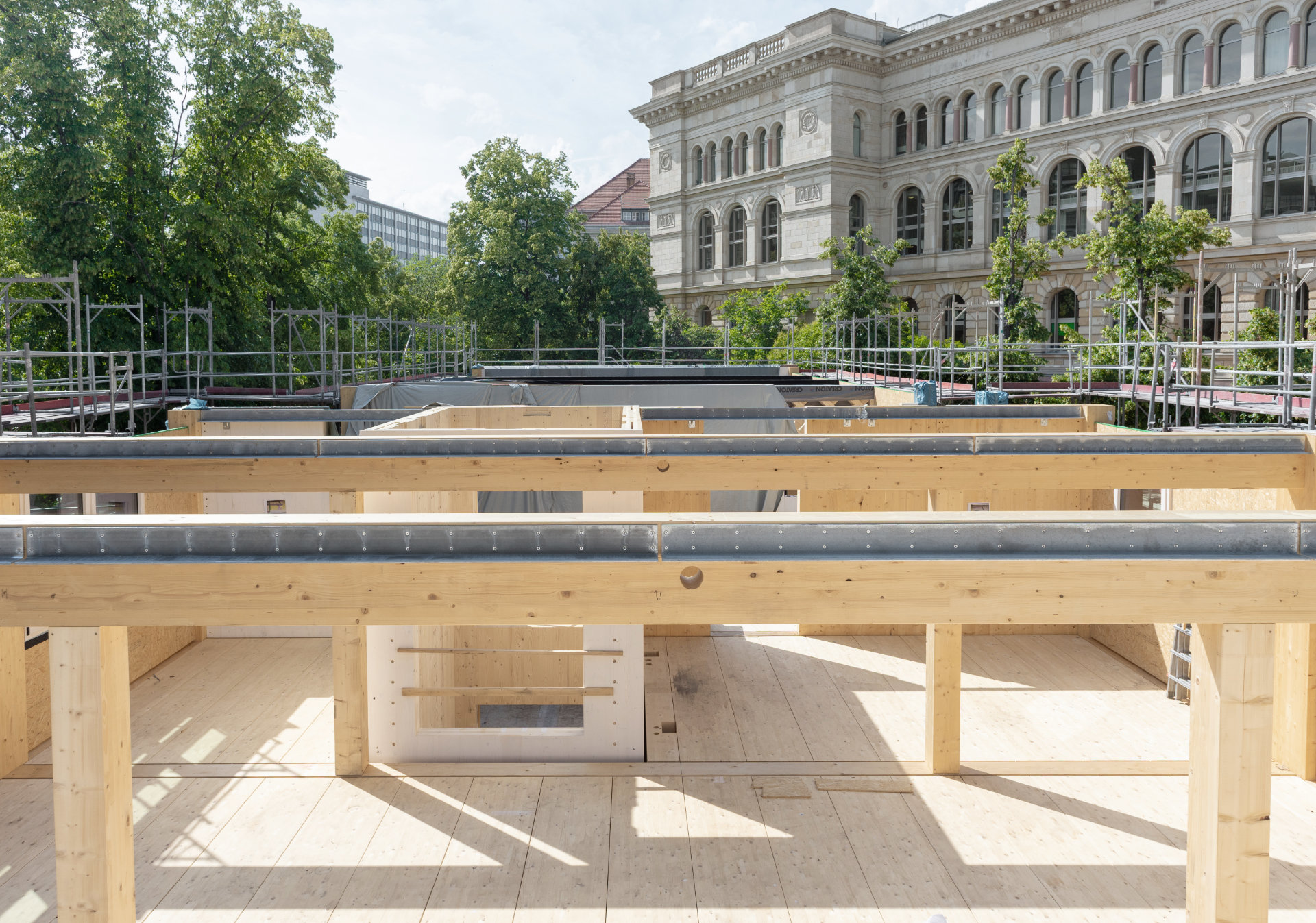
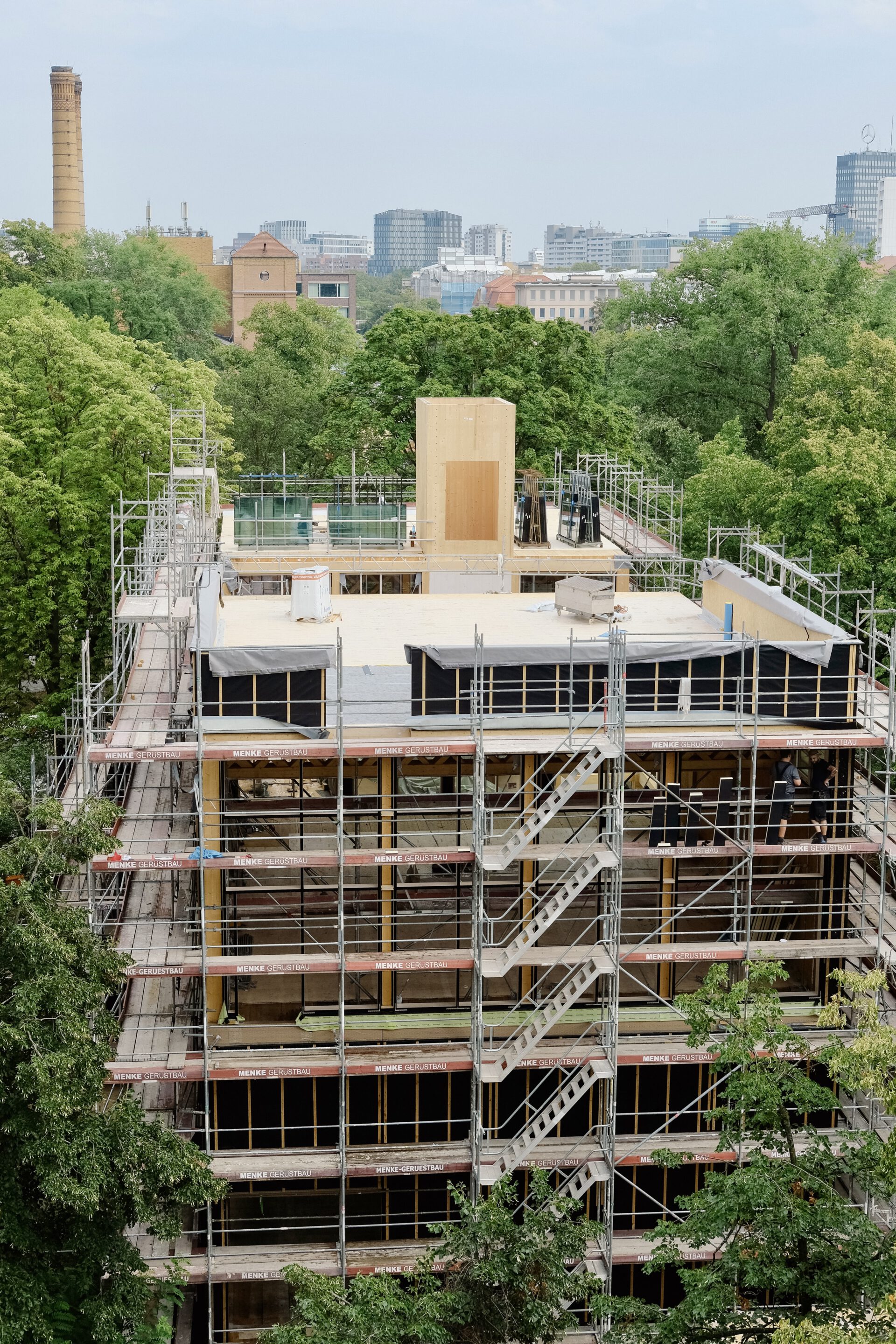
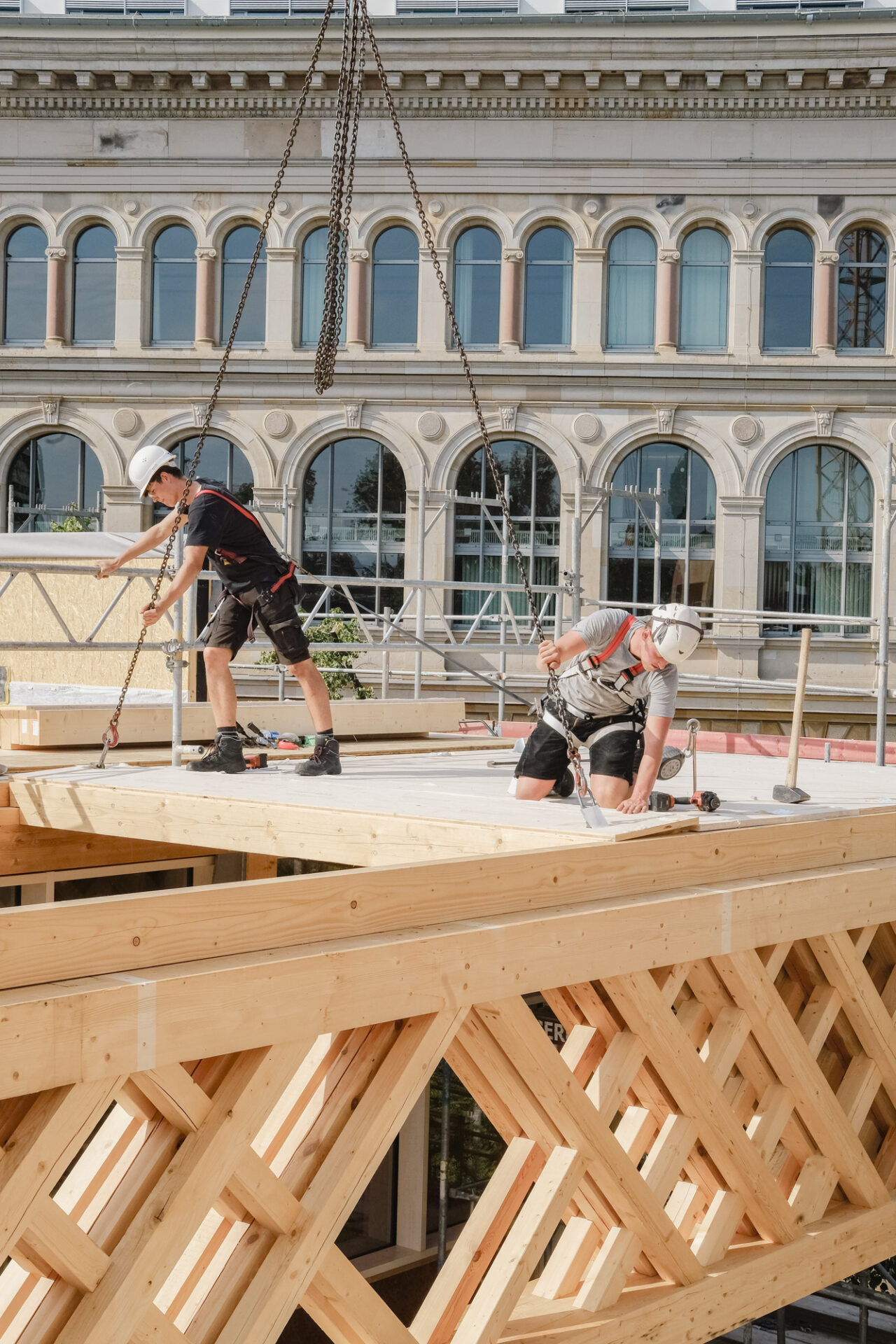
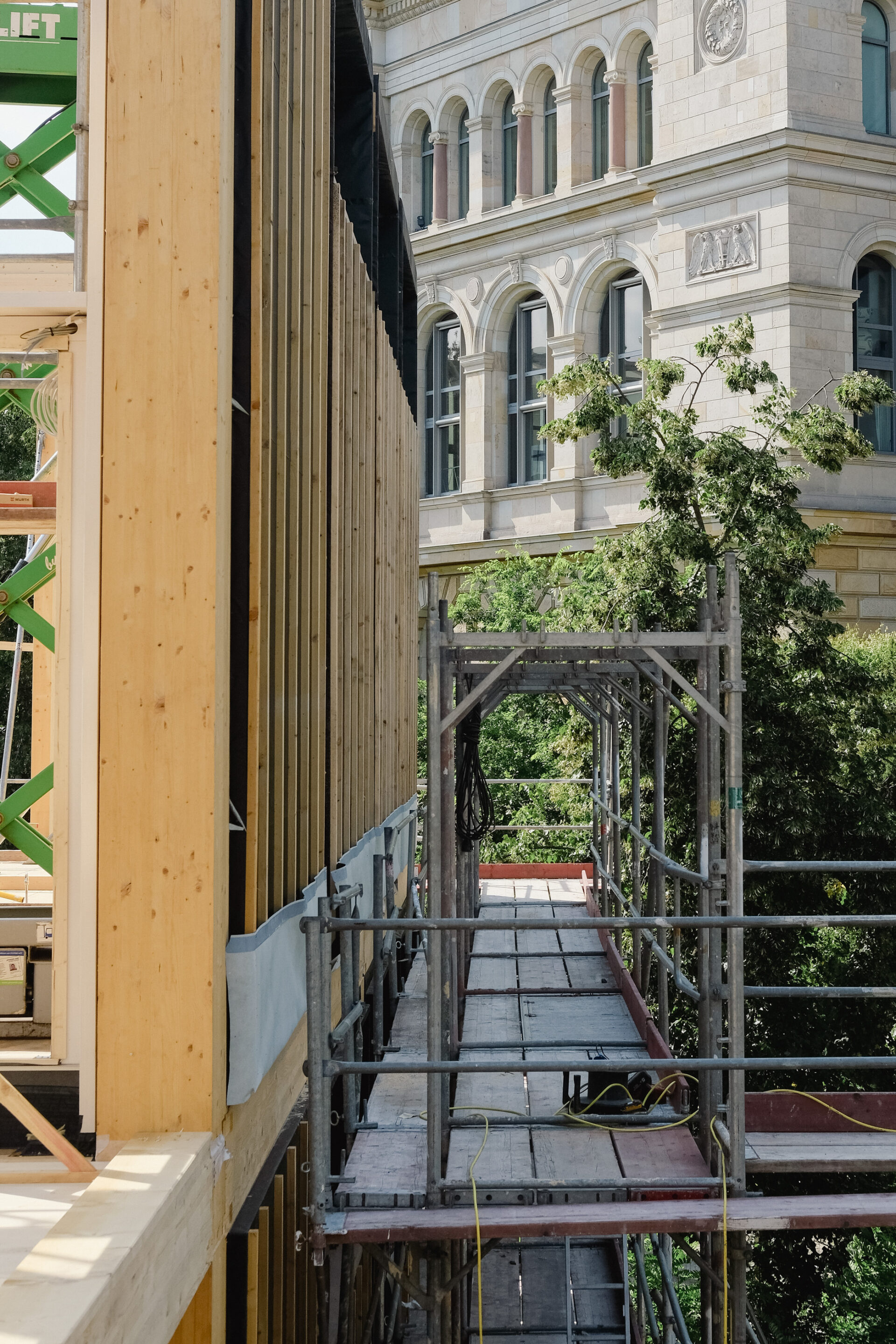
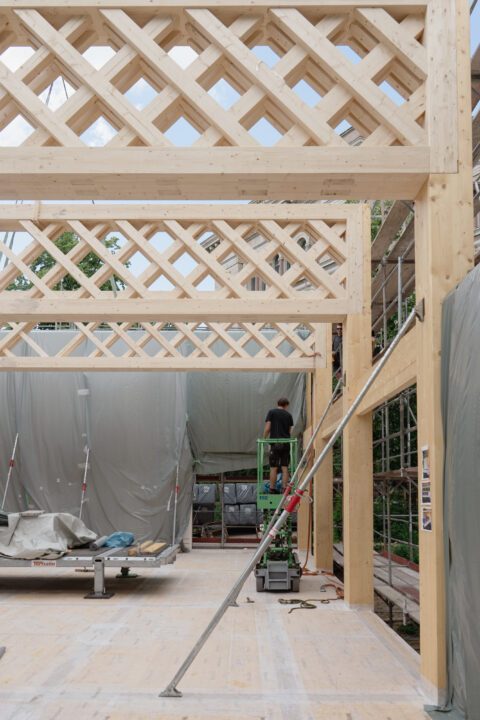
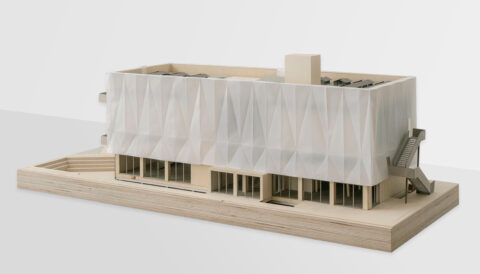
The lightweight, translucent textile façade across the upper floors abstracts the building form and references the crystal structure of a mineral. Ventilated and back-hung, it prevents the building envelope from overheating, diffuses daylight evenly into the interior, and eliminates the need for separate solar shading. Behind the façade lies a rigorous timber structure – renewable, reversible, and designed with minimal concrete and steel.
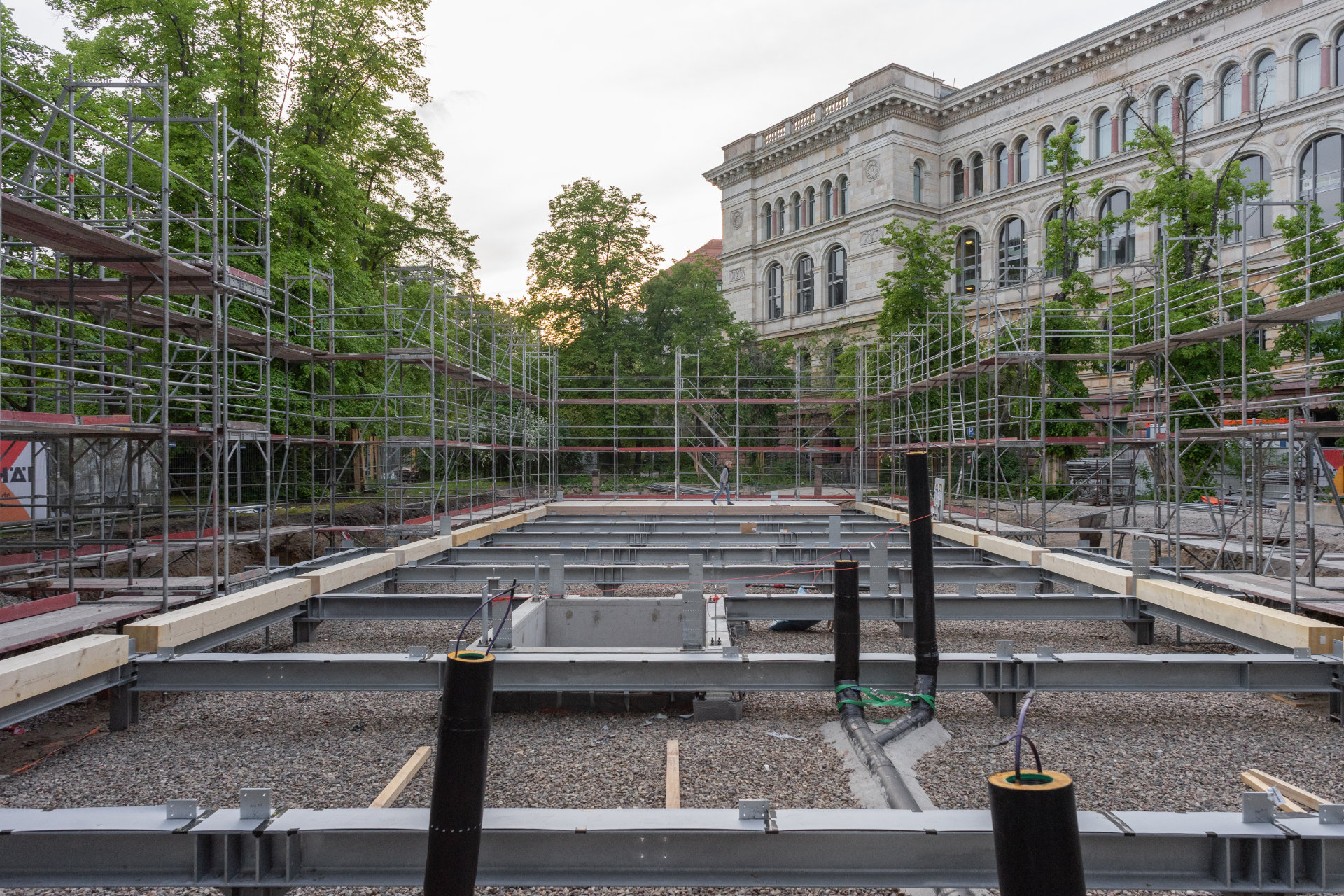
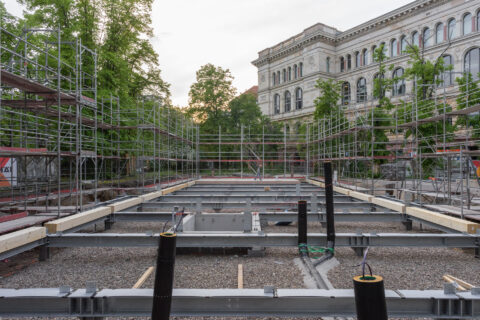
An elevated, floating foundation avoids sealing the ground almost entirely.
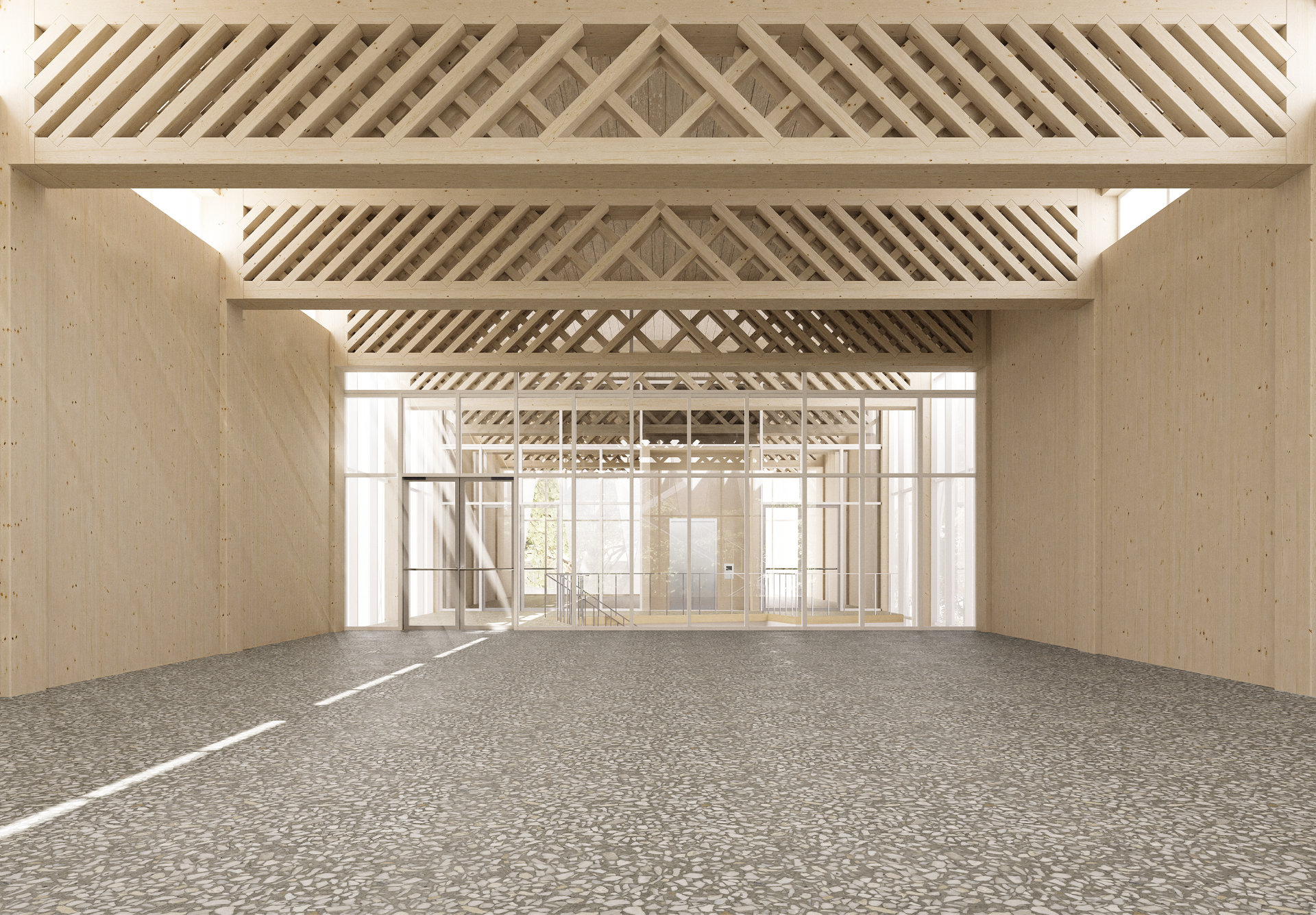
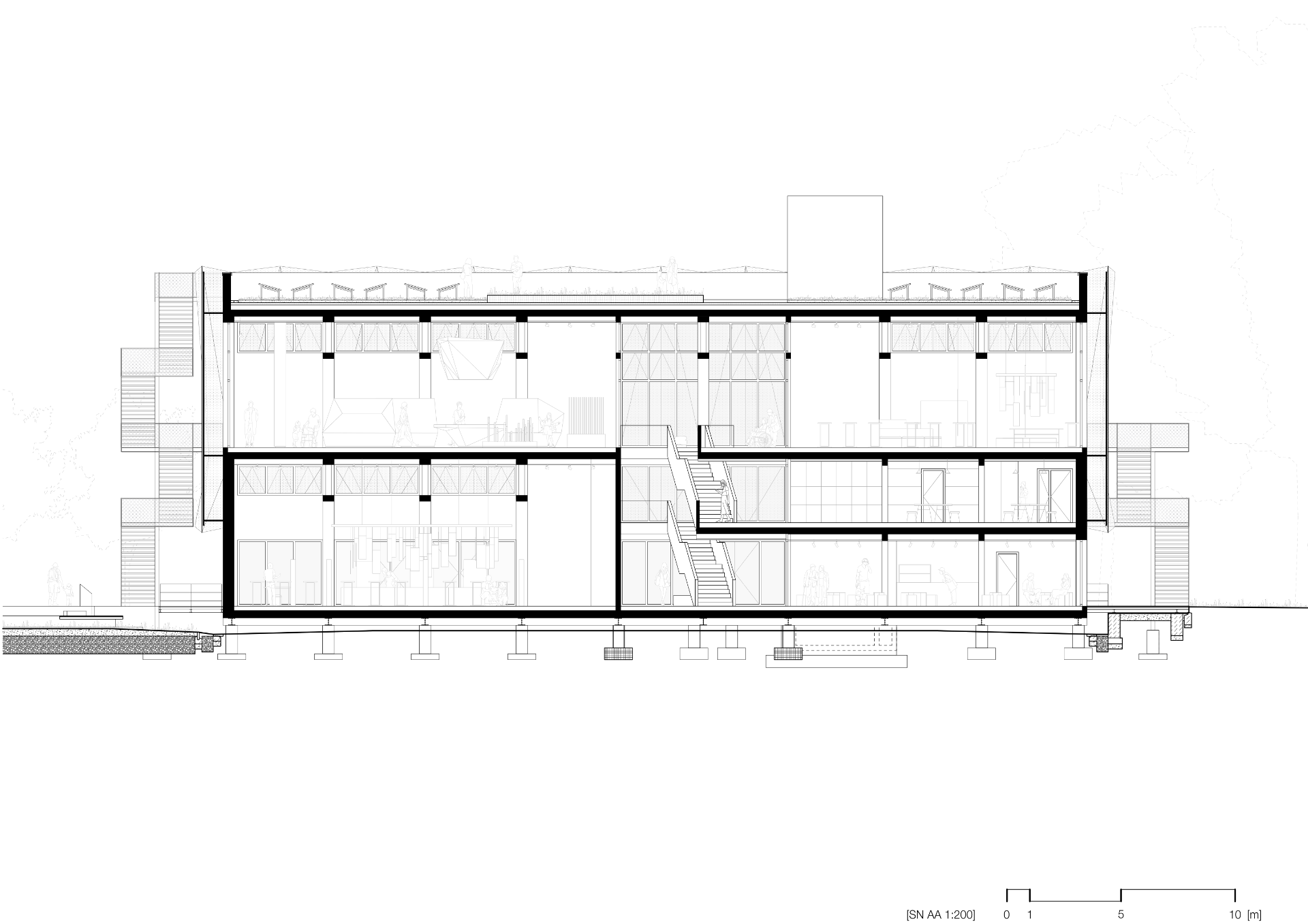
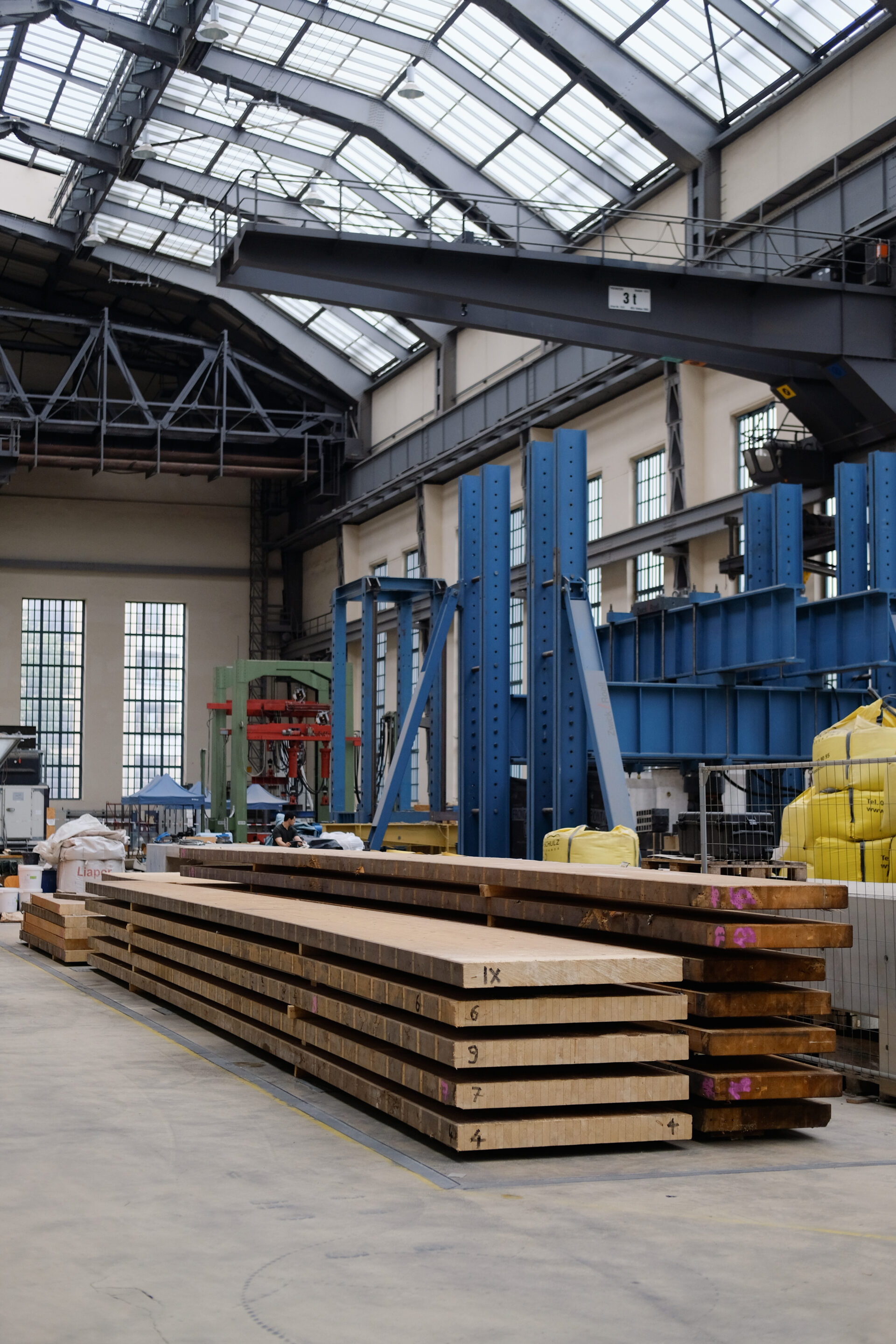
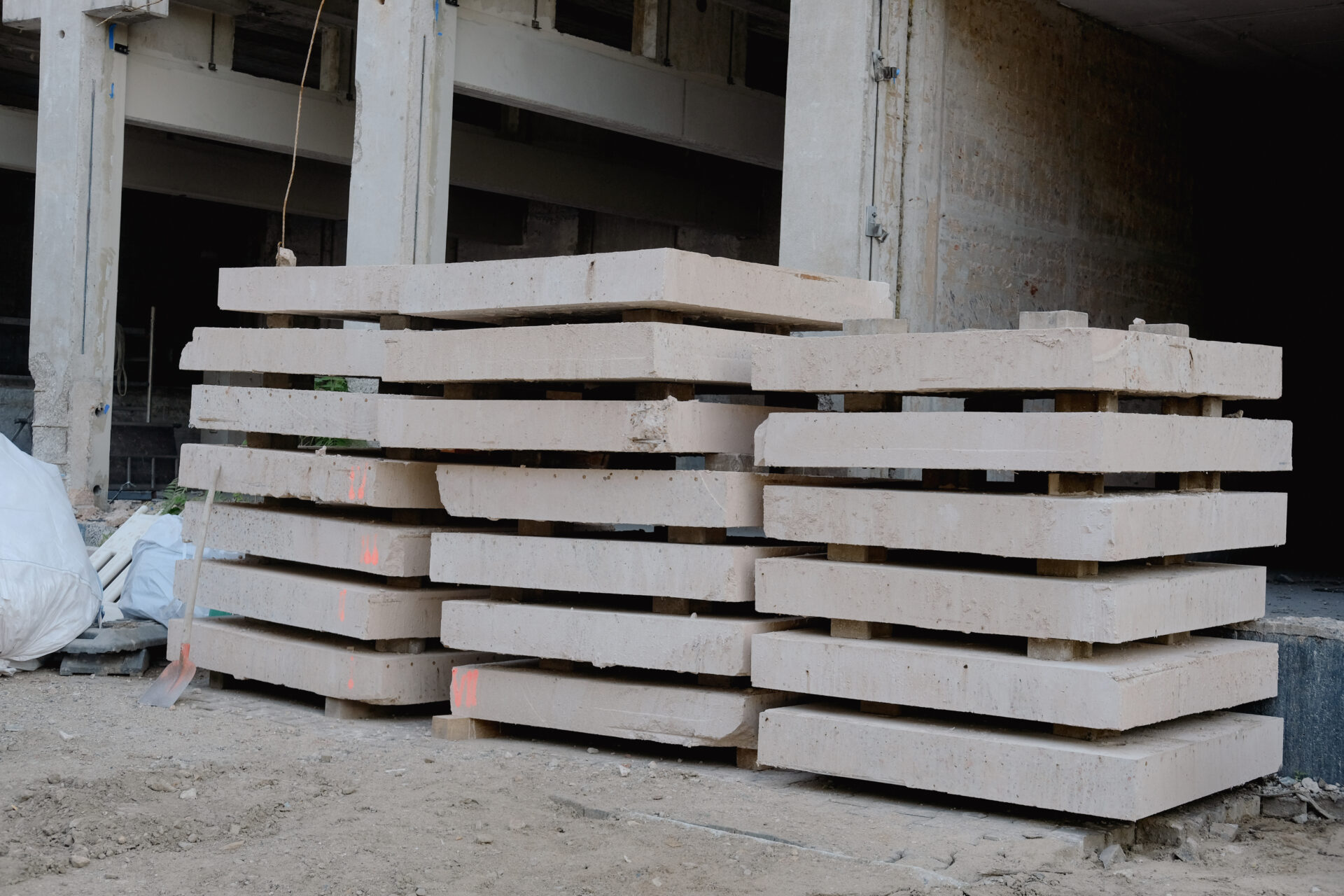
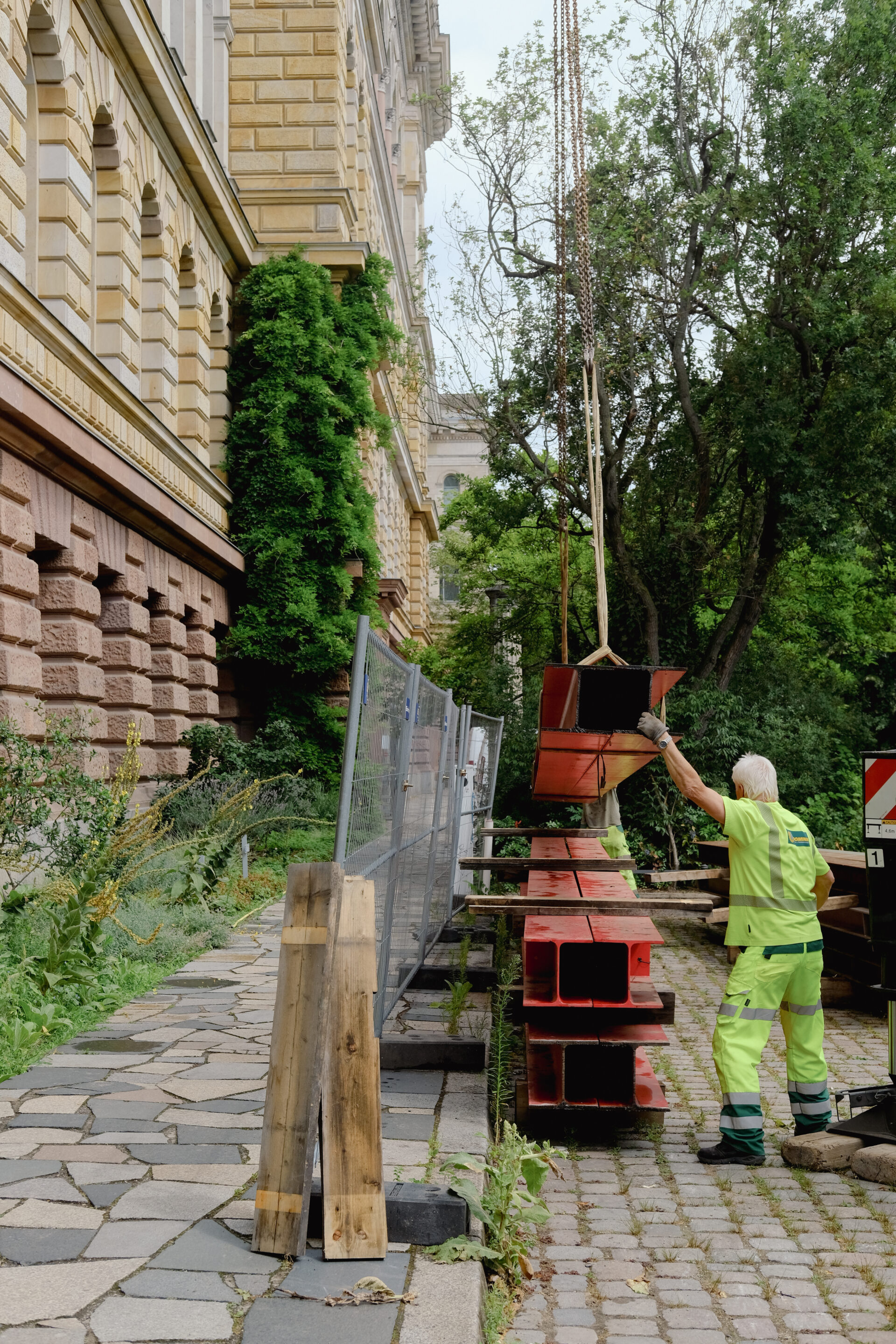
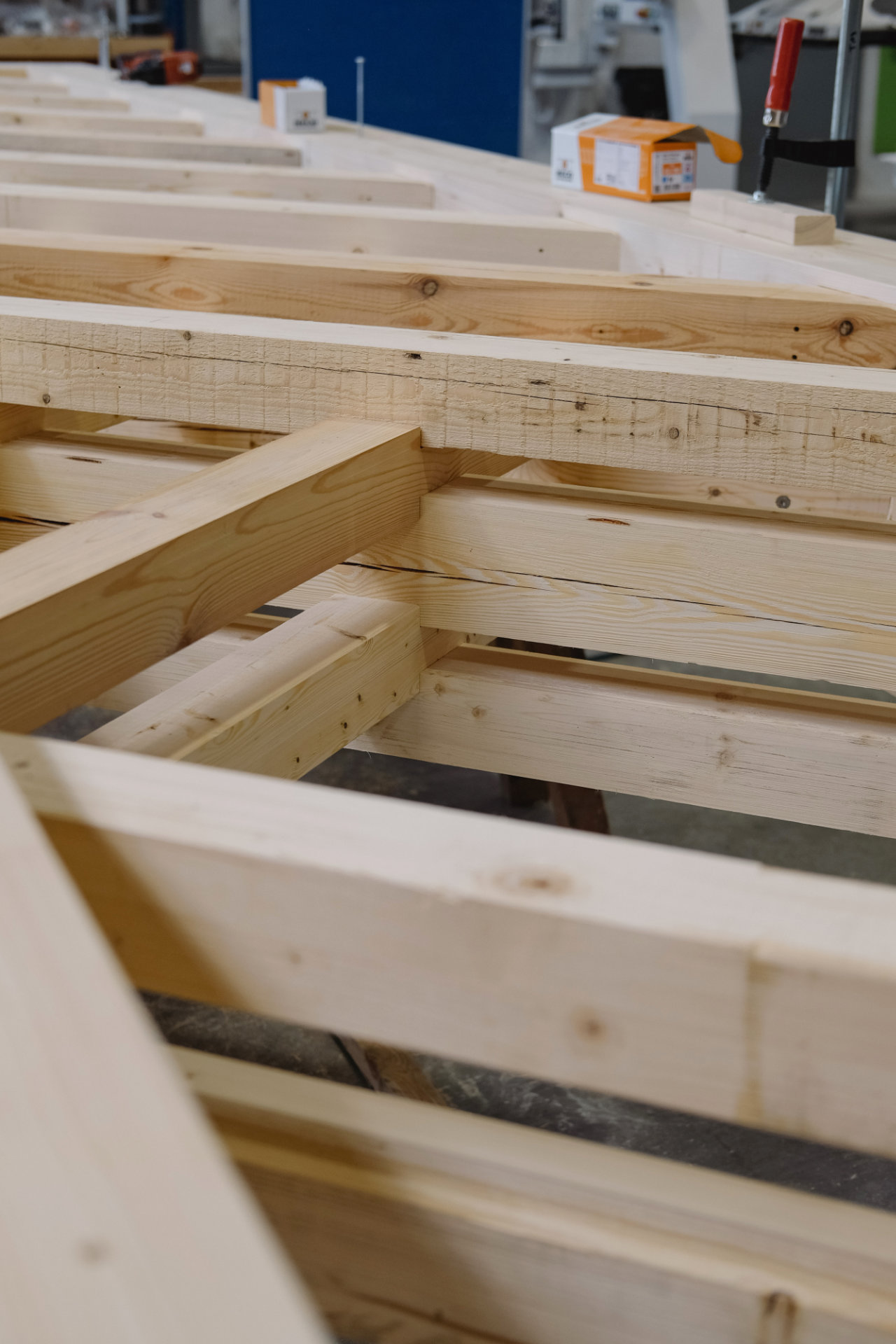
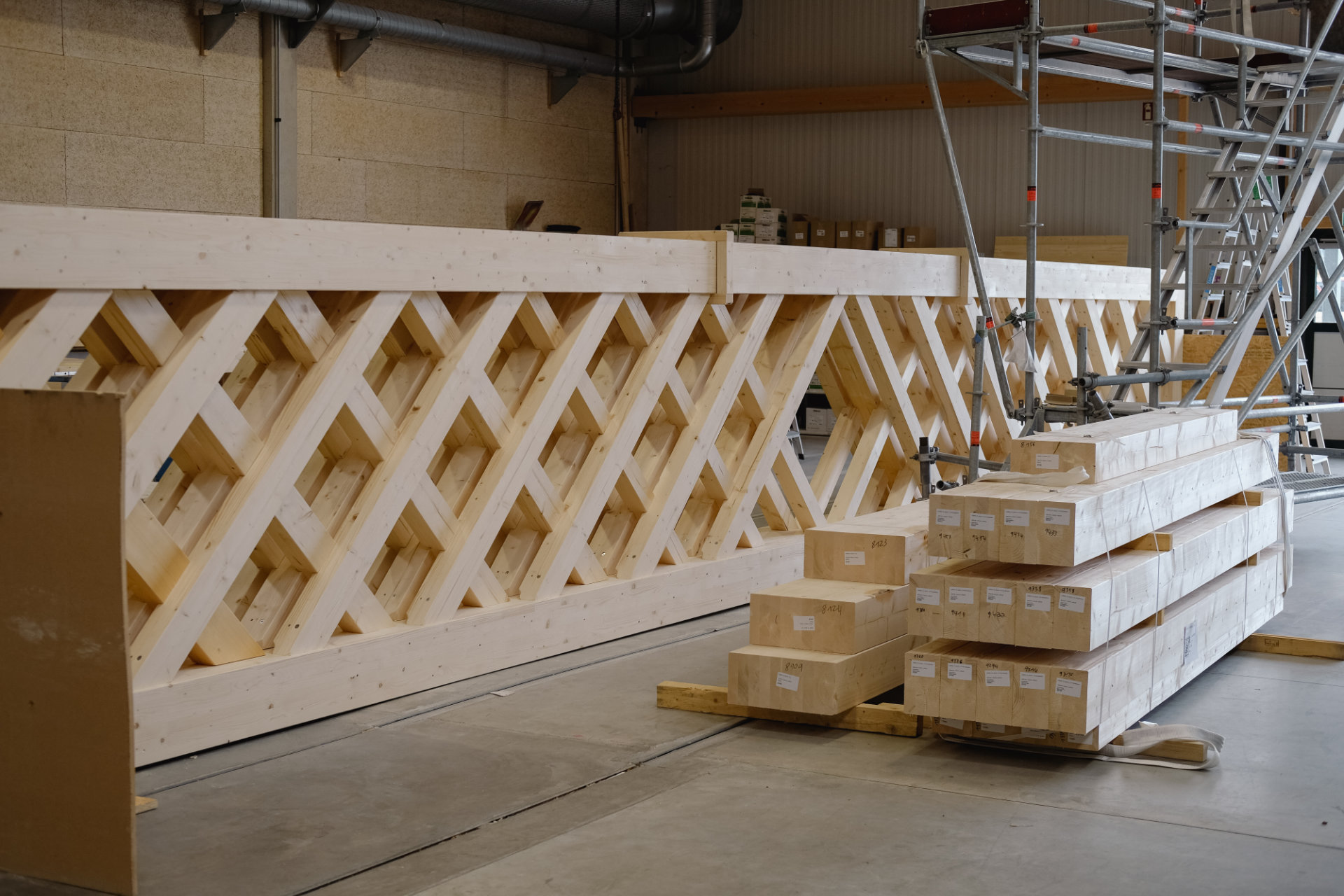
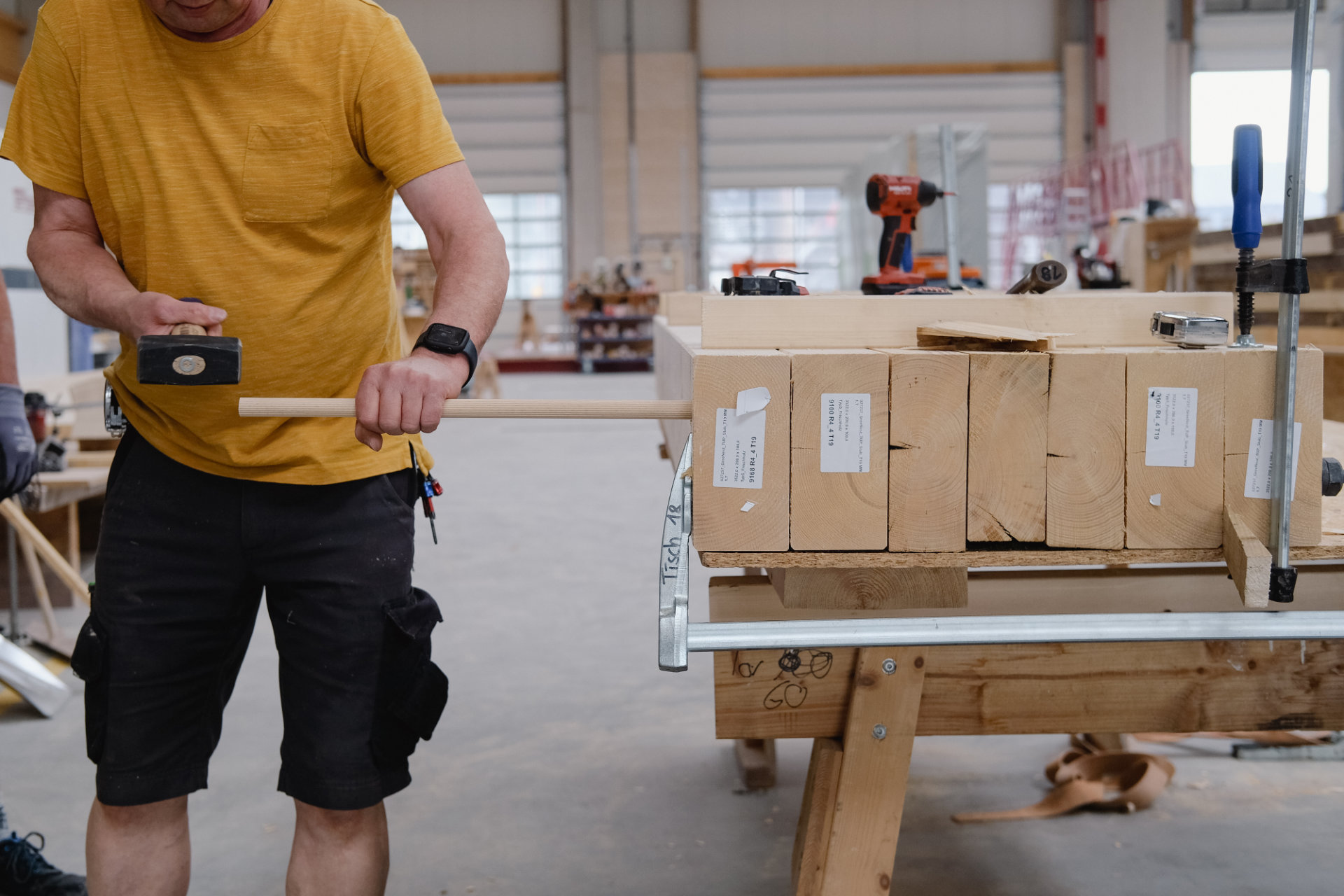
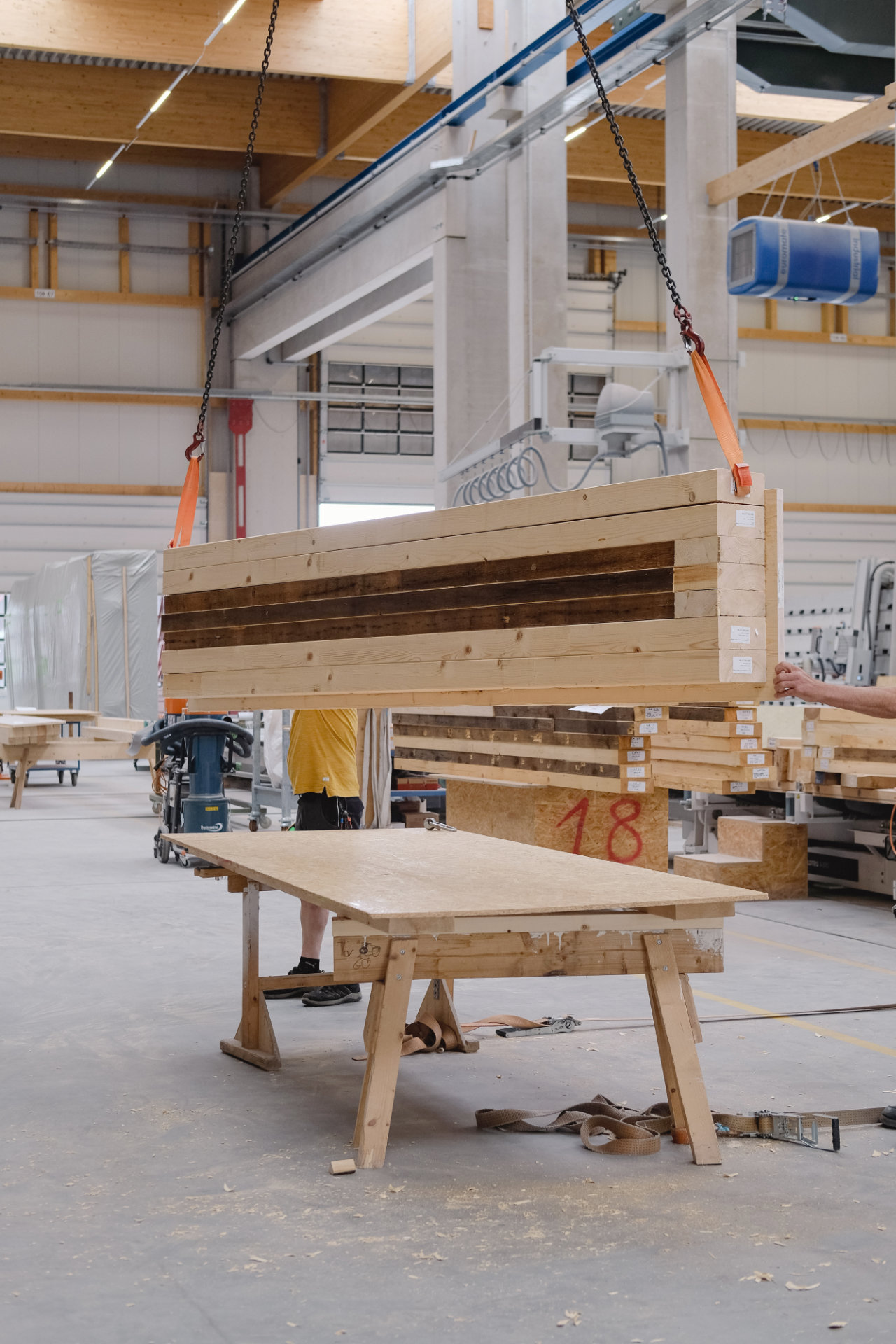
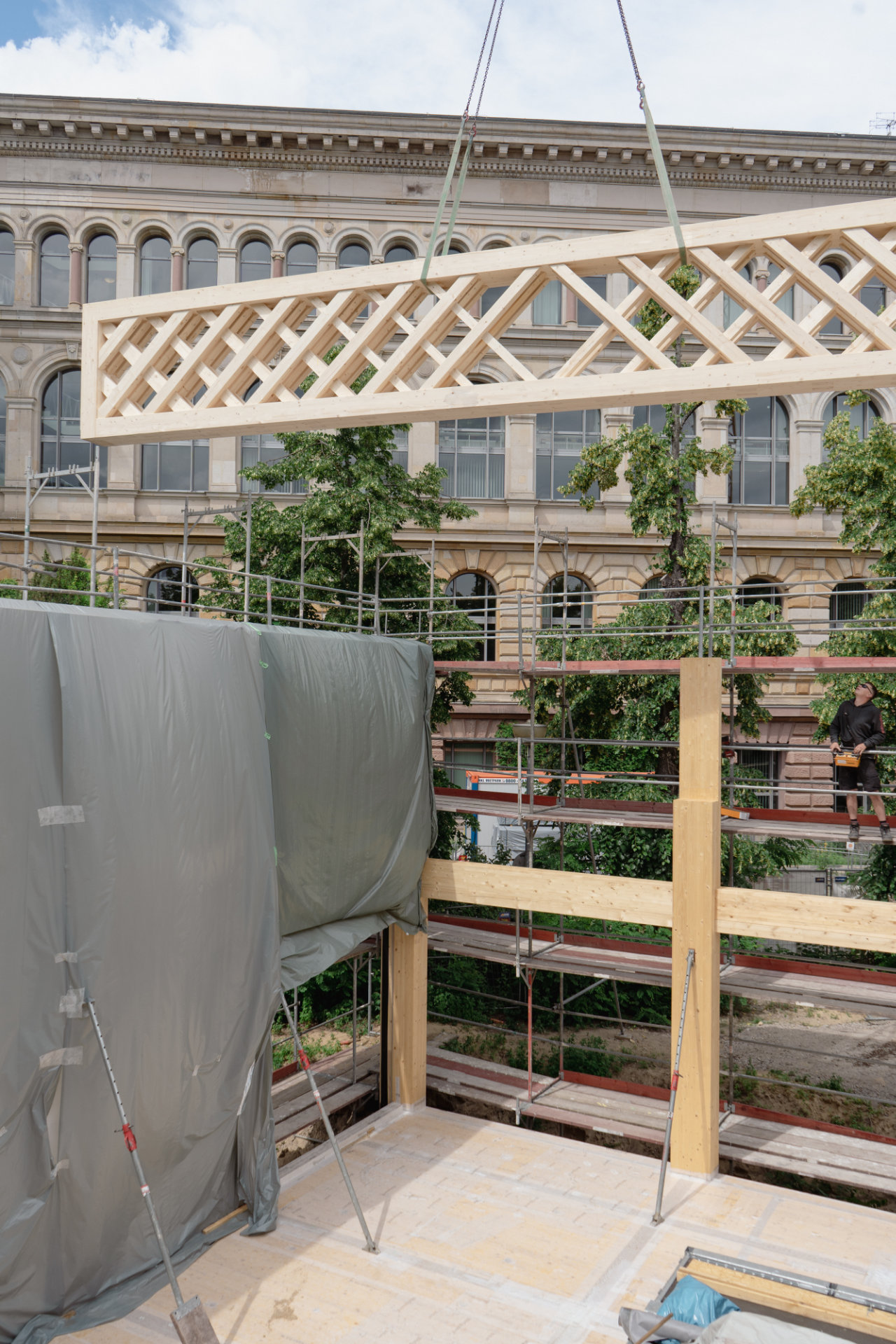
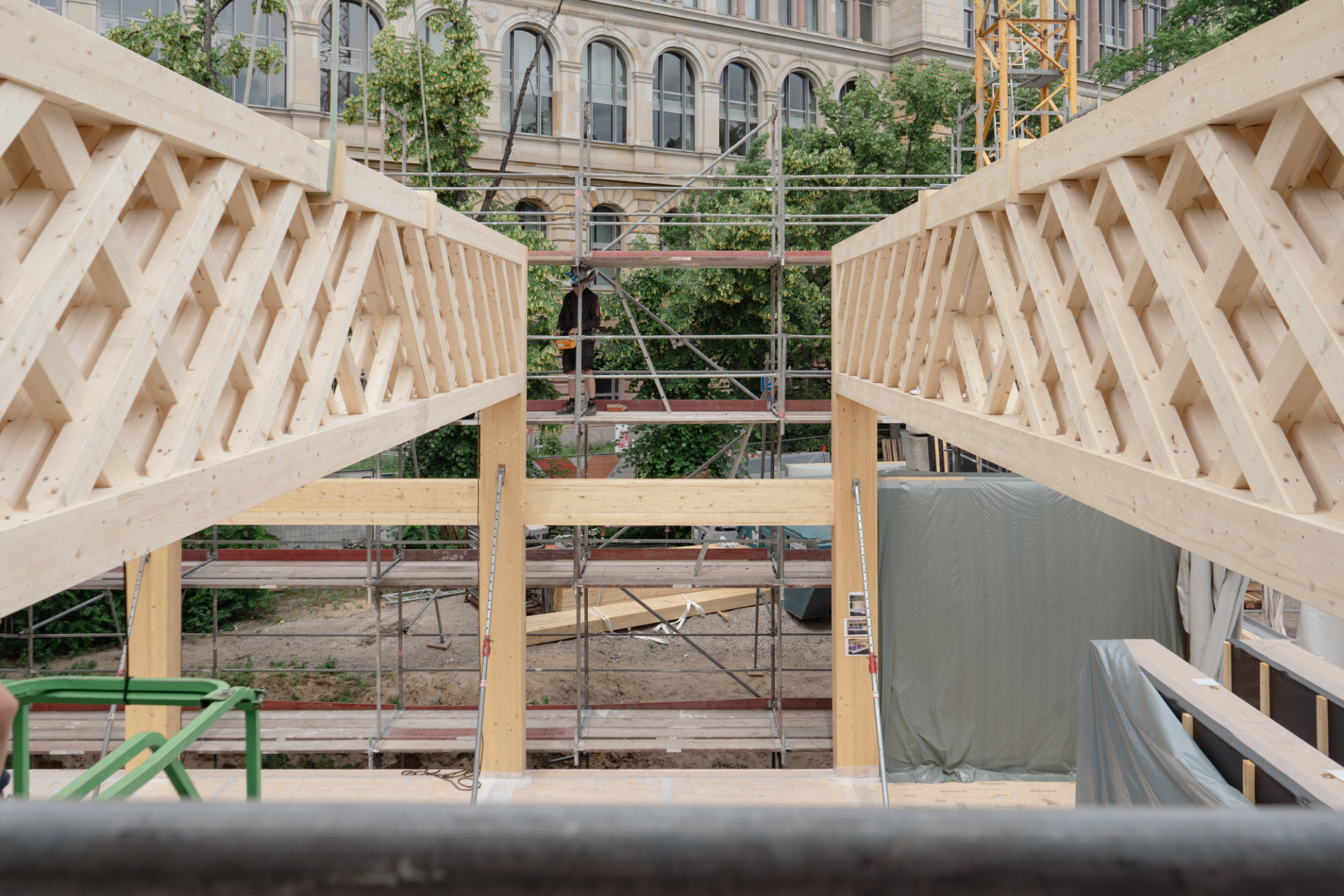
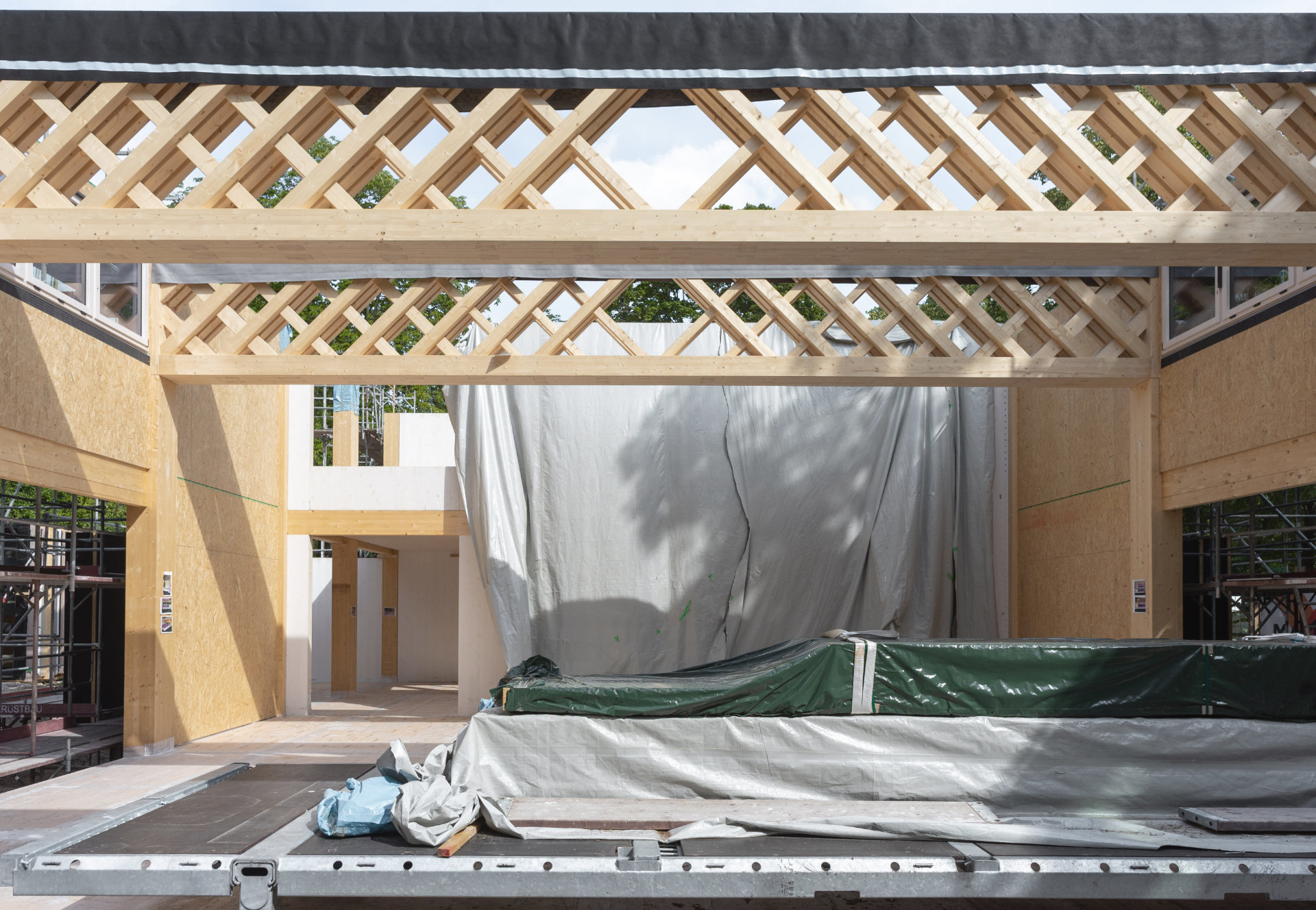
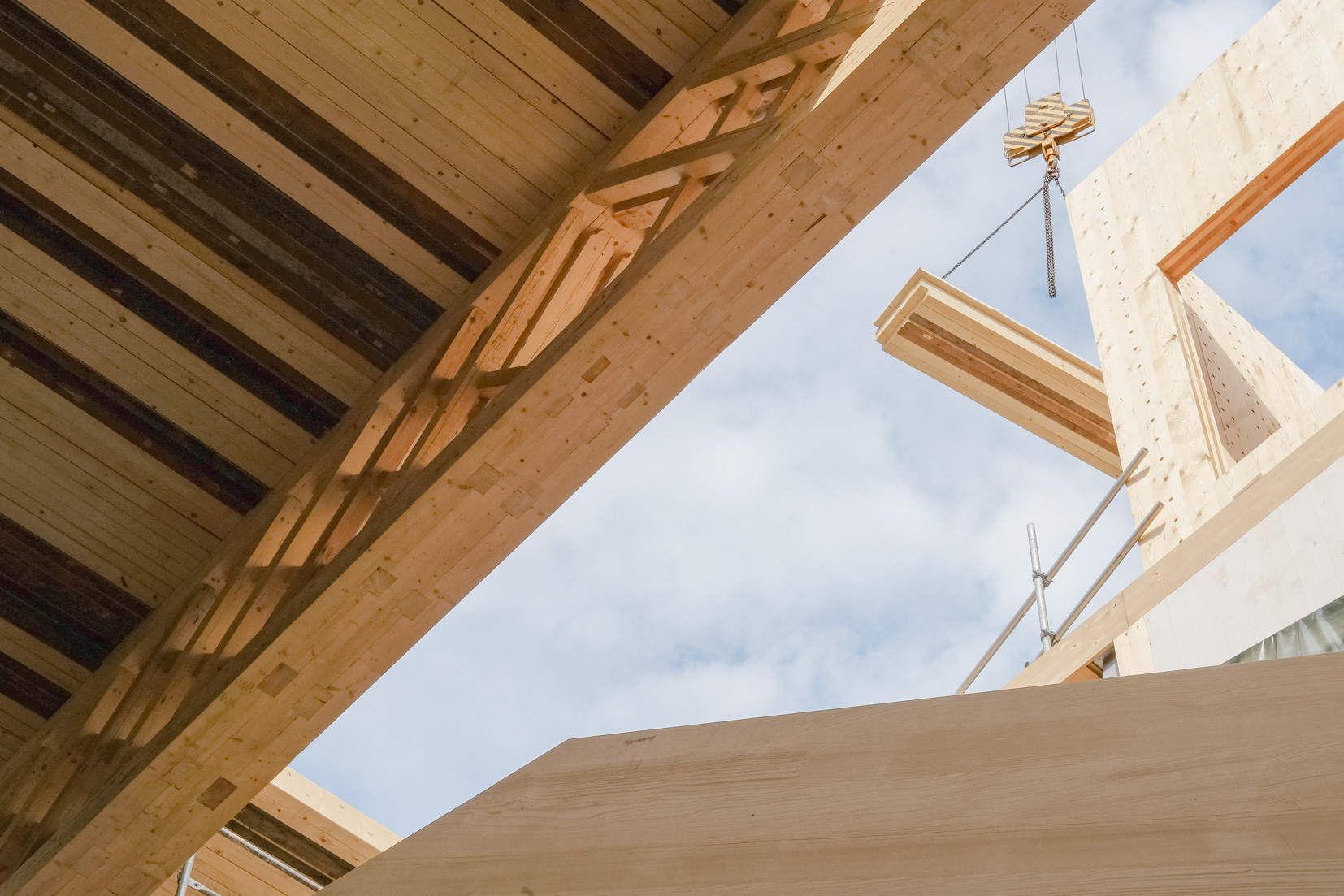
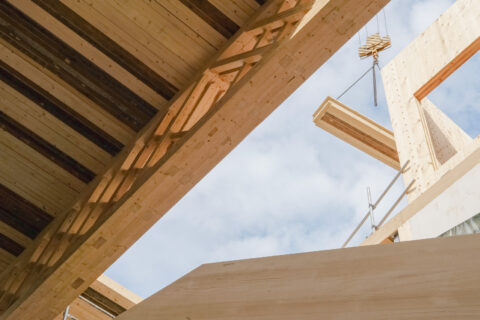
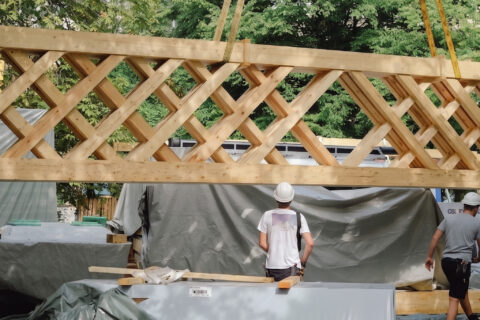
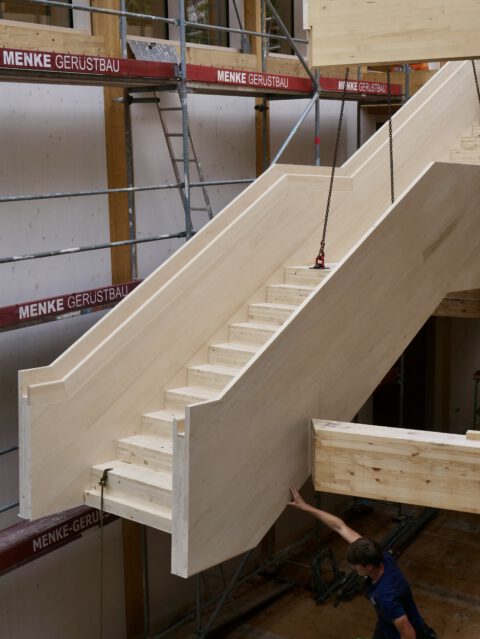
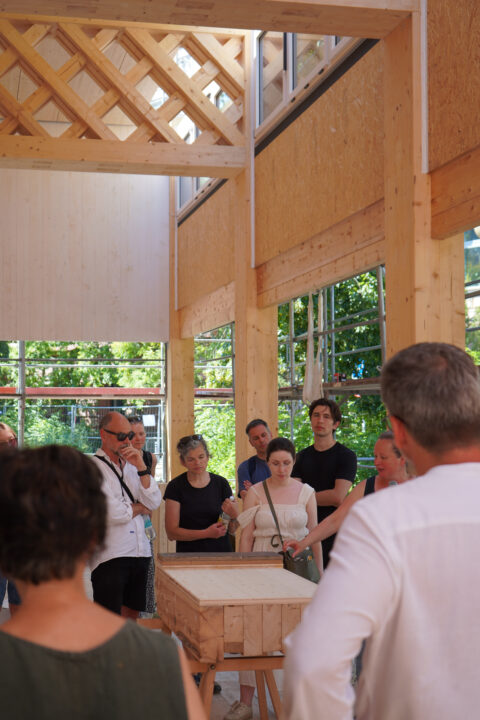
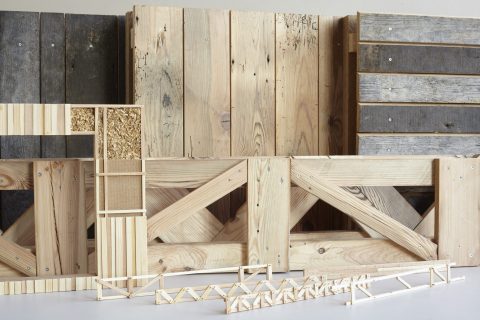
TULIUM demonstrates that reuse is possible even in demanding, long-span structural applications. Parts of the load-bearing structure originate from a former Berlin drinks warehouse, a Kreuzberg roof truss, and late nineteenth-century ceiling beams. The structural centrepiece is the lattice girder in the foyer: an additive system of reclaimed timber that flexibly accommodates varying material resources while spanning large distances.
Building-code approval for the reused structural components was obtained case by case – a process coordinated by TU Berlin’s Natural Building Lab and taken further by the B(e)Ware living lab.
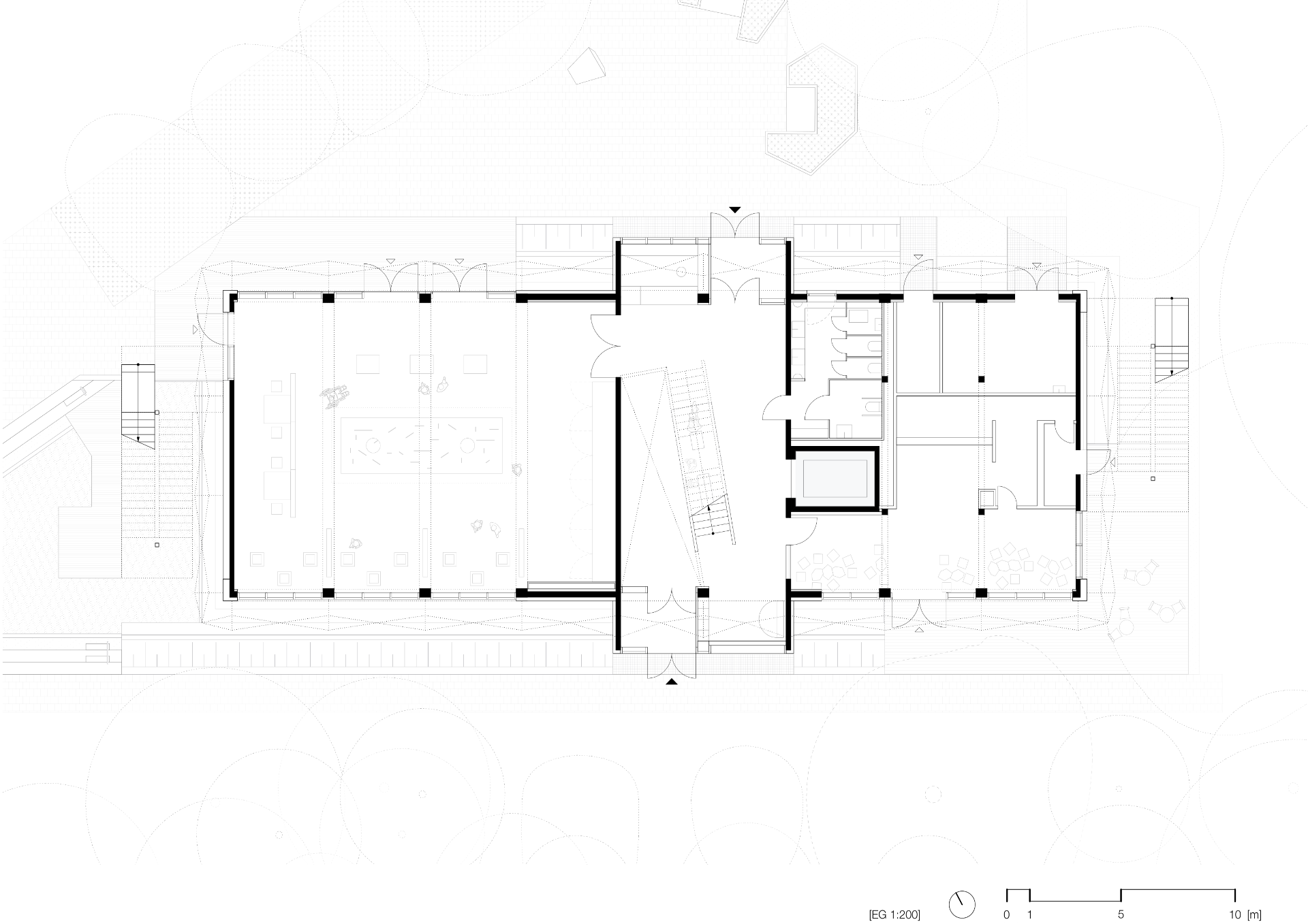
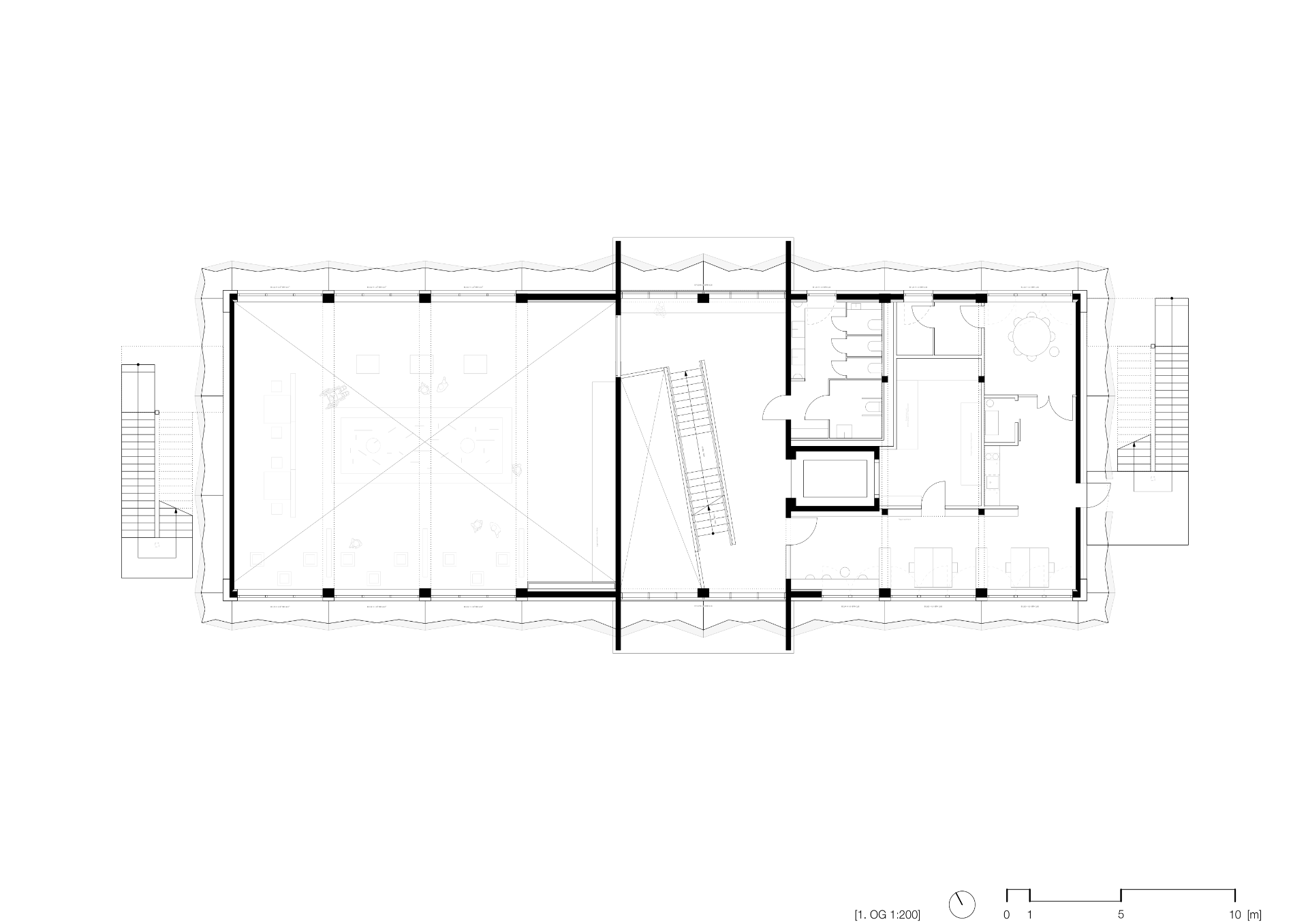
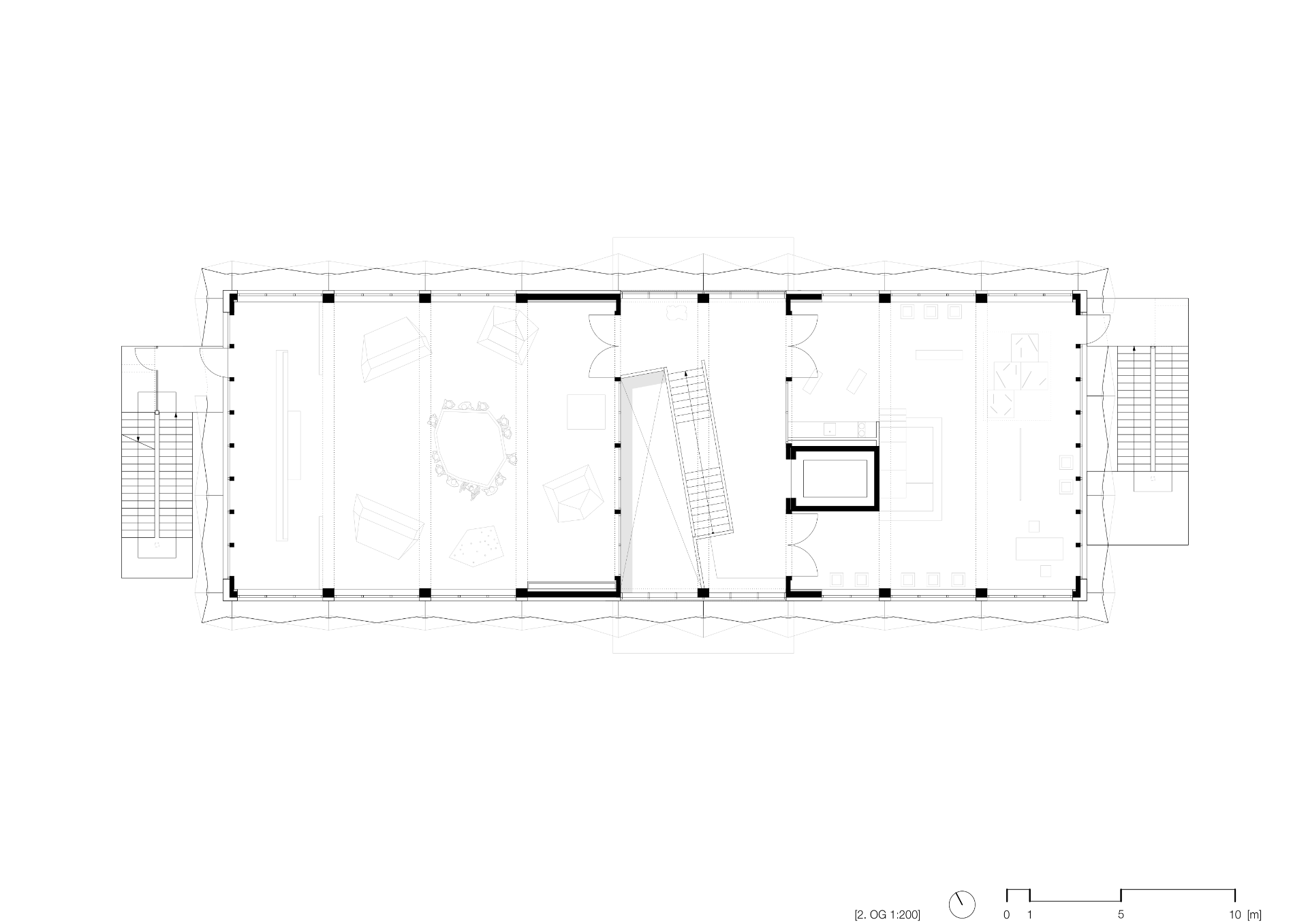
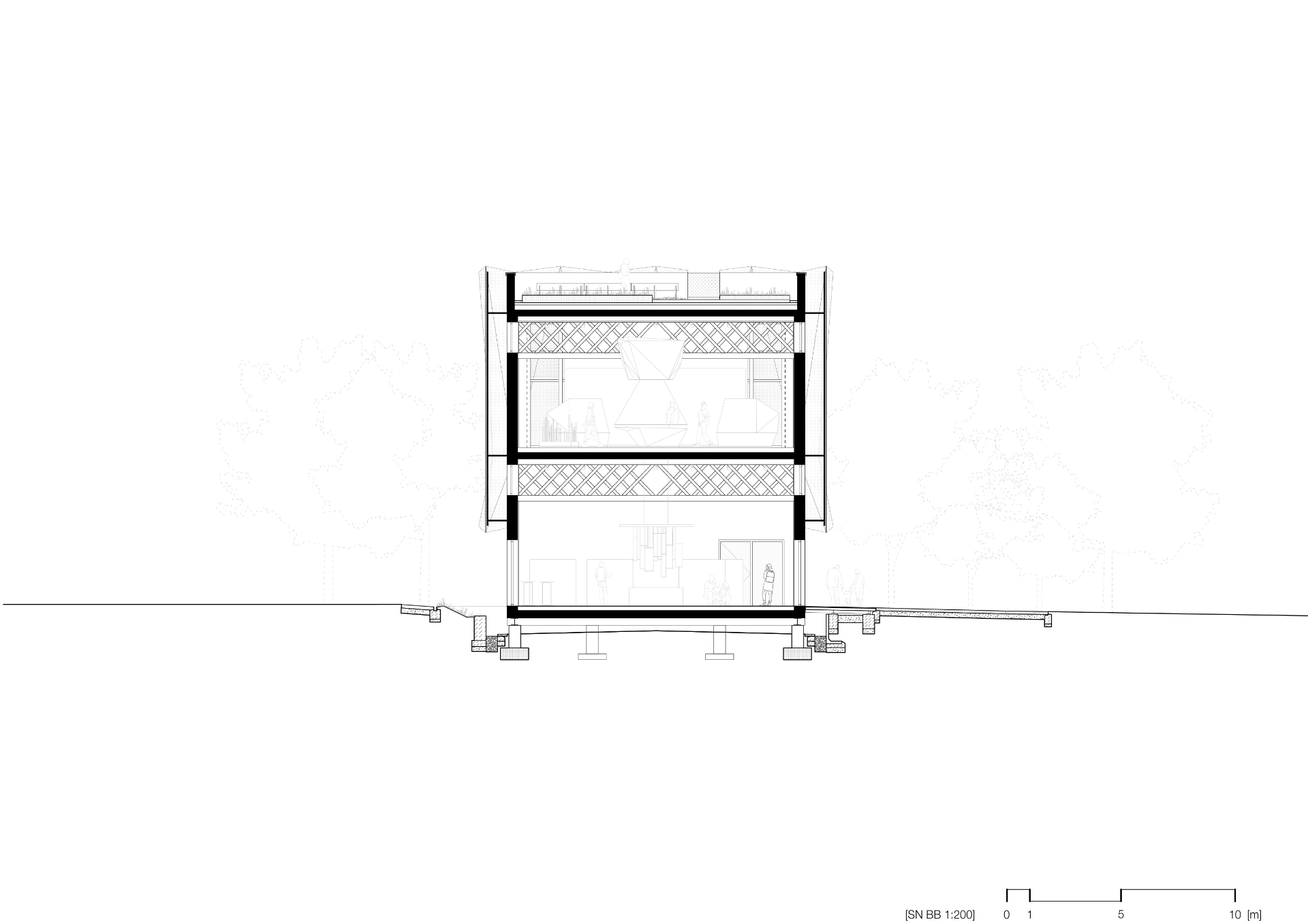
TULIUM is conceived as a meeting point for science, art, and society. The central foyer connects to changing exhibitions, events, and the café on the ground floor. The upper floor houses the permanent display of TU Berlin’s Mineralogical Collections – one of the oldest and most significant university collections still held by the TU – alongside a changing exhibition space in dialogue with mineralogy. The material choices throughout continue the principles of the building itself.
The campus is becoming a place of knowledge exchange and a gathering point for the TU community and visitors alike.
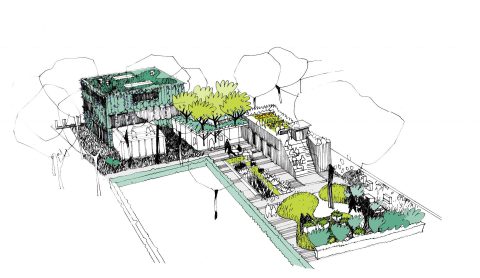
Around TULIUM, a clearing is being created as a forecourt and new centre with café and green forum. The Knowledge Trails connect the university and the city through knowledge buoys, providing orientation across the campus.
Breaking with the conventions of architectural competitions, the project has been developed since 2019 through a participatory, transdisciplinary process within the university, with over 300 students involved. A student project office developed the final design, which was handed over to a collaborative team of architects, landscape architects, and specialist planners now realising it.
As a real world laboratory, TULIUM opens up urgently needed space for experimentation in the construction sector – demonstrating what is already possible today under real-world conditions.
The construction project “Museums-Pavillon und Touristische Wissenspfade auf dem TU Campus” is supported with earmarked federal and state funds as part of the joint task “Verbesserung der regionalen Wirtschaftsstruktur” (GRW).
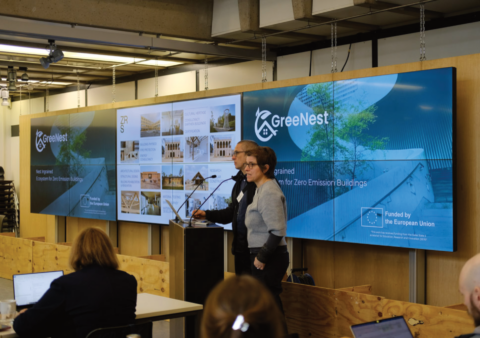
As a living lab, the project cooperates with several research initiatives coordinated by TU Berlin’s Natural Building Lab: the EU Horizon project “GreeNest”, the DBU project “Neubau Museums-Pavillon”, and the B(e)Ware real word laboratory.