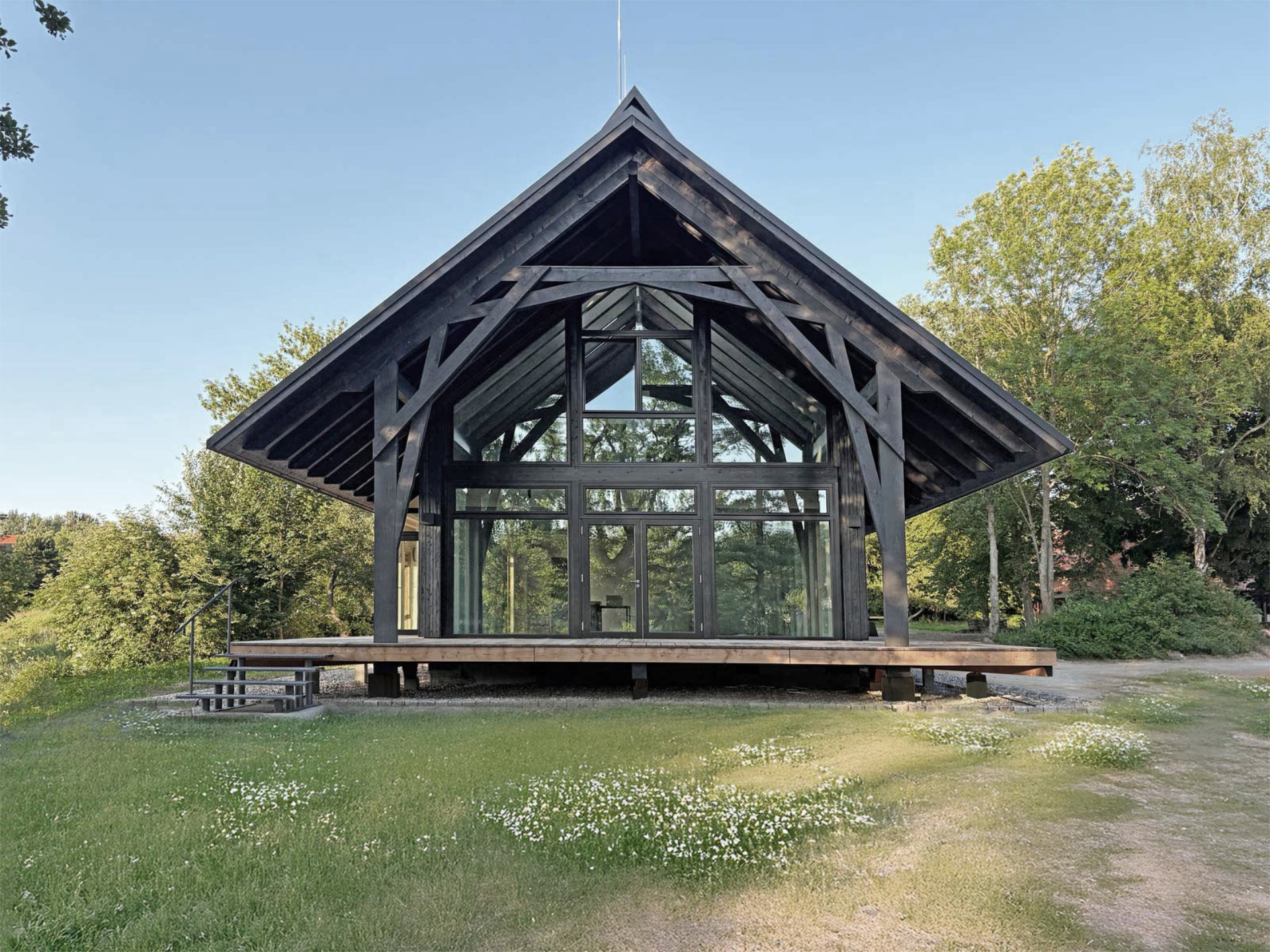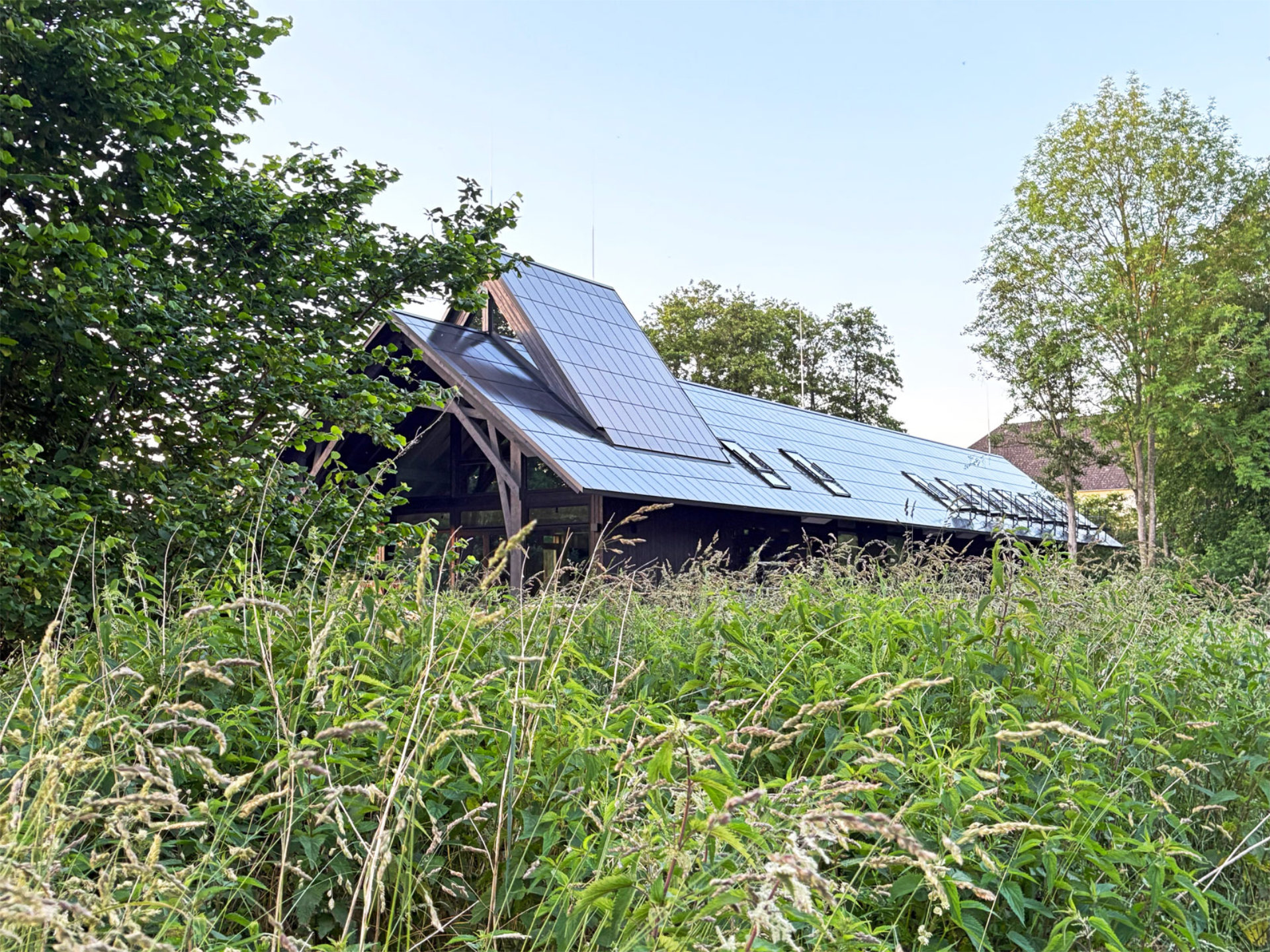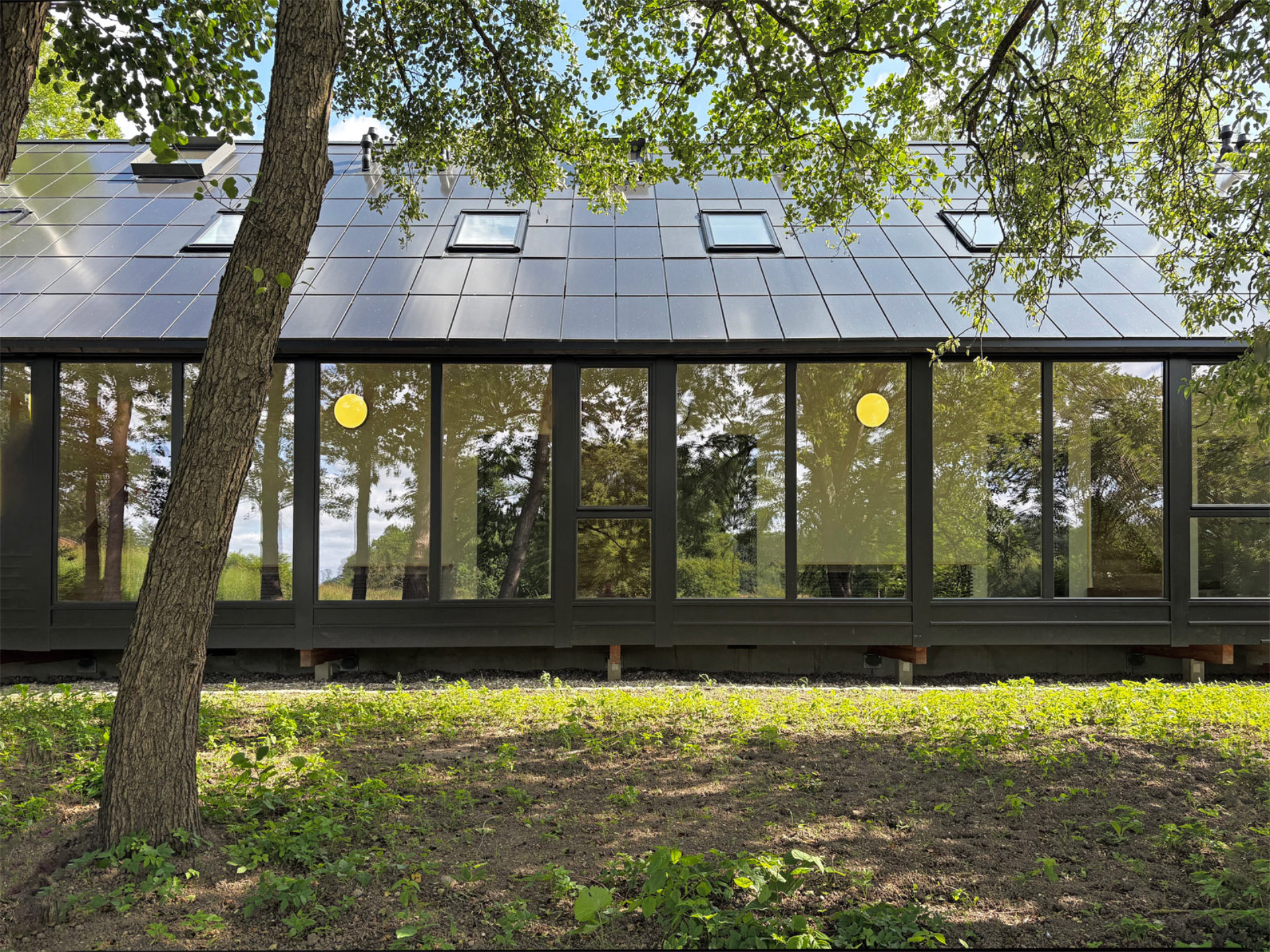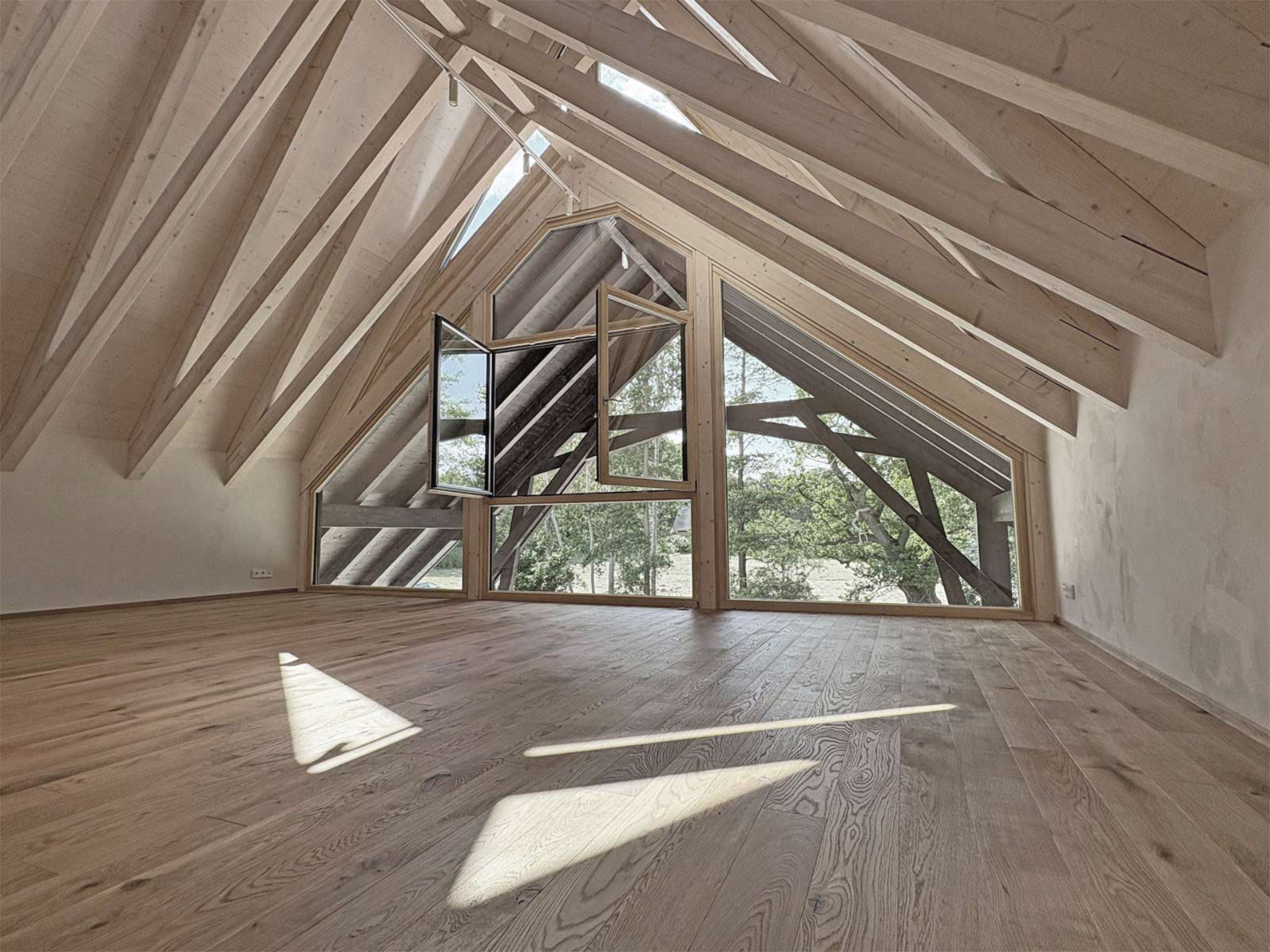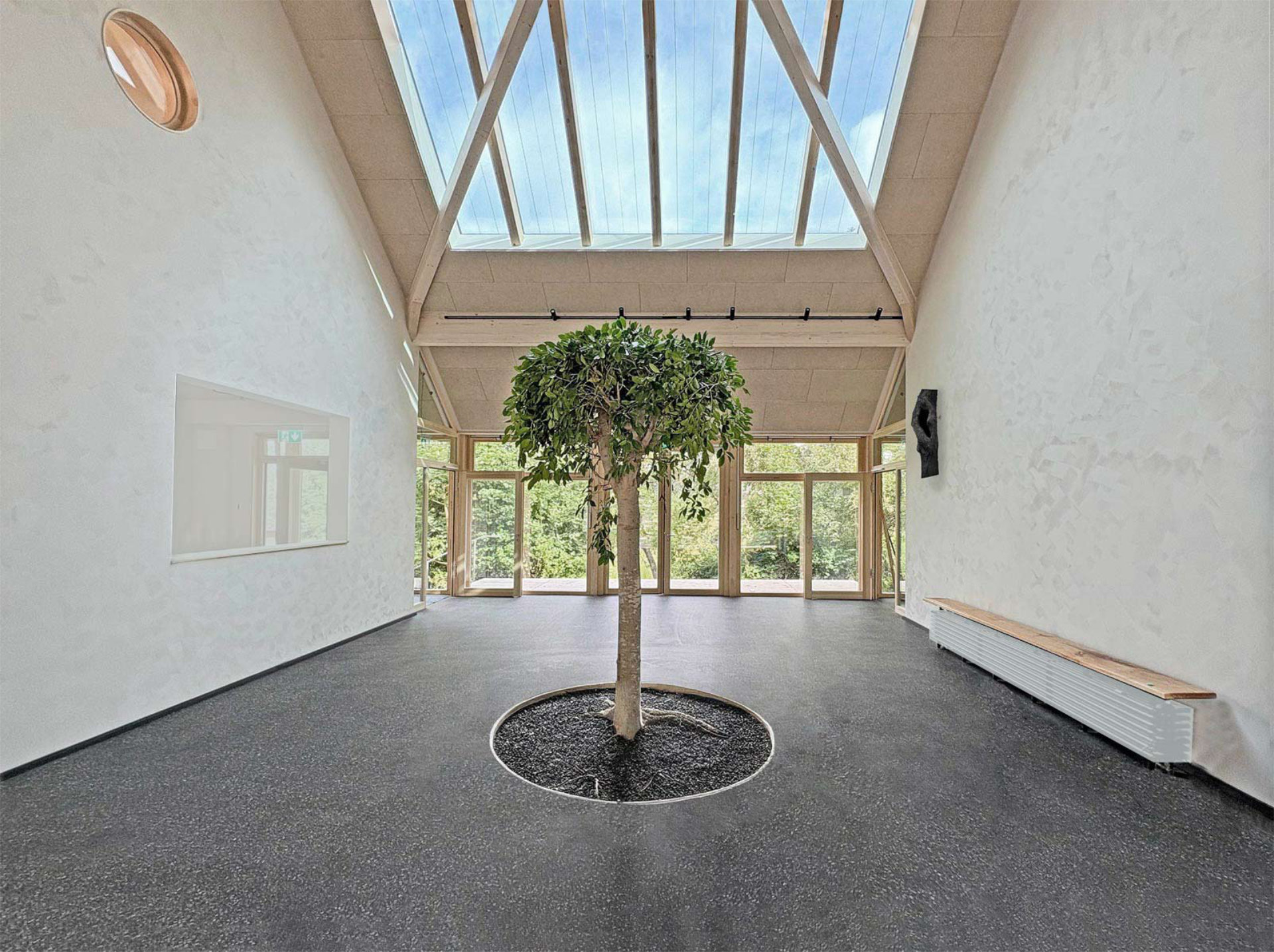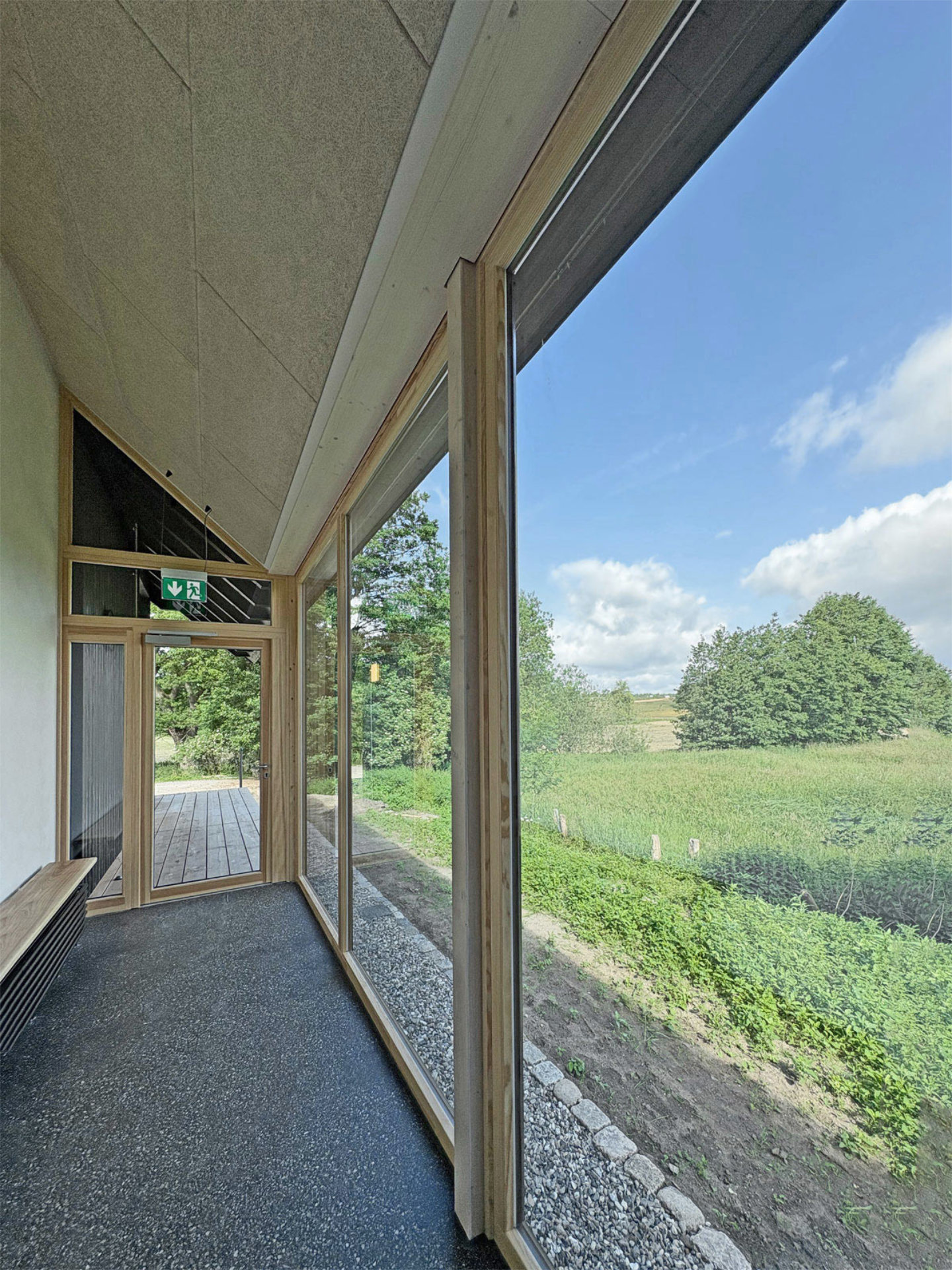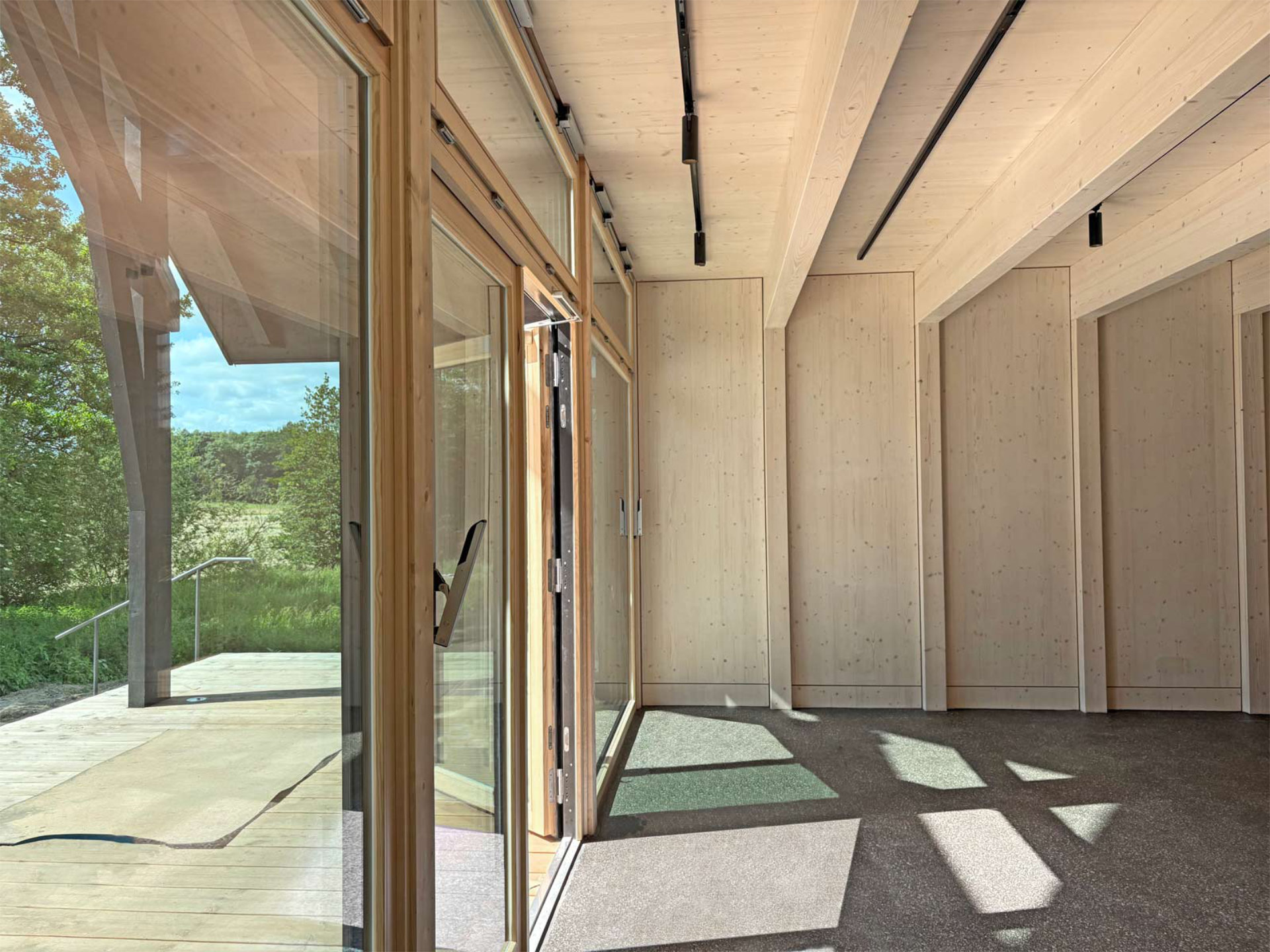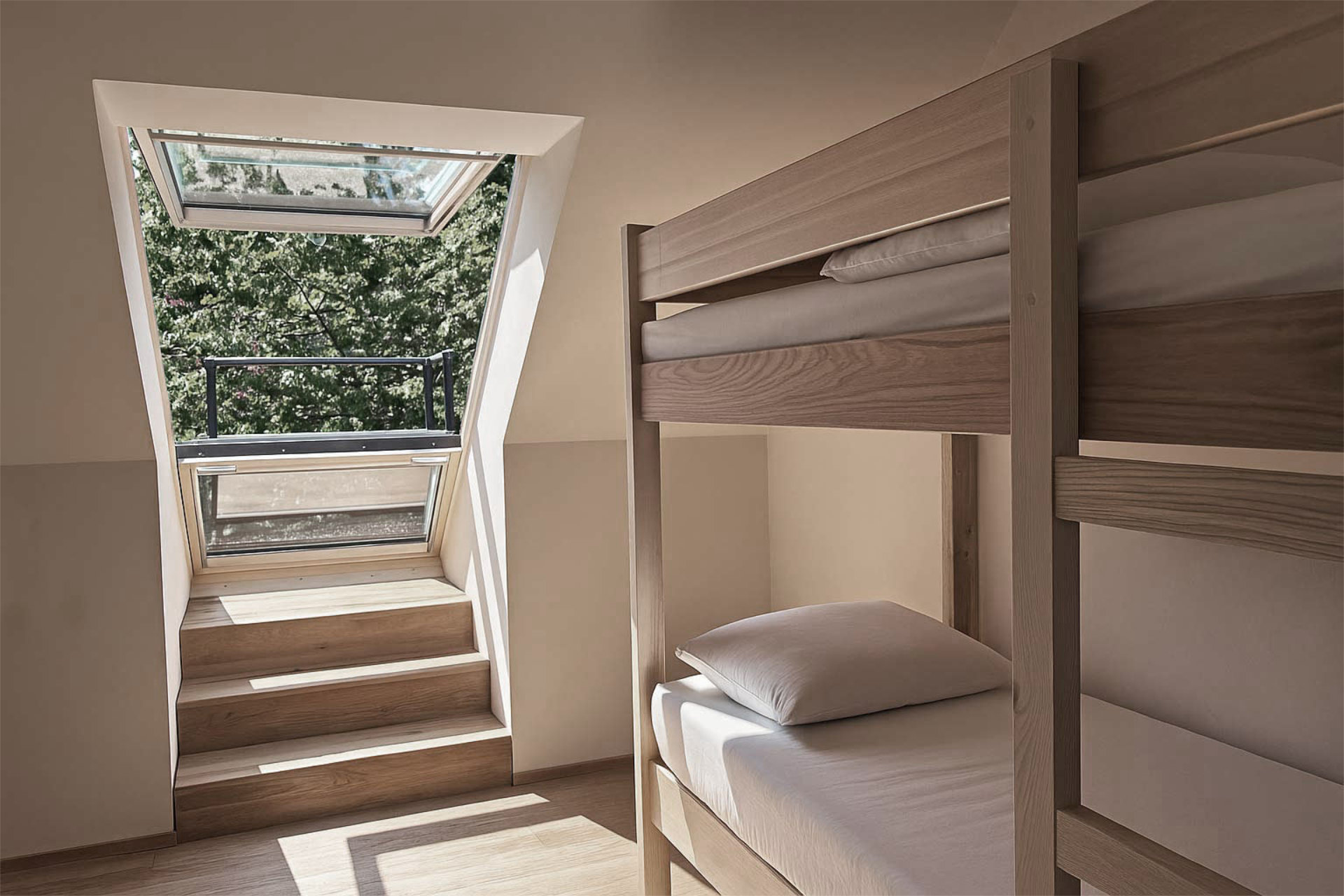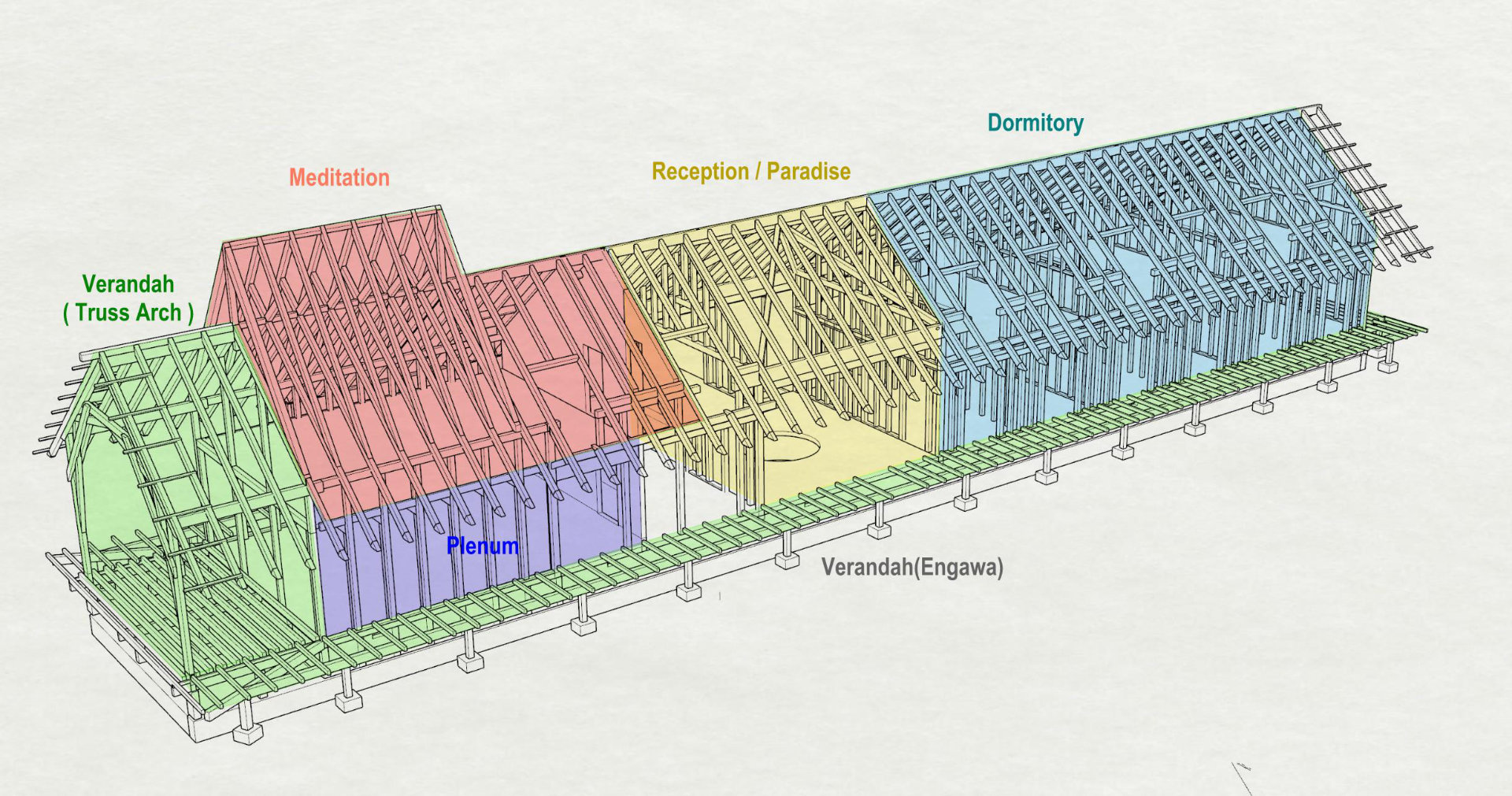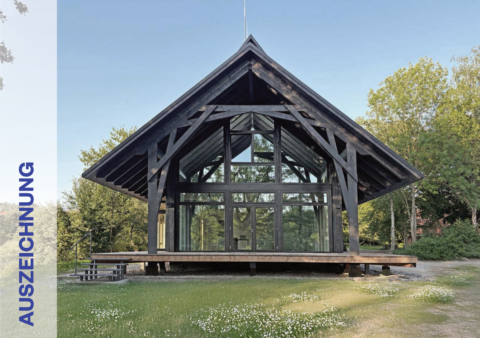


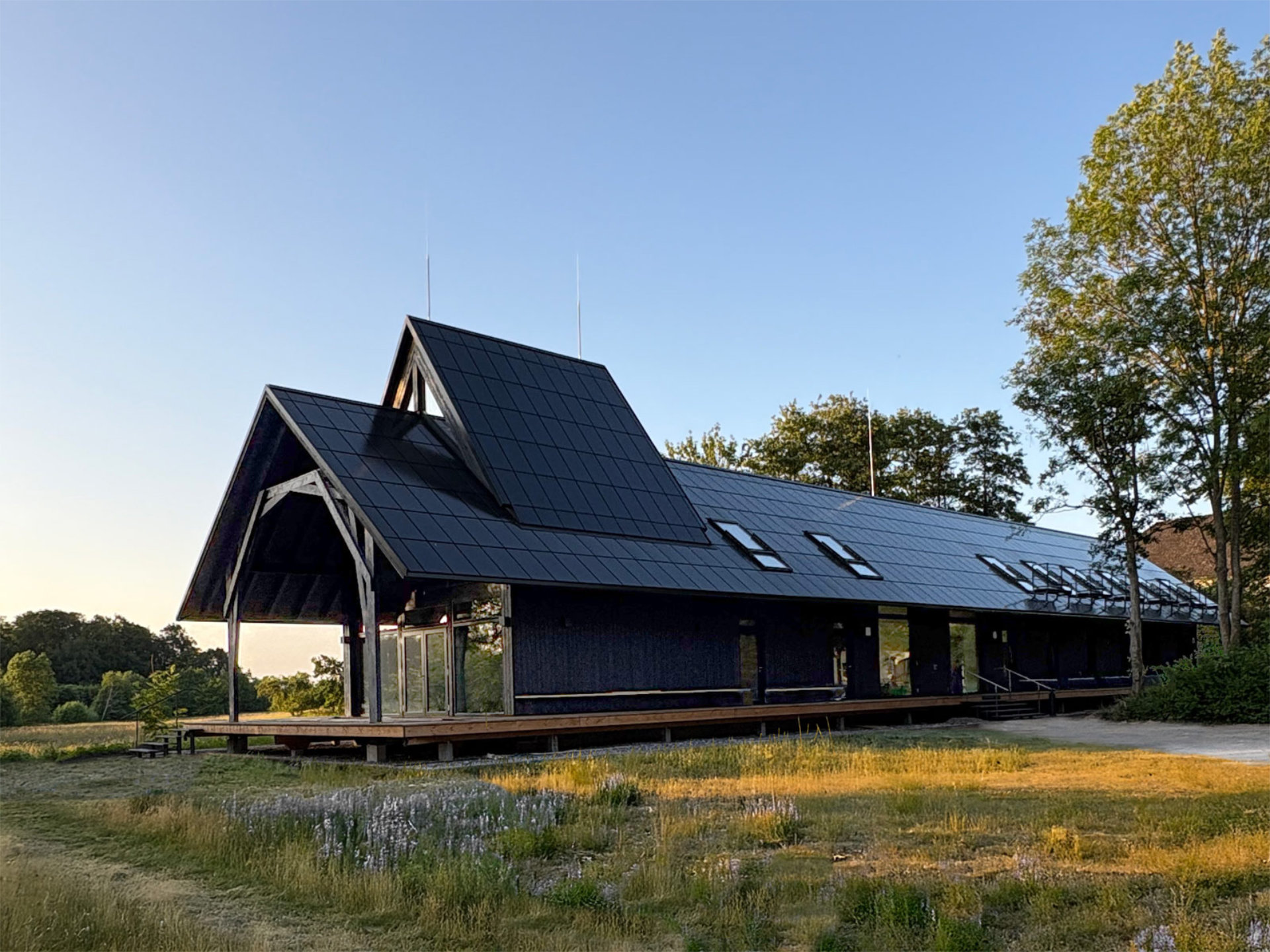
Inspired by traditional Japanese timber construction, the Kloster Nütschau is a longhouse based on the post-and-beam building method. Divided into gathering, meditation and sleeping areas, the 8-meter-wide longitudinal layout has the central reception space (Paradies) at its heart. The so-called Engawa, a covered wooden veranda, functions as the link between the interior and the exterior, thereby creating a strong sense of openness and connection to nature.
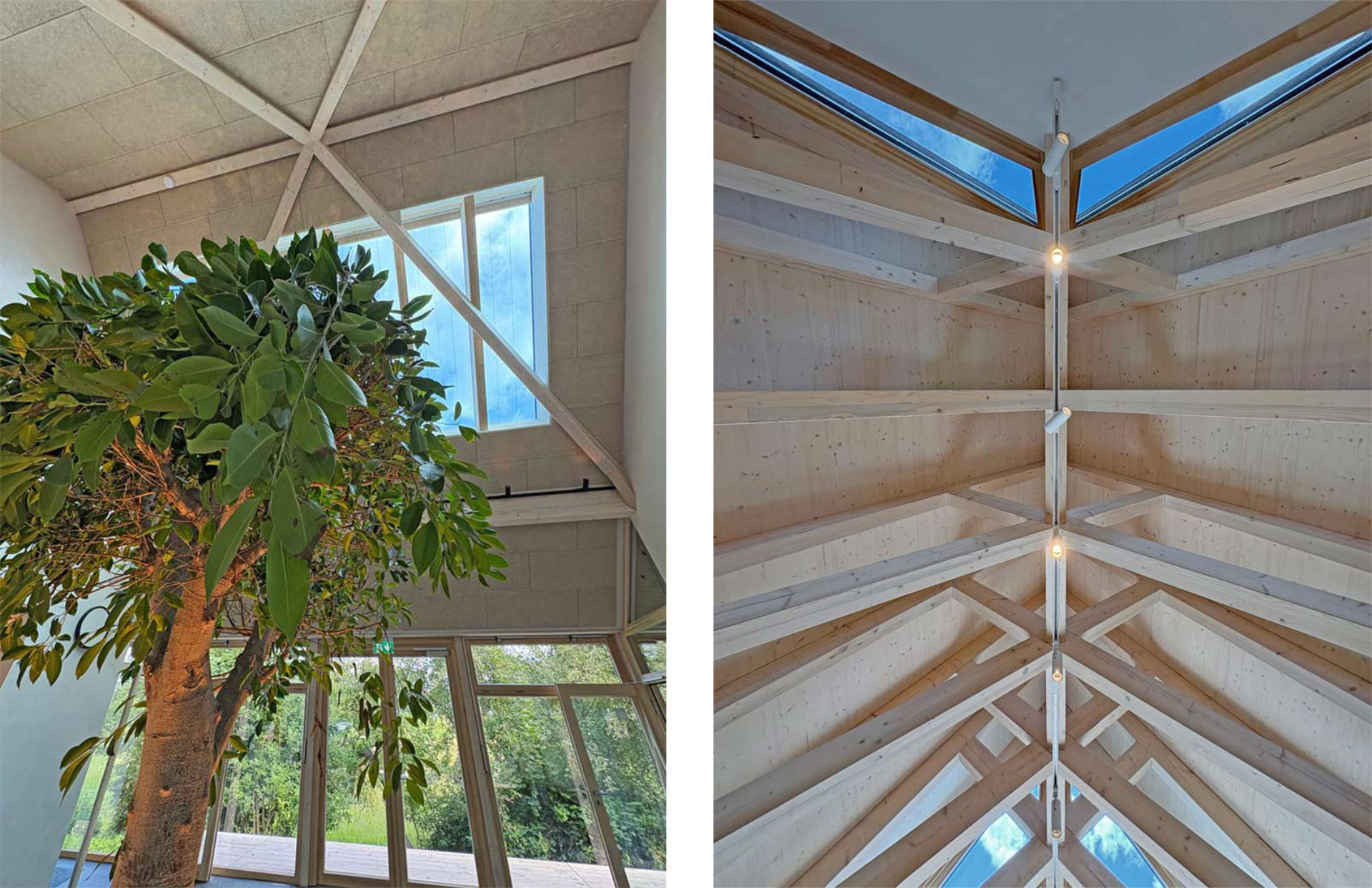
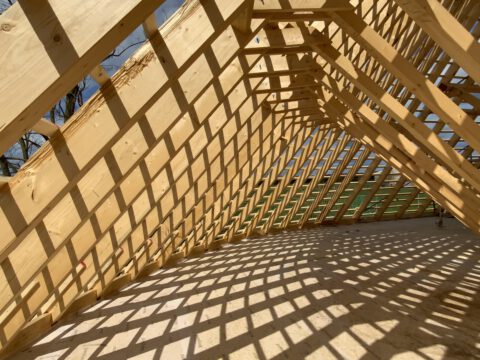
Three truss systems define the structure of the building. They are each arranged according to their function. The pyramidal truss above the reception area provides stability against wind loads while supporting the ridge beam in the centre. In the meditation room, the shape of the roof lantern is cleverly used to allow intersecting rafters, which also provide intermediate support for the longer-span upper rafters.
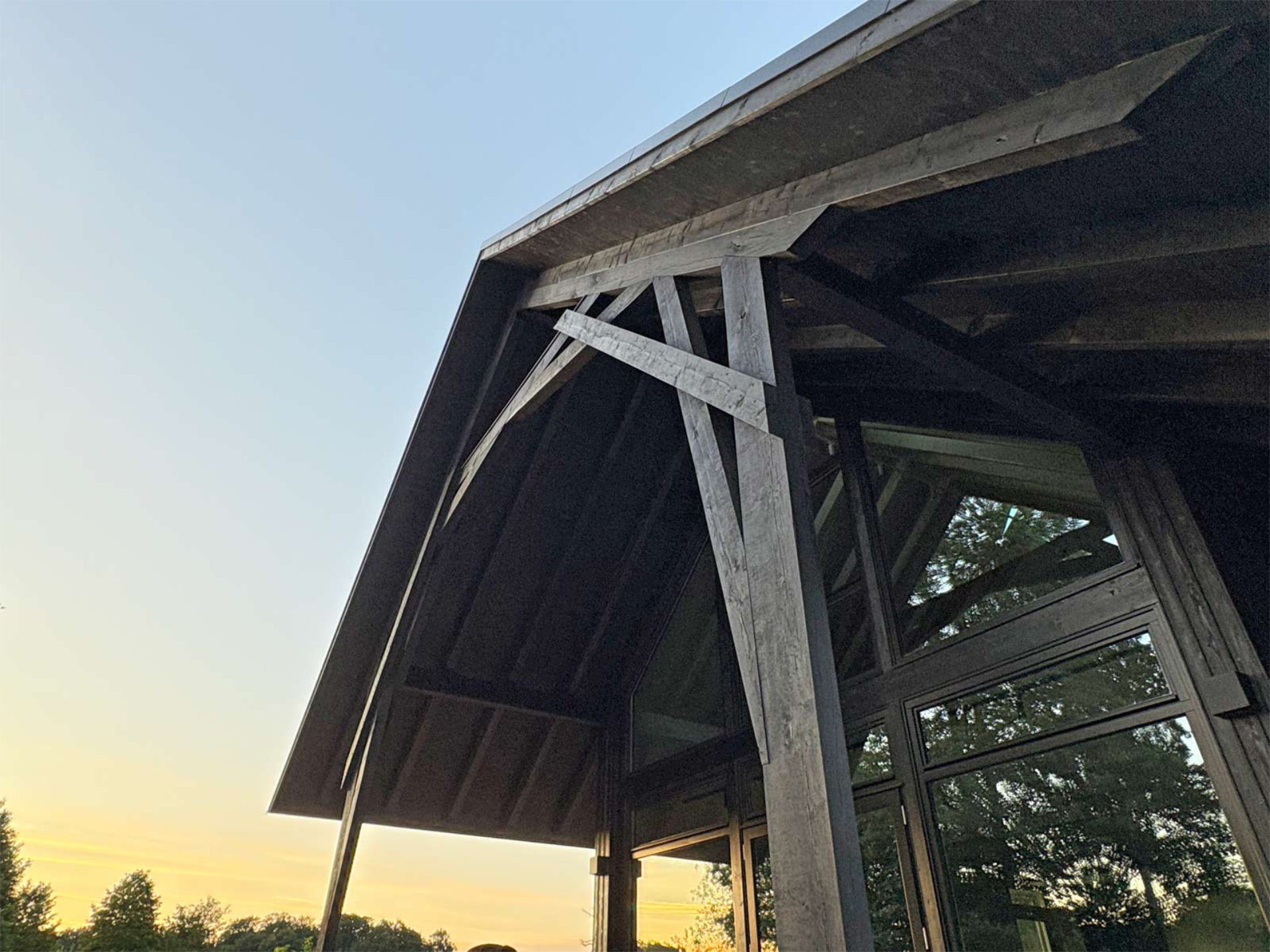
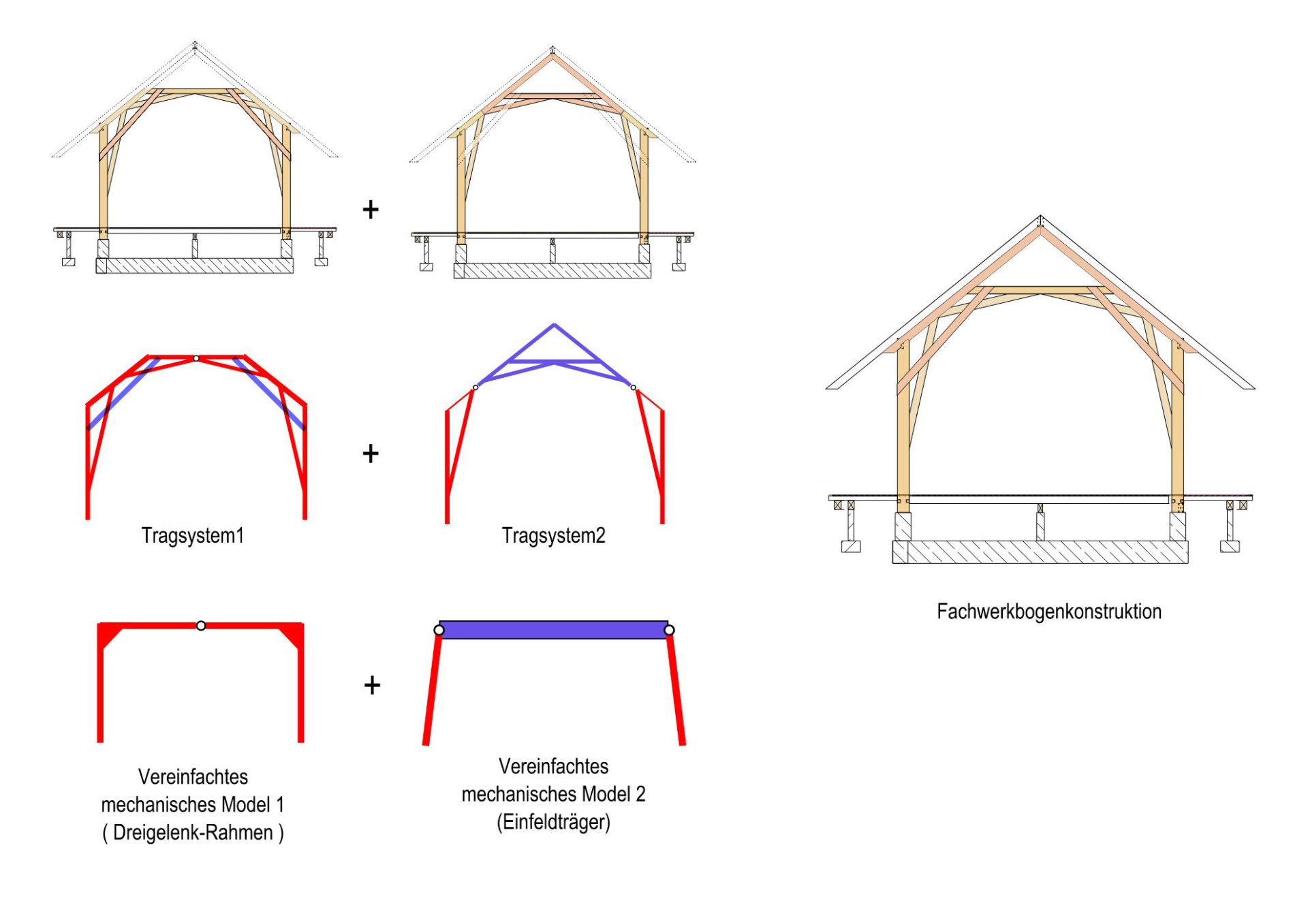
On the veranda, a truss arch effectively utilises the traditional practice of timber joinery. The arch is placed between double inclined members, forming a sandwich arch truss that resists vertical and horizontal loads. Careful planning ensures that the connections are hidden from view, giving visitors a pure and unobstructed impression of the wood.