

Engineering-optimised solutions | Structural Strengthening with Carbon Fibre Reinforced Polymer (CFRP)
Preserving existing structures instead of demolition and reconstruction
Engineering in Focus
With this article, we aim to provide insight behind the scenes at the structural engineering work of ZRS – work that plays a decisive role in the success of every project, from the assessment of existing structures, through structural design to detailed execution planning. We begin with a Berlin-based example: the partial refurbishment of the Französisches Gymnasium.
Background
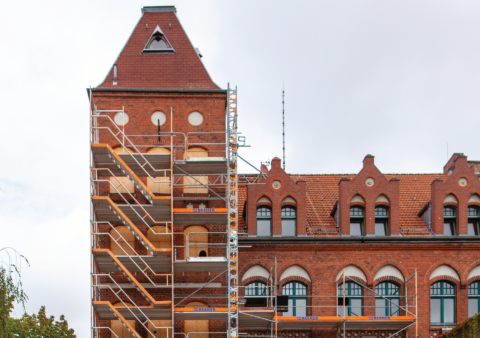
In the course of converting the roof areas into roof terraces, a subsequent strengthening of the existing reinforced concrete slabs was required. The structure, originally designed for snow loads, was insufficiently dimensioned for the future imposed loads. ZRS Ingenieure were commissioned with the assessment and structural analysis of the existing load-bearing structure with regard to the new usage, providing decision support for the architectural planning team in selecting suitable strengthening measures, carrying out structural design in accordance with current standards, and the preparation of execution drawings.
Sustainability through Preservation of Existing Structures
The decision against demolition and reconstruction was not only economically, but also ecologically sound: it preserves the embodied energy of the existing building and avoids material- and energy-intensive demolition works. By combining modern CFRP technology with conventional concrete strengthening methods, a durable, cost-efficient and sustainable solution was achieved with minimal intervention in the existing structure.
Strengthening of the Reinforced Concrete Slab
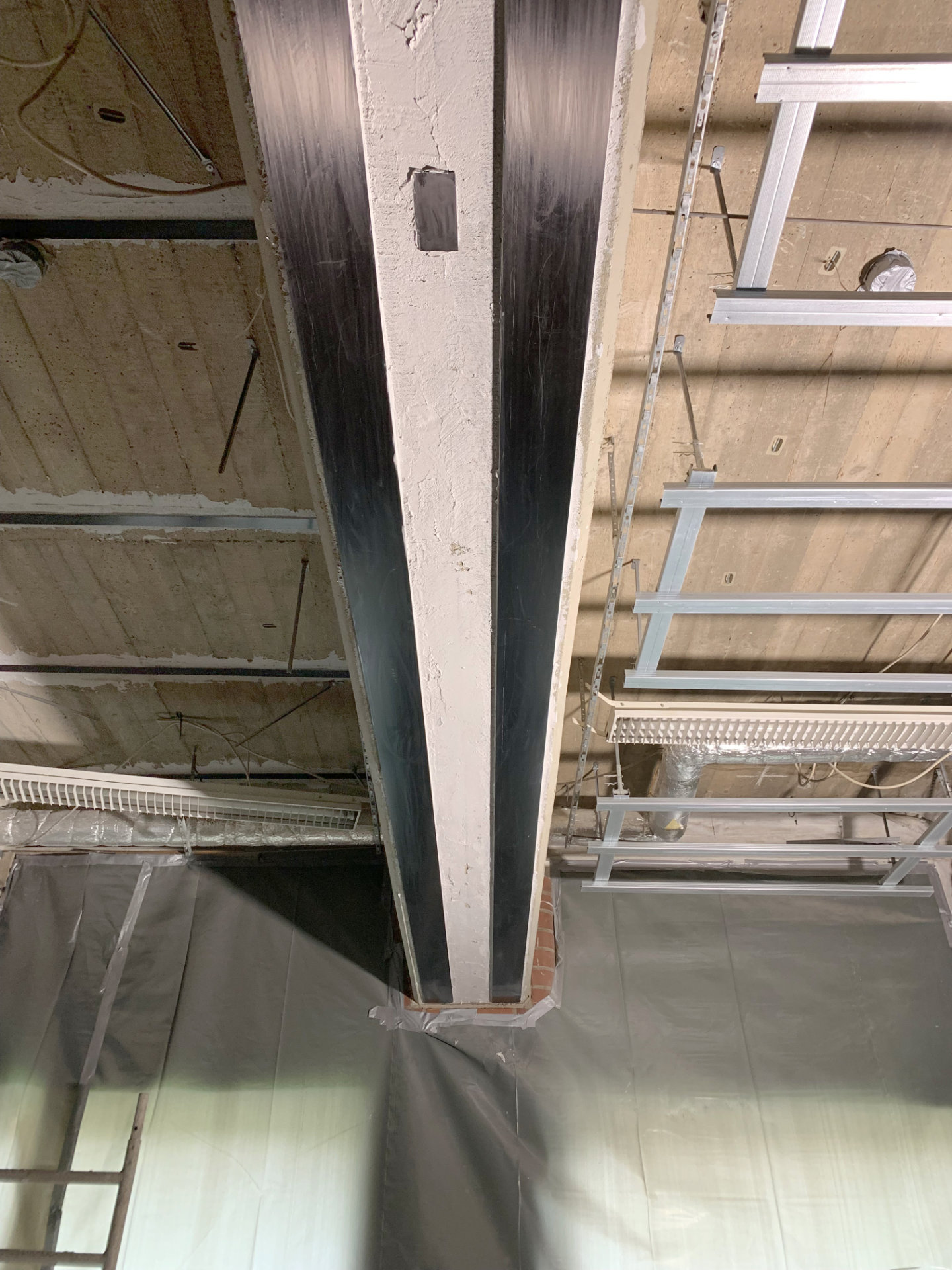
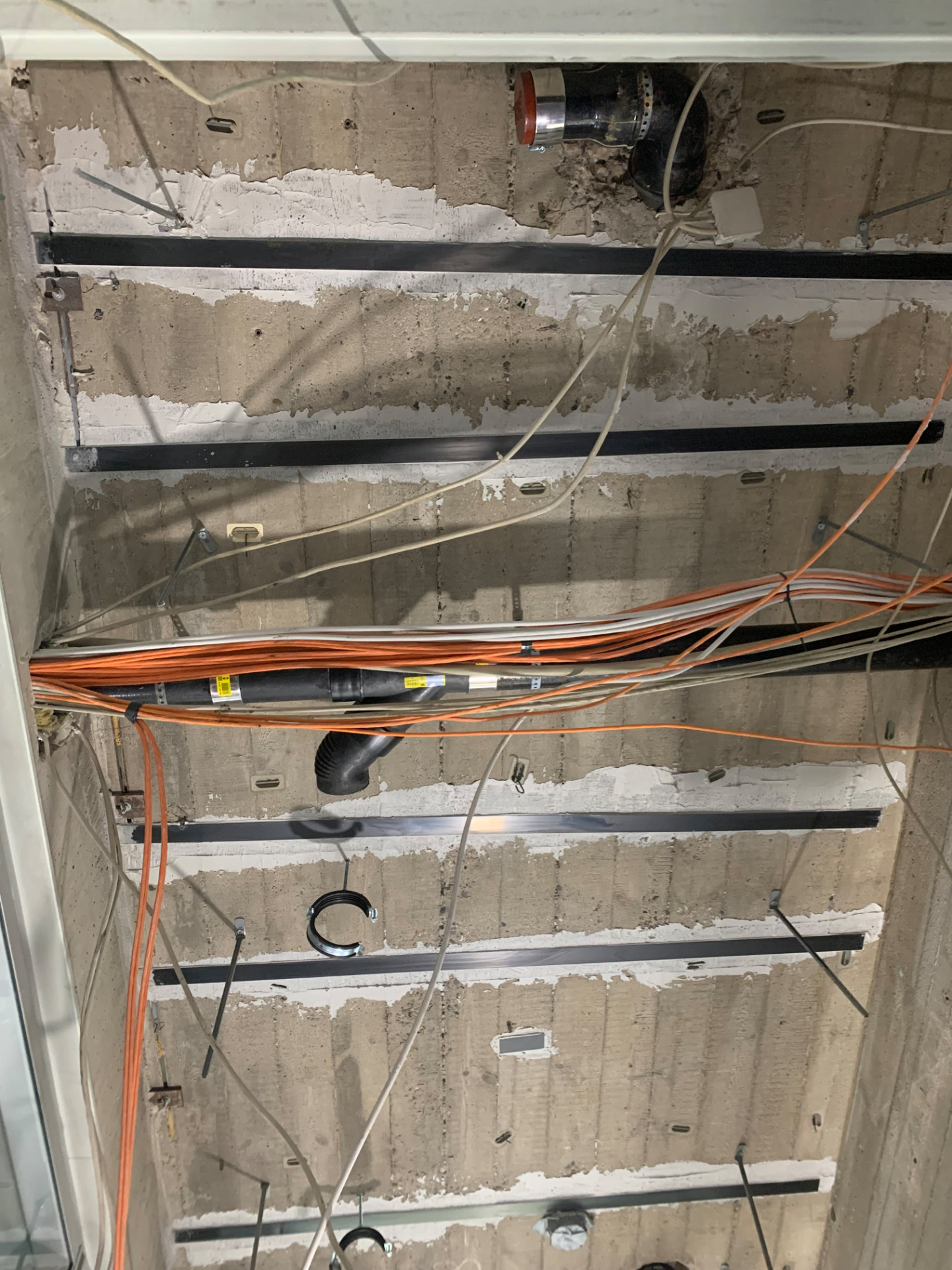
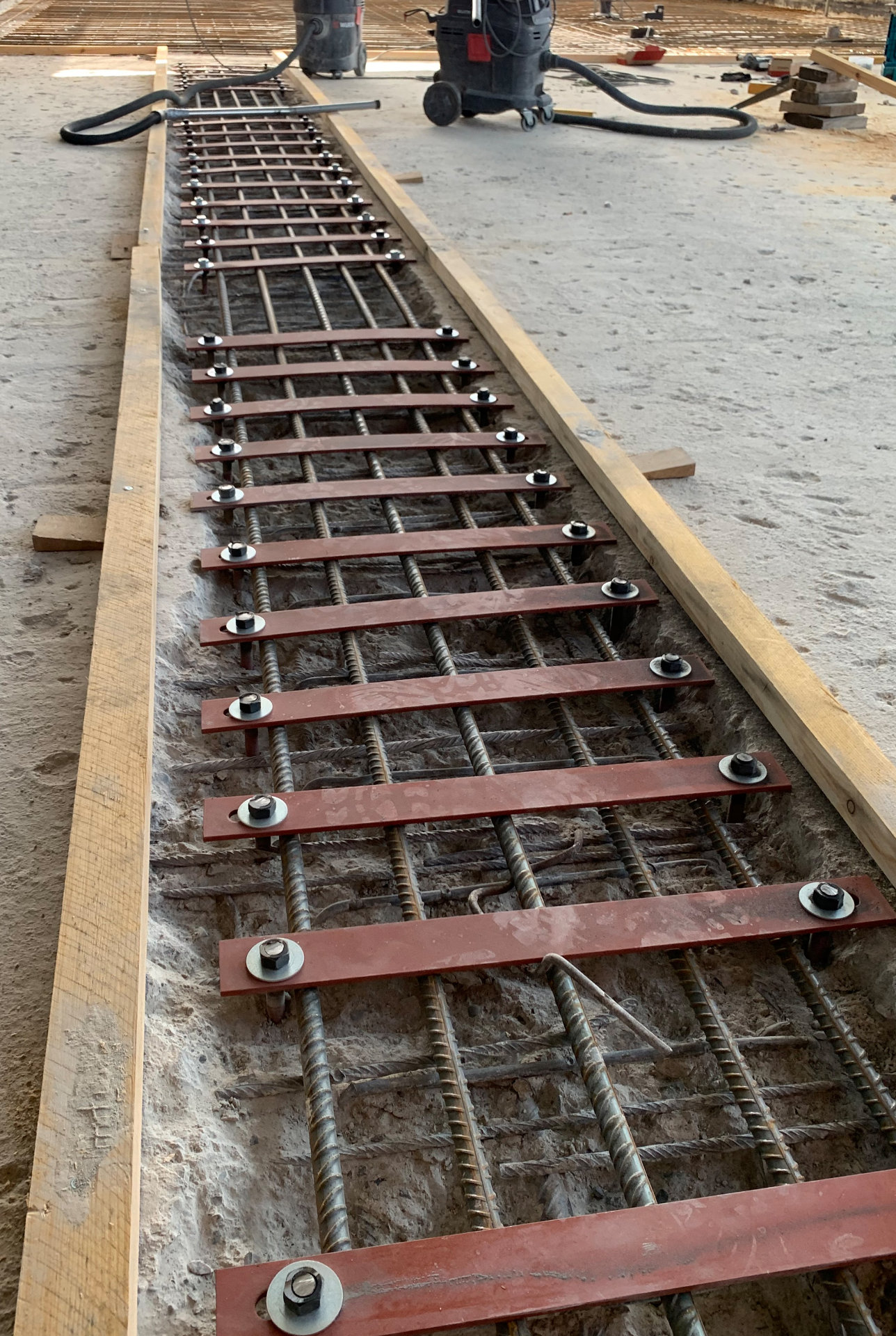
The slab, continuous over twelve spans, was strengthened differently in two areas: in the hogging moment regions, a concrete overlay with additional reinforcement and shear dowels was applied. In the span zones, CFRP laminates (carbon fibre reinforced polymer laminates) were bonded to the soffit of the slab. Since CFRP laminates lose their load-bearing capacity in the event of fire, the structural fire protection verifications were conservatively carried out without considering the CFRP contribution.
Strengthening of the Reinforced Concrete T-Beams
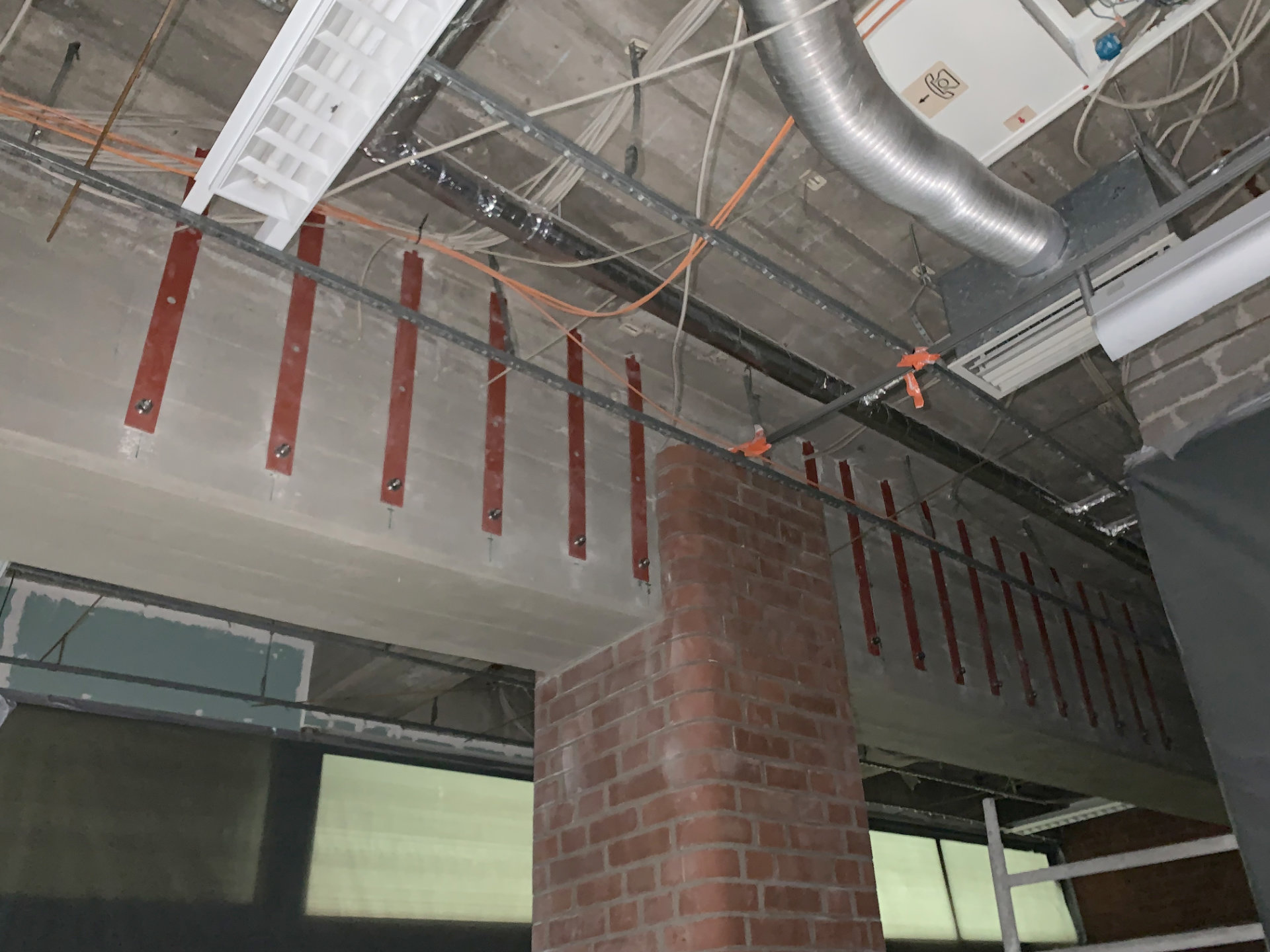
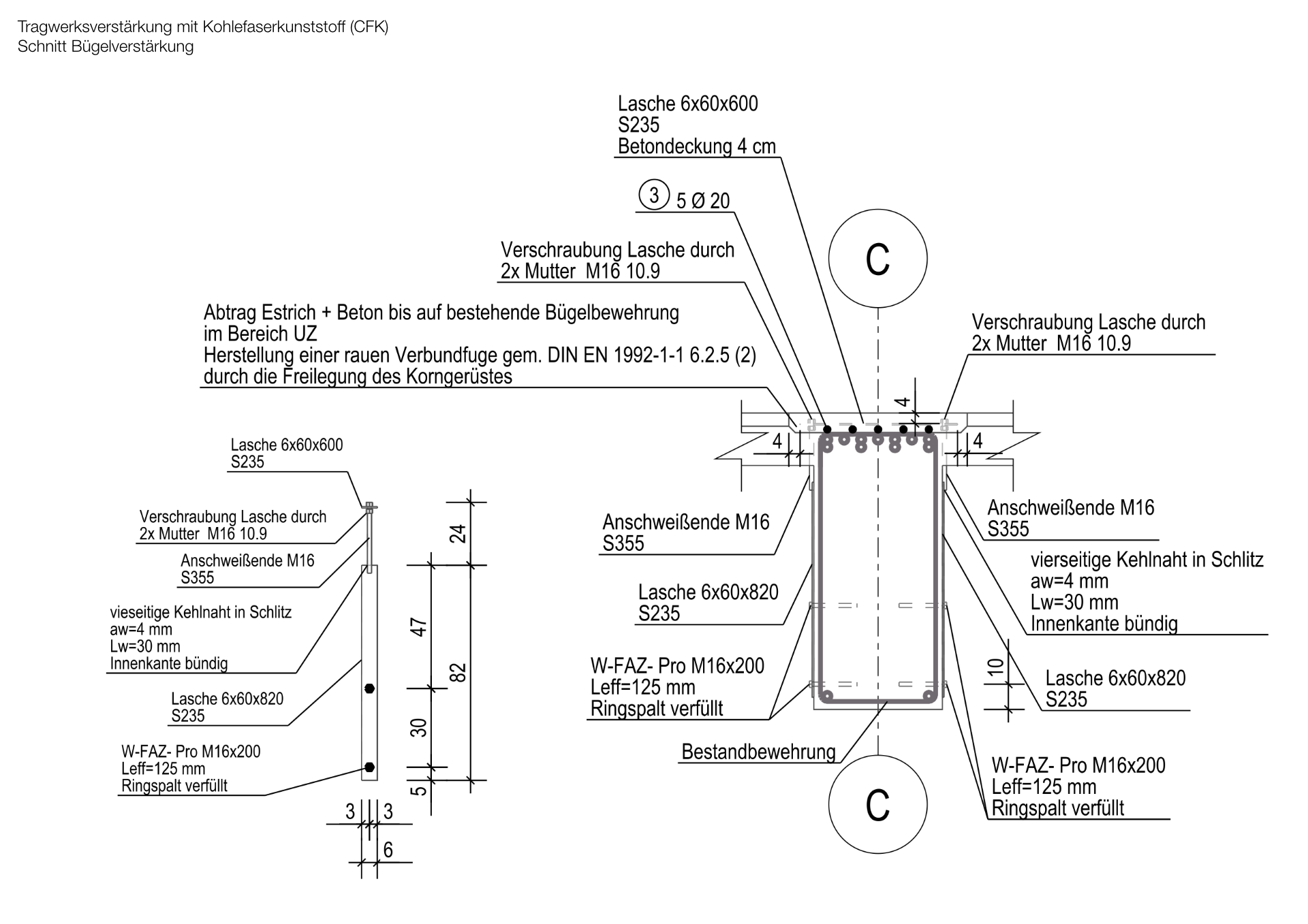
The T-beams contributing to the load transfer were also strengthened. In the tension zone, bonded CFRP laminates were applied while in the hogging moment regions the load-bearing capacity was increased by means of reinforcement integrated into the concrete overlay. For shear strengthening, specially fabricated stirrups with welded threaded rods were installed, enclosing the upper strengthening reinforcement and enhancing shear resistance. Due to stringent fire protection requirements and limited concrete cover in the existing structure, the beams were additionally clad with fire protection boards to ensure adequate cover of the existing reinforcement in the event of fire.
Photos: ZRS Architekten Ingenieure