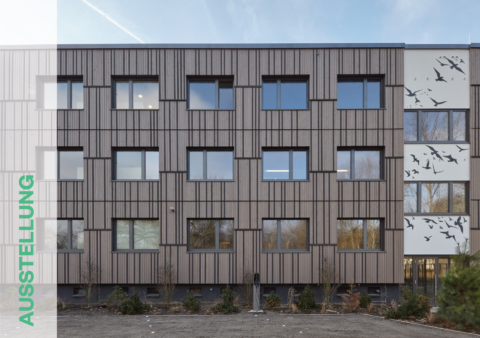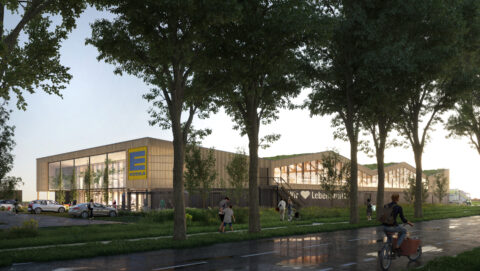


Construction site tour | St. Mauritius Secondary School, Halle (Saale)
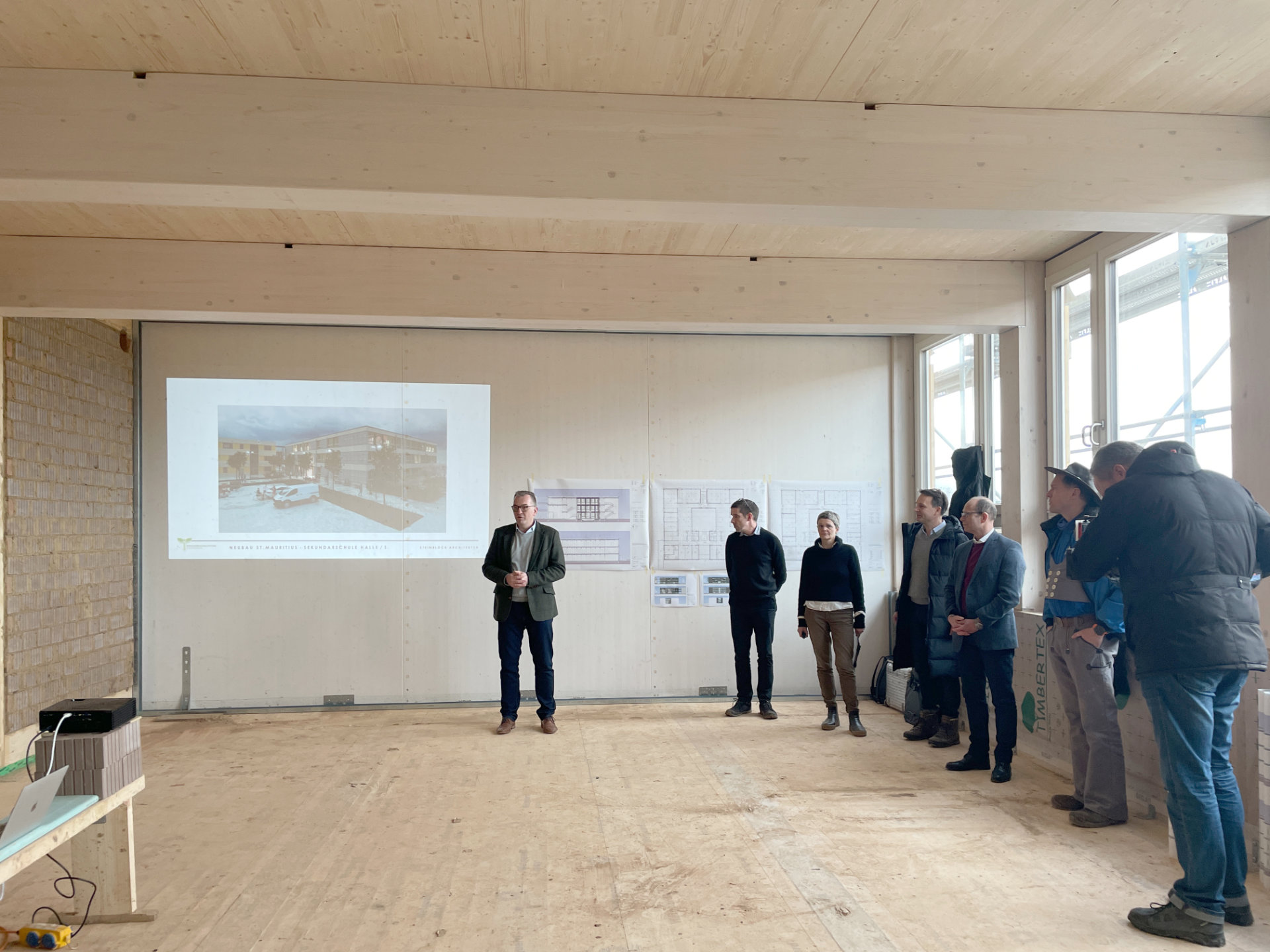
On Thursday, February 12, 2026, a site visit took place at the new St. Mauritius Secondary School building in Halle (Saale). The Edith Stein School Foundation of the Diocese of Magdeburg is implementing this sustainable and healthy construction project. The ambitious goal: “The building will be constructed to be CO₂-neutral and will also be operated in this manner,” said Steffen Lipowski, Chairman of the Edith Stein School Foundation.
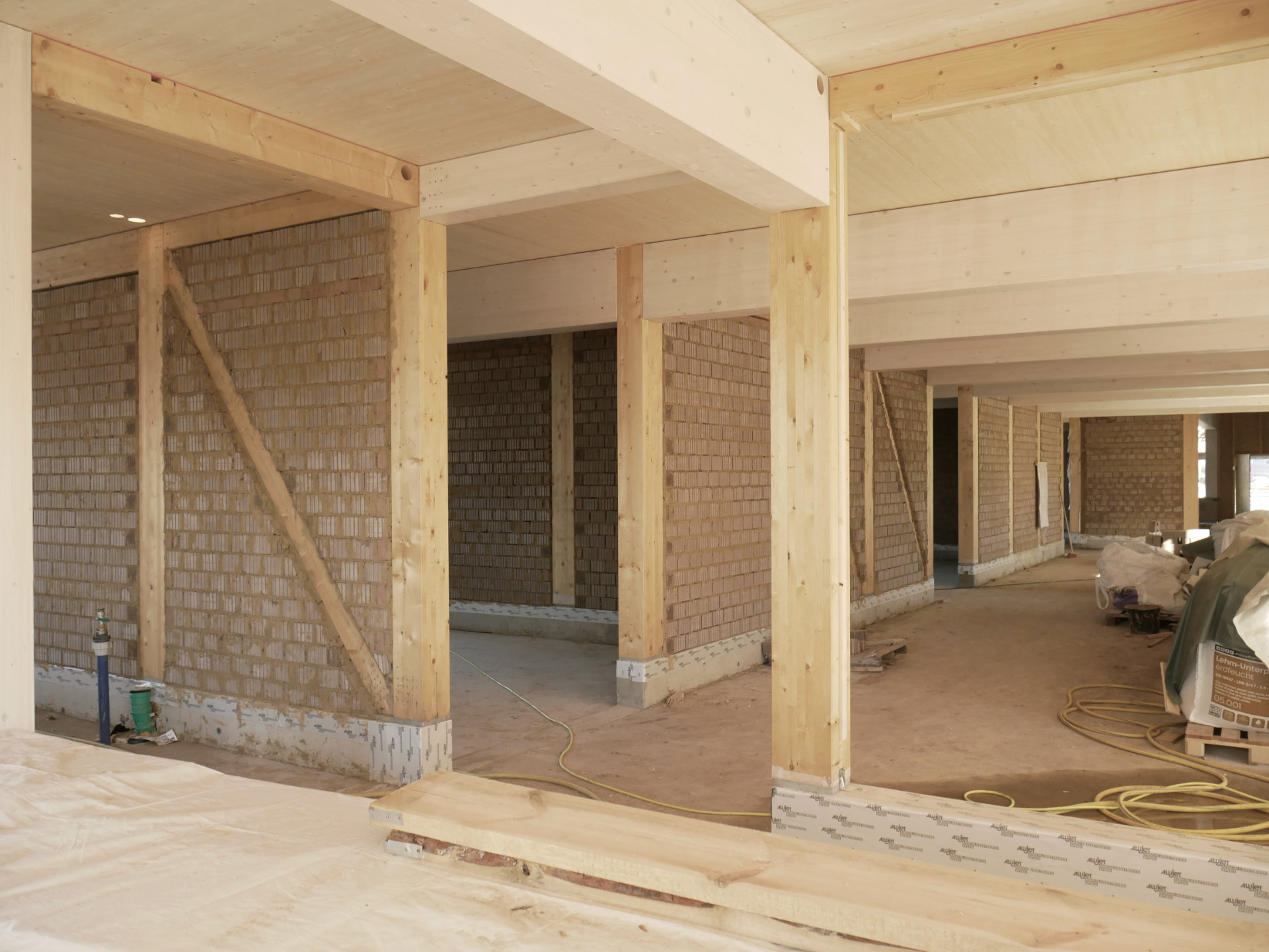
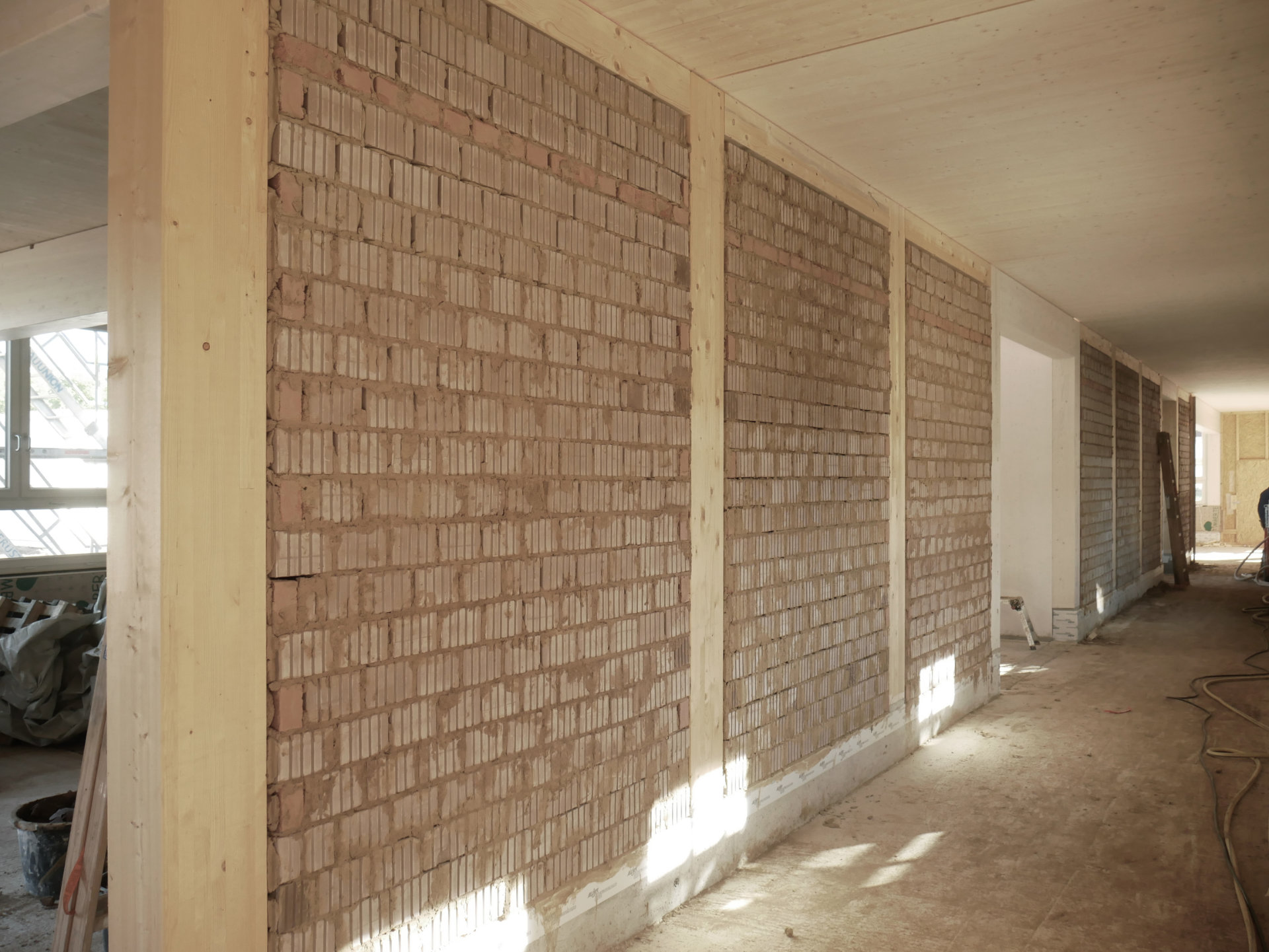
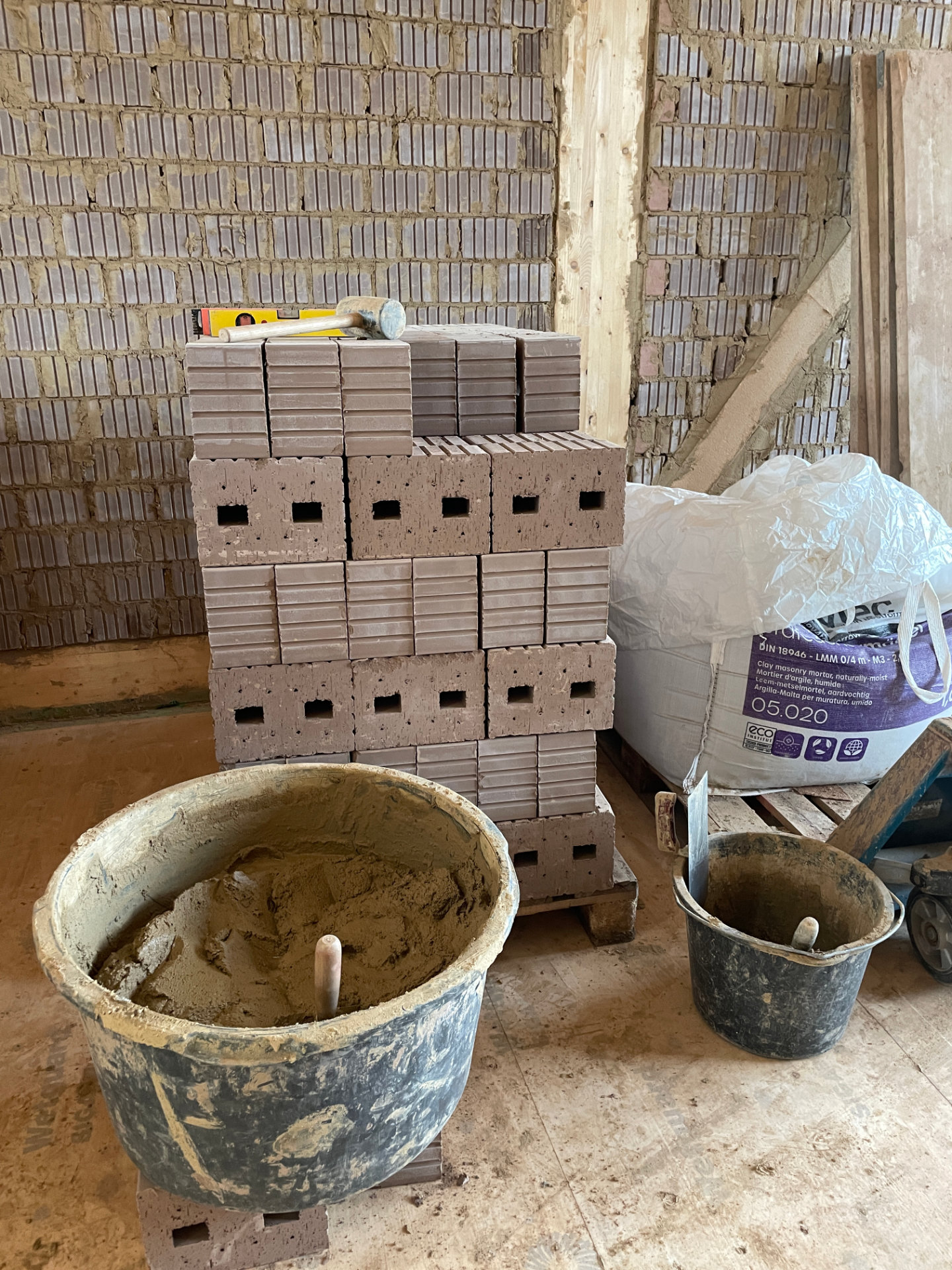
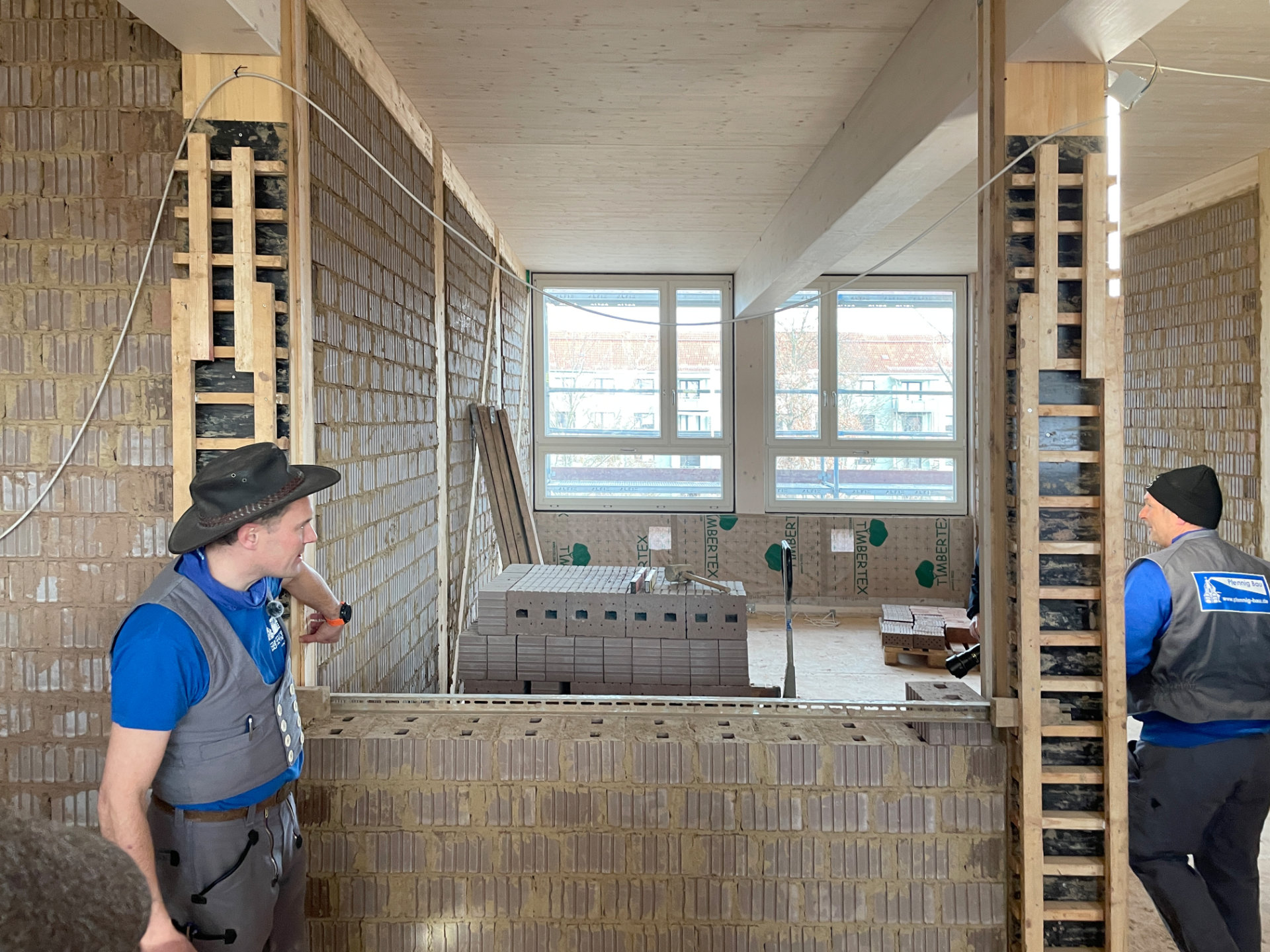
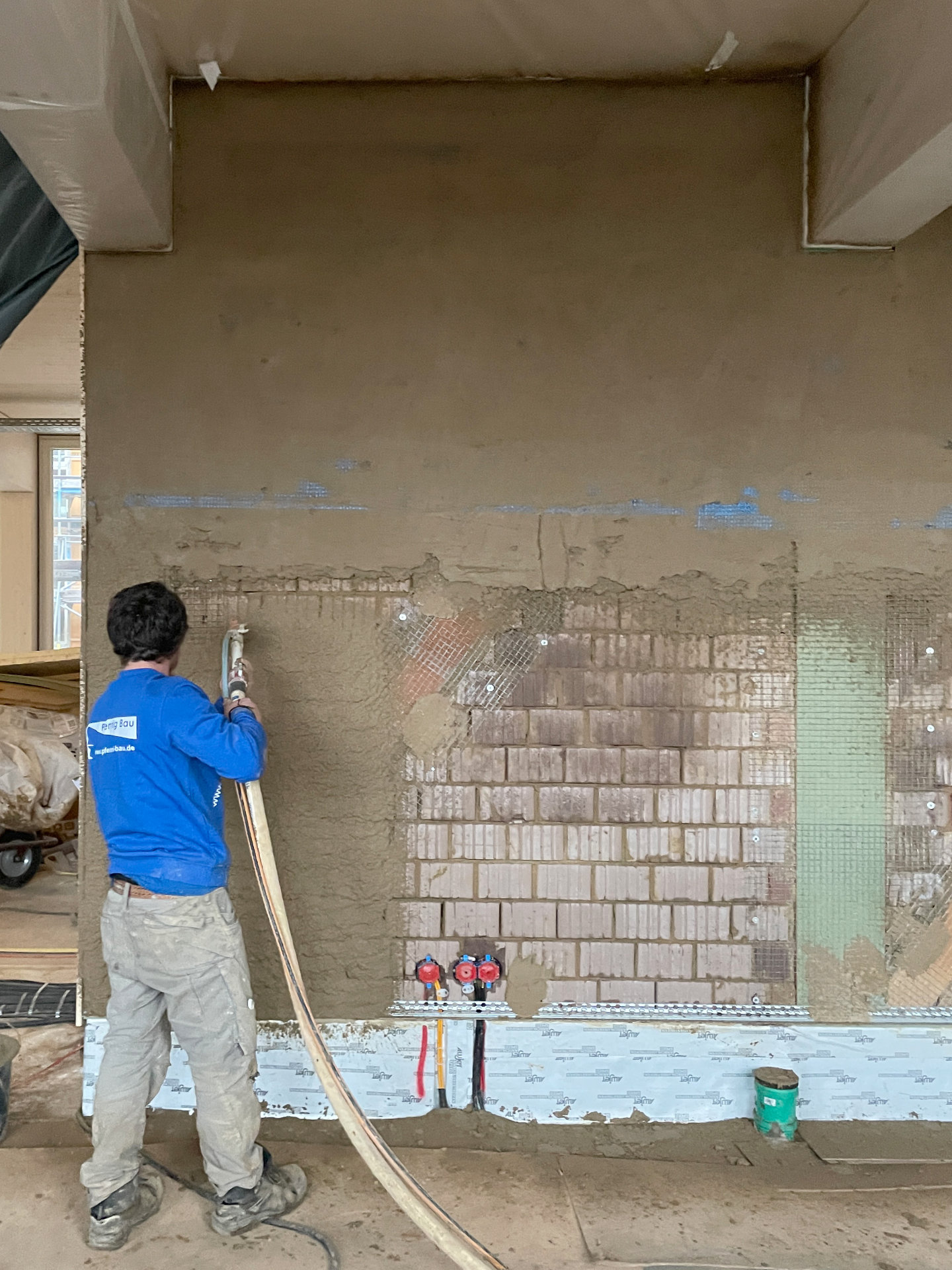
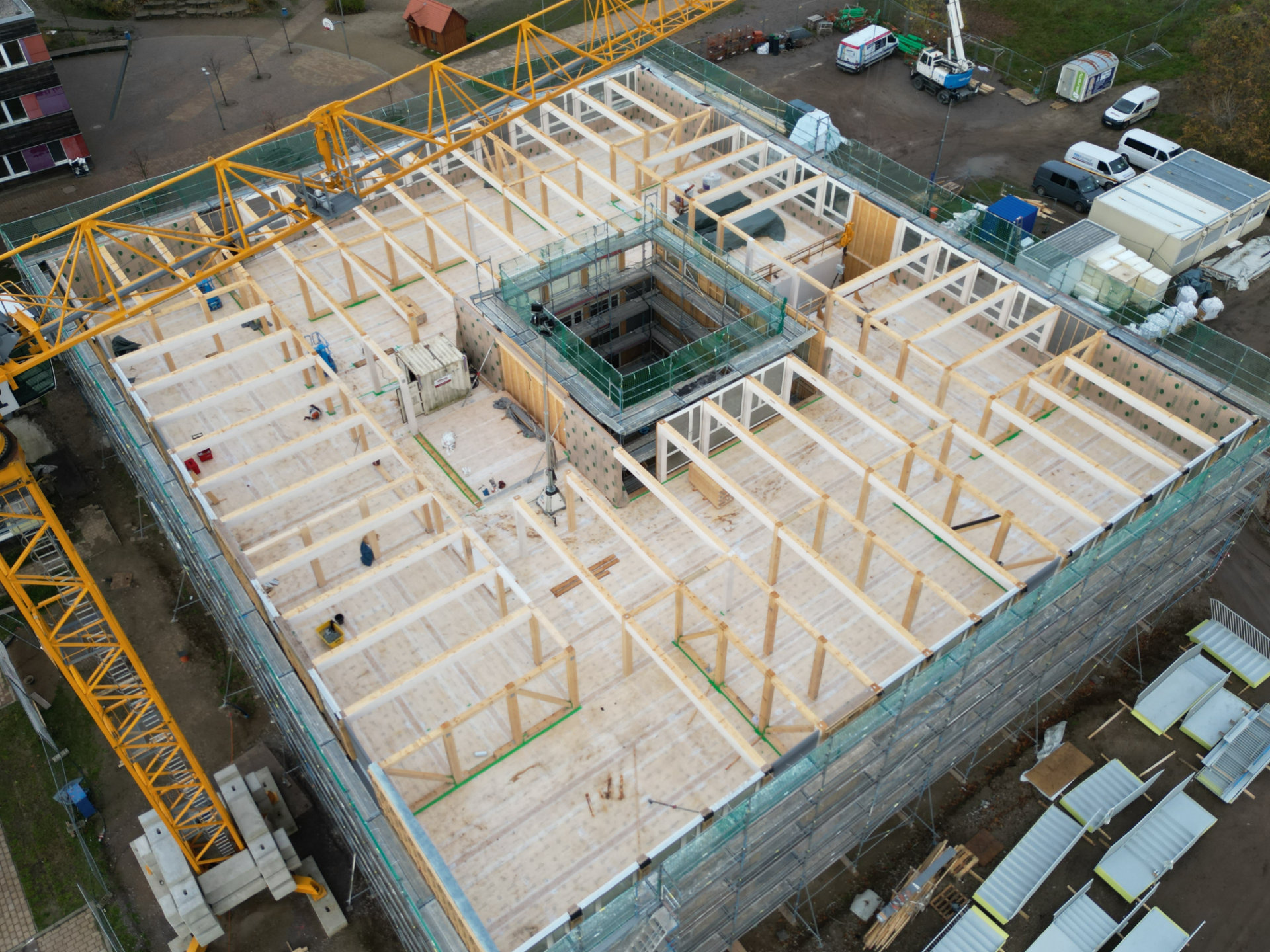
Therefore, the planning focus was on reducing CO₂ emissions during construction and operation. “We are achieving this by using natural building materials in serial elements with a high degree of prefabrication. The loadbearing structure of the three-story building is made entirely out of wood. The wooden frames of the exterior walls are insulated with cellulose and clad with a wooden facade. The interior walls, prefabricated as half-timbered structures, are filled with 24 cm thick earth bricks and plastered with earth. The minimized, regenerative innovative technology concept uses only renewable energies, primarily geothermal energy and a photovoltaic system,” explained Alexander Tietze, planning architect at Steinbock-Architekten in Magdeburg, describing the concept.
The earth bricks give the timber construction the thermal inertia of a solid building. “The extensive use of earth, as filling for the wooden modules and in the plaster, ensures a pleasant indoor climate and, thanks to its high storage mass, contributes to lower energy consumption for heating and cooling as well as excellent sound insulation,” explained Prof. Christof Ziegert, an expert in earth construction from Leipzig, ZRS Ingenieure. ZRS Architects Engineers were responsible for the structural, sound insulation, and fire protection aspects of the school building.
Traditional earth buildings are particularly widespread in central Germany and are valued for their pleasant indoor climate. The new school building therefore incorporates traditional building materials and construction methods and adapts them to modern building requirements. Prof. Ziegert has played a significant role in making this possible and permissible again, despite Germany’s strict building regulations. He is also co-founder of the WIR! alliance GOLEHM, based in Halle (Saale) at the State Office for Heritage Management and Archaeology Saxony-Anhalt. Funded by the Federal Ministry of Research, Technology, and Space, numerous research projects are being carried out here to develop further foundations for DIN standards for earth building materials that have fallen into oblivion in the meantime. “Only with an appropriate building law framework can planners and craftsmen regain acceptance and, in a positive sense, normality in the use of these building materials,” explains Ziegert.
The school building itself was mainly planned and constructed regionally. “This strengthens and secures expertise in sustainable construction and thus the future viability of the regional construction industry,” explains David Pfennig, managing director of Pfennig Bau in Oschatz and also a partner at GOLEHM.
Link to press release
MDR report: Schule in Halle entsteht in Lehmbauweise
Photos: © GOLEHM, LDA Sachsen-Anhalt (1, 4–6) | ZRS Ingenieure, Berlin (2,3) | © Edith-Stein-Schulstiftung, Magdeburg. Photo: Sven Gora (7)