

In the procurement procedure for the Anglerstraße/Heimeranstraße neighborhood development in Munich, the bid submitted by the consortium of ZRS Architekten, dRMM, IFUB*, and STADT RAUM PLANUNG was awarded the contract for the planning implementation.
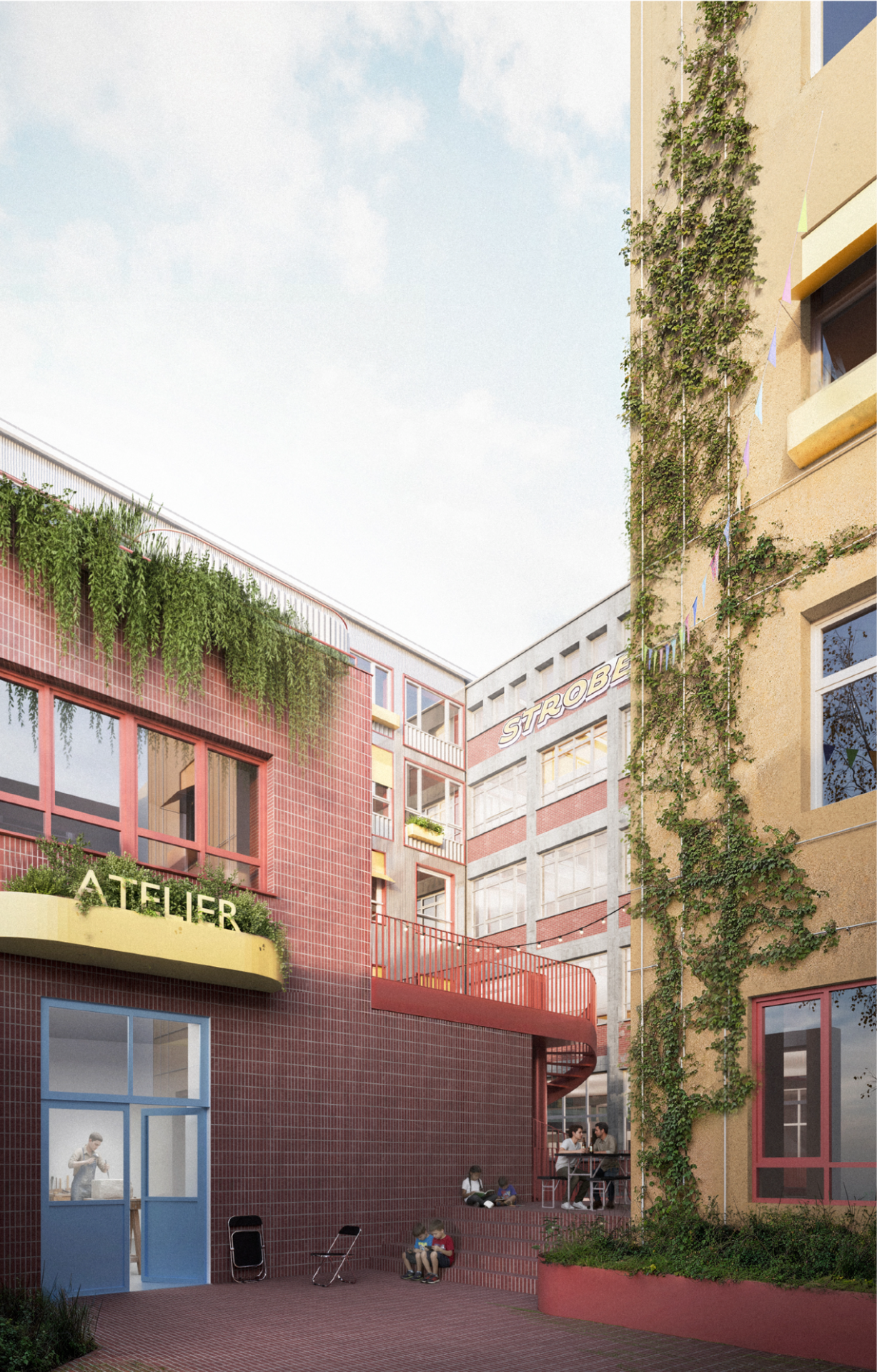
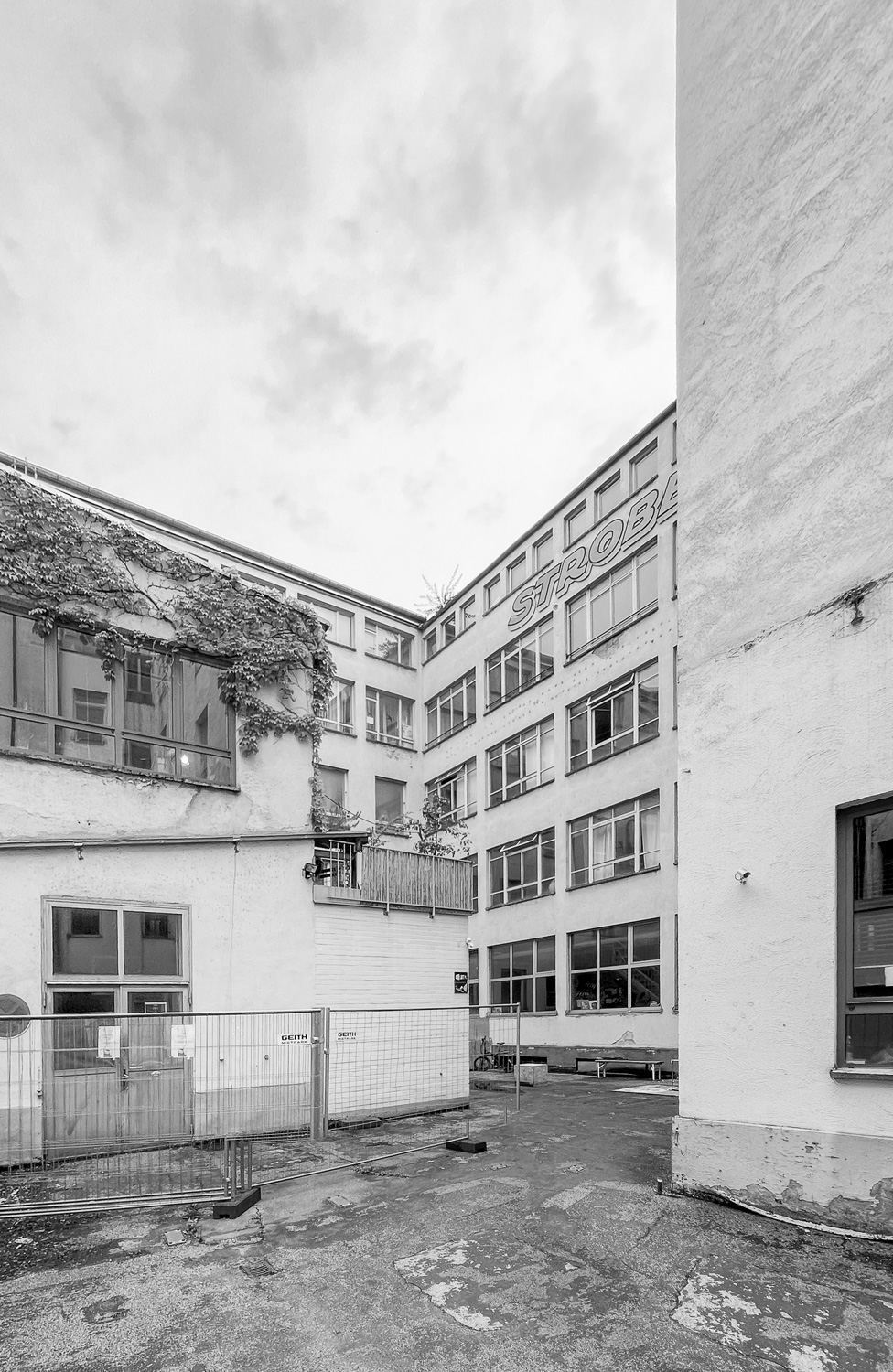
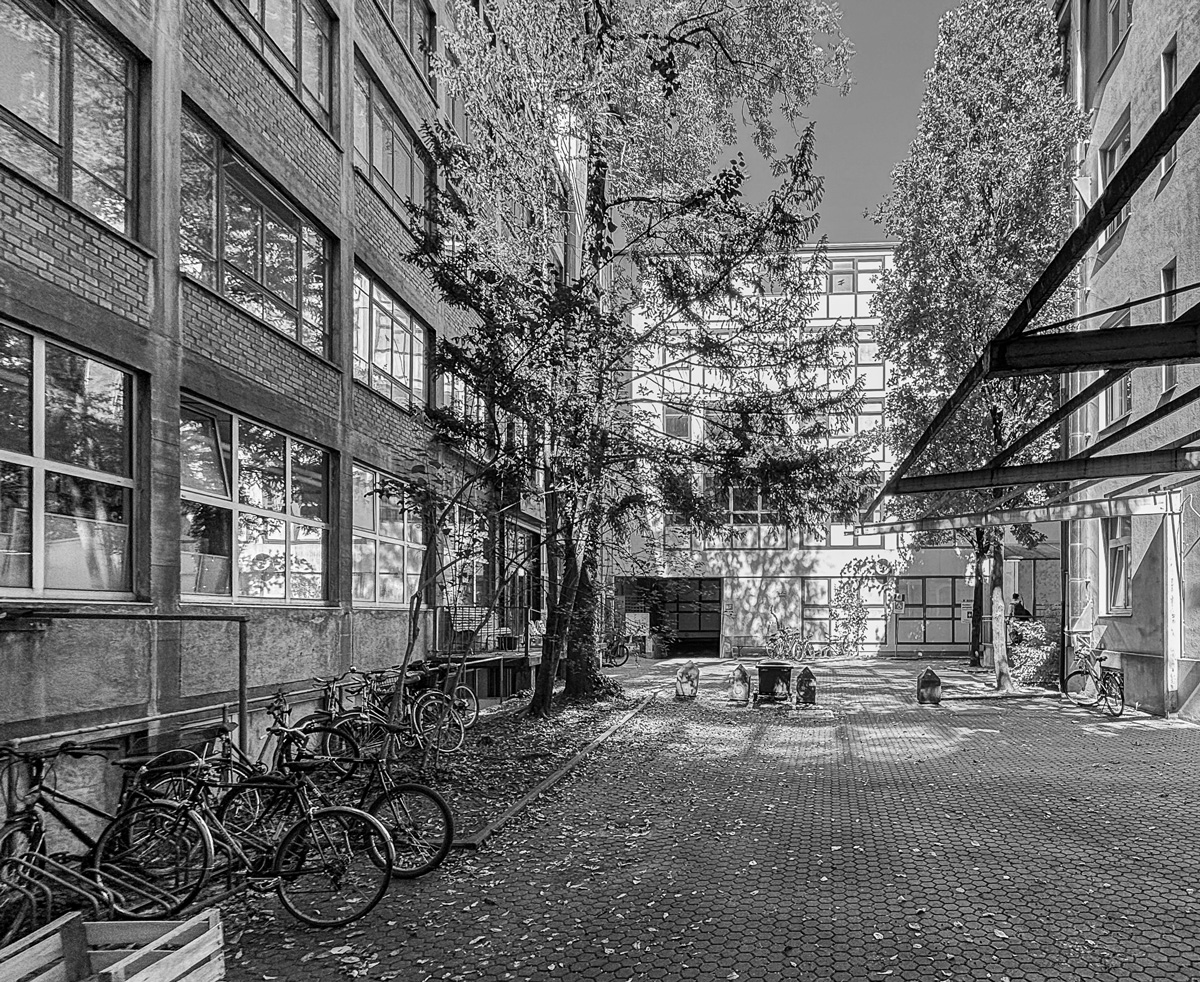
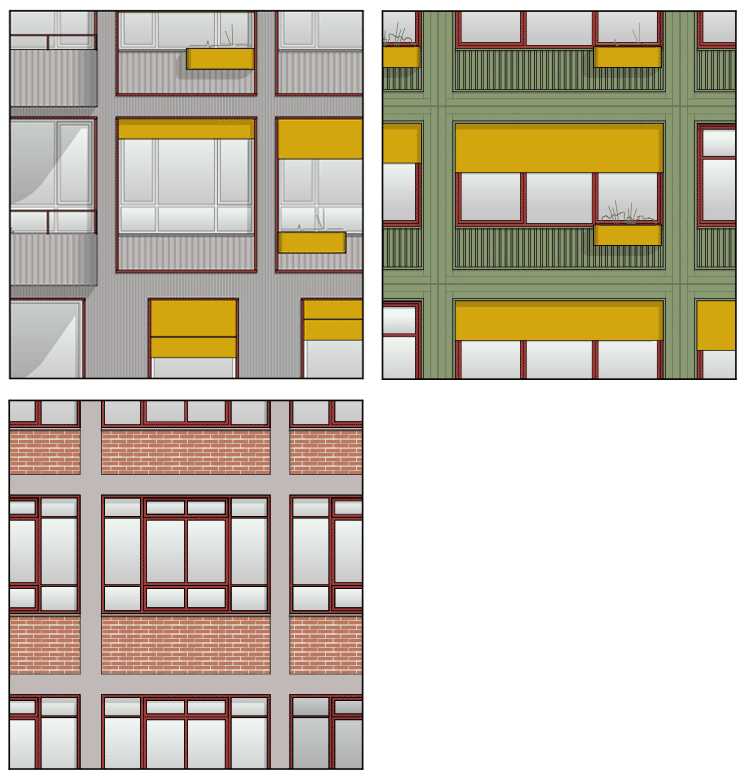
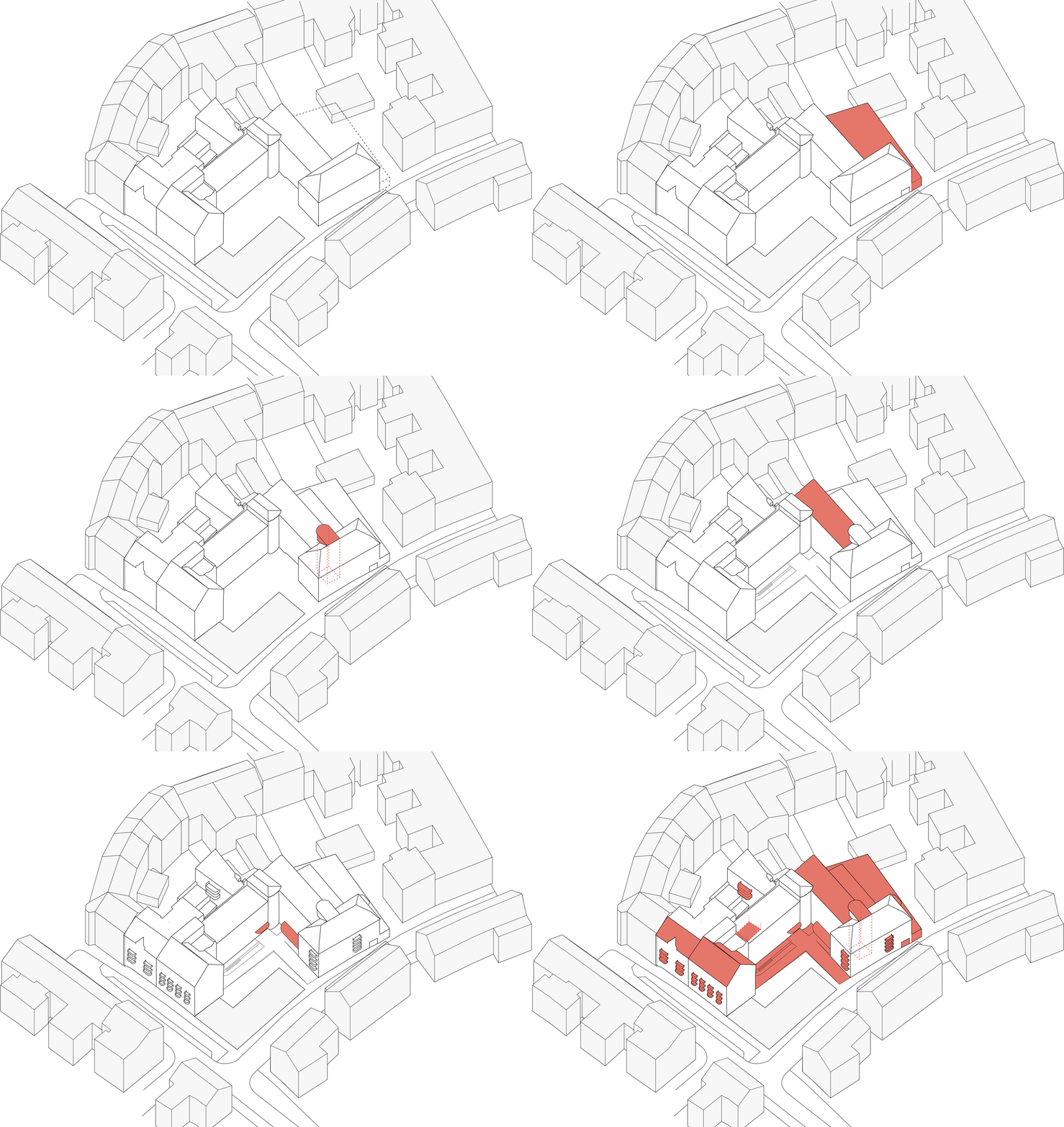
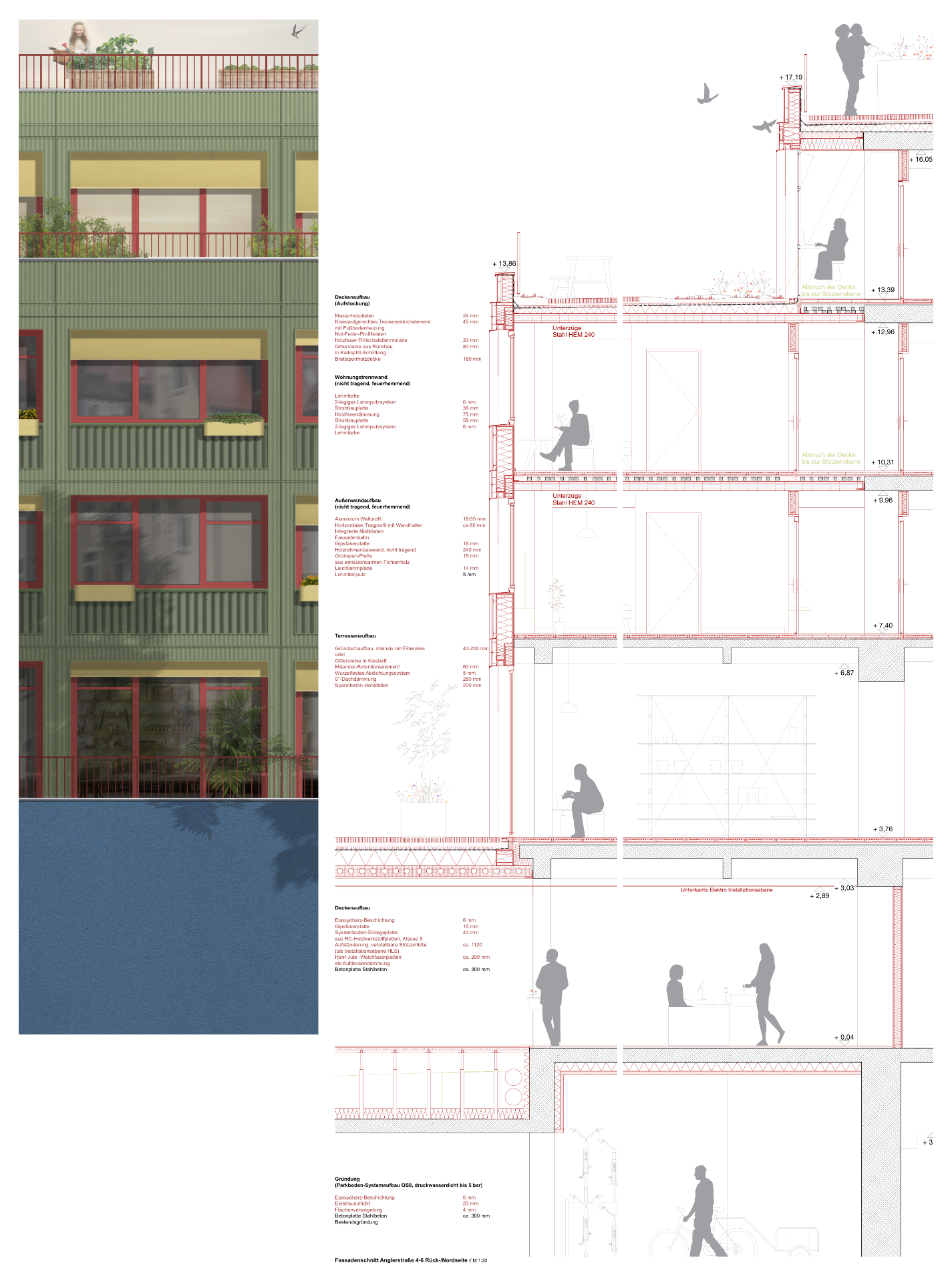
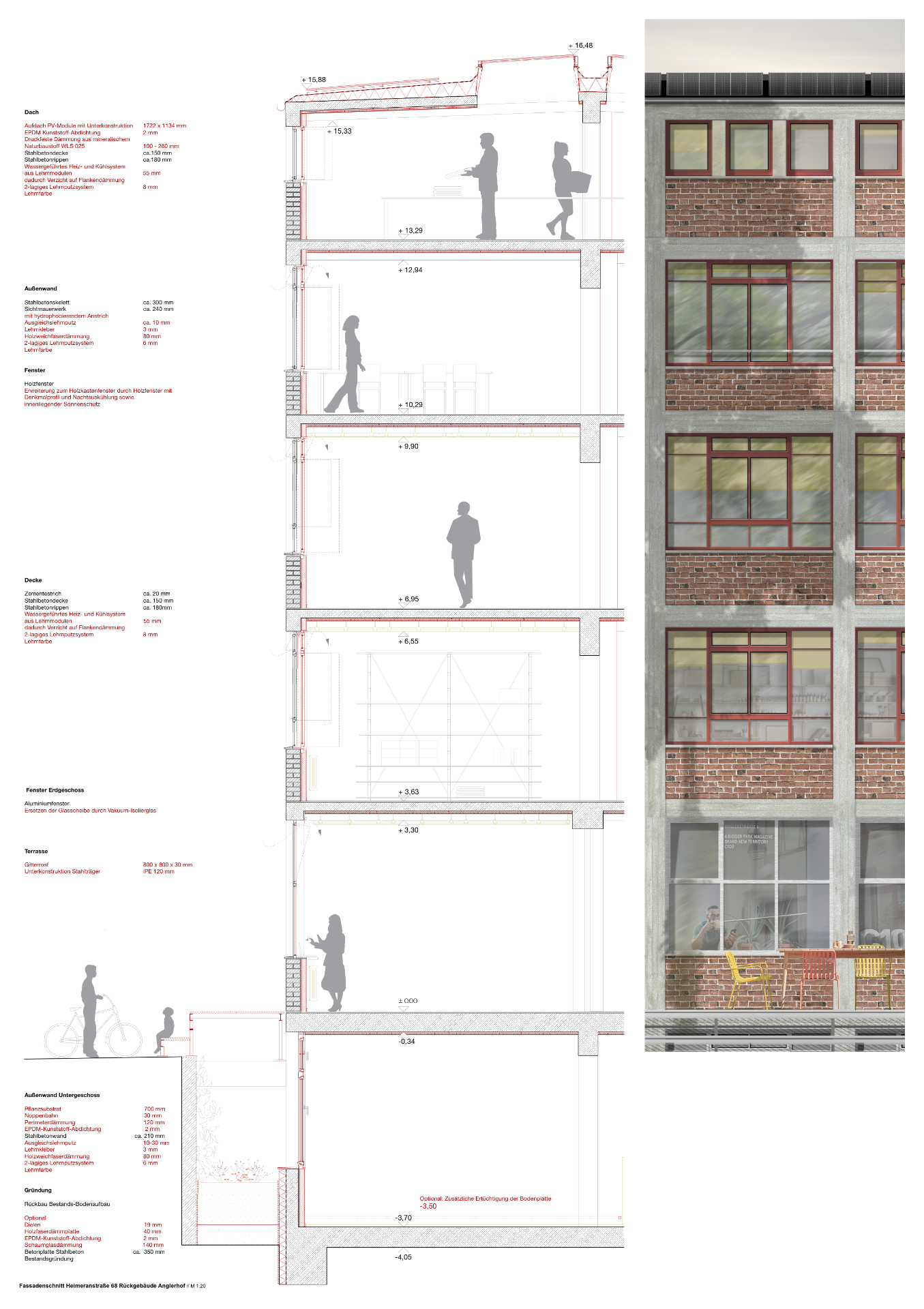
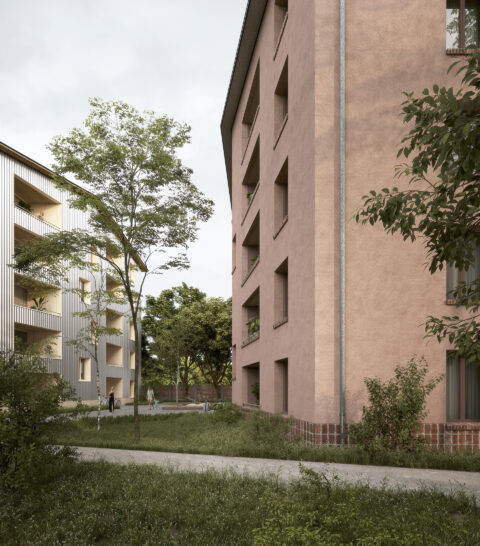
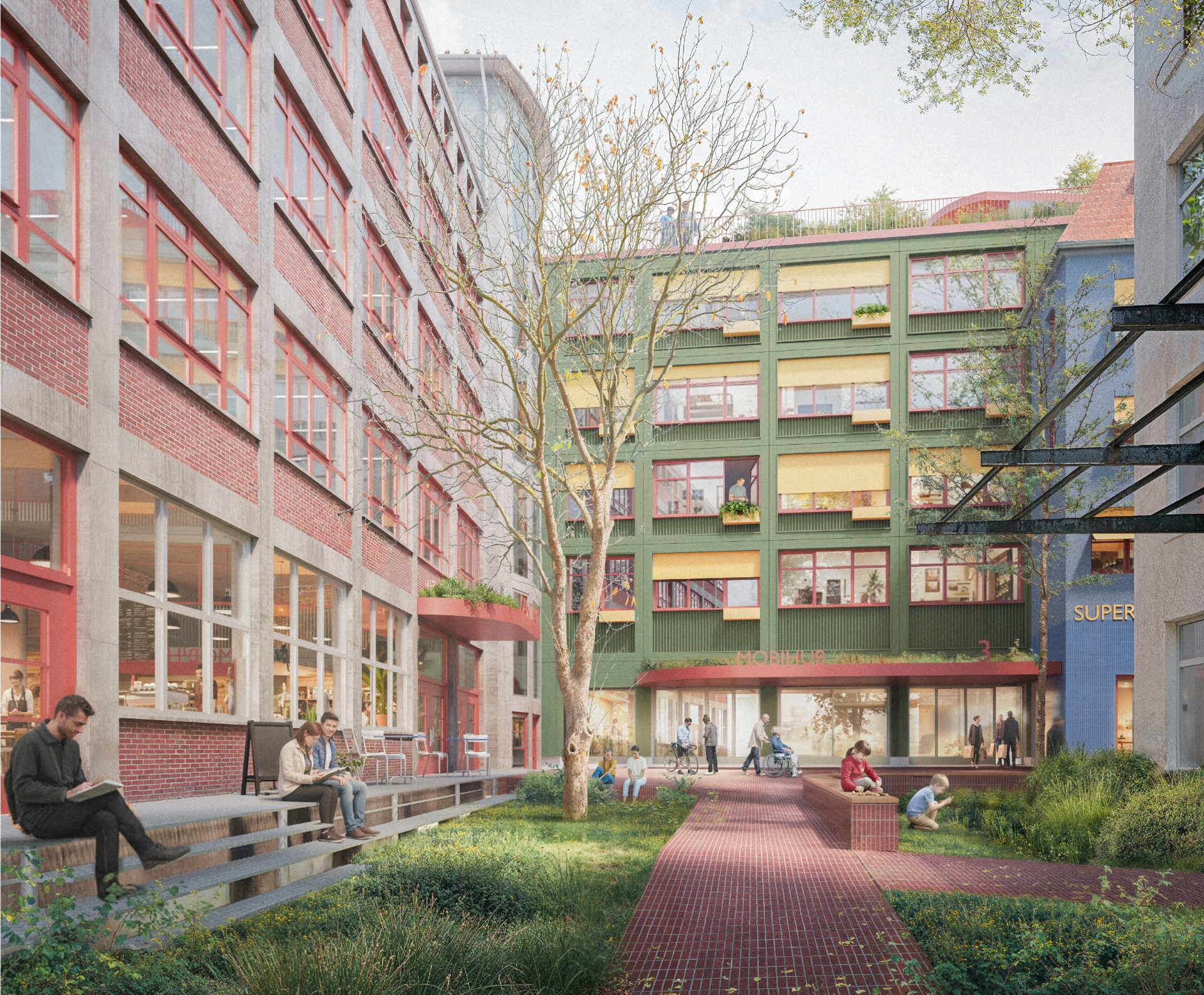
The focus is on the communal concept for the entire area and the creation of more affordable housing. The appreciation of the monument, maximum preservation of existing structures, circular construction, and comprehensive accessibility are the central themes of the neighbourhood concept, which consists of six buildings and three inner courtyards. By preserving the “grey energy” conserved in the existing structures, the project will be as sustainable as possible. The small proportion of new construction will be built using ecological materials in a sustainable manner and will be designed to be as circular as possible. The entire life cycle is always taken into account.
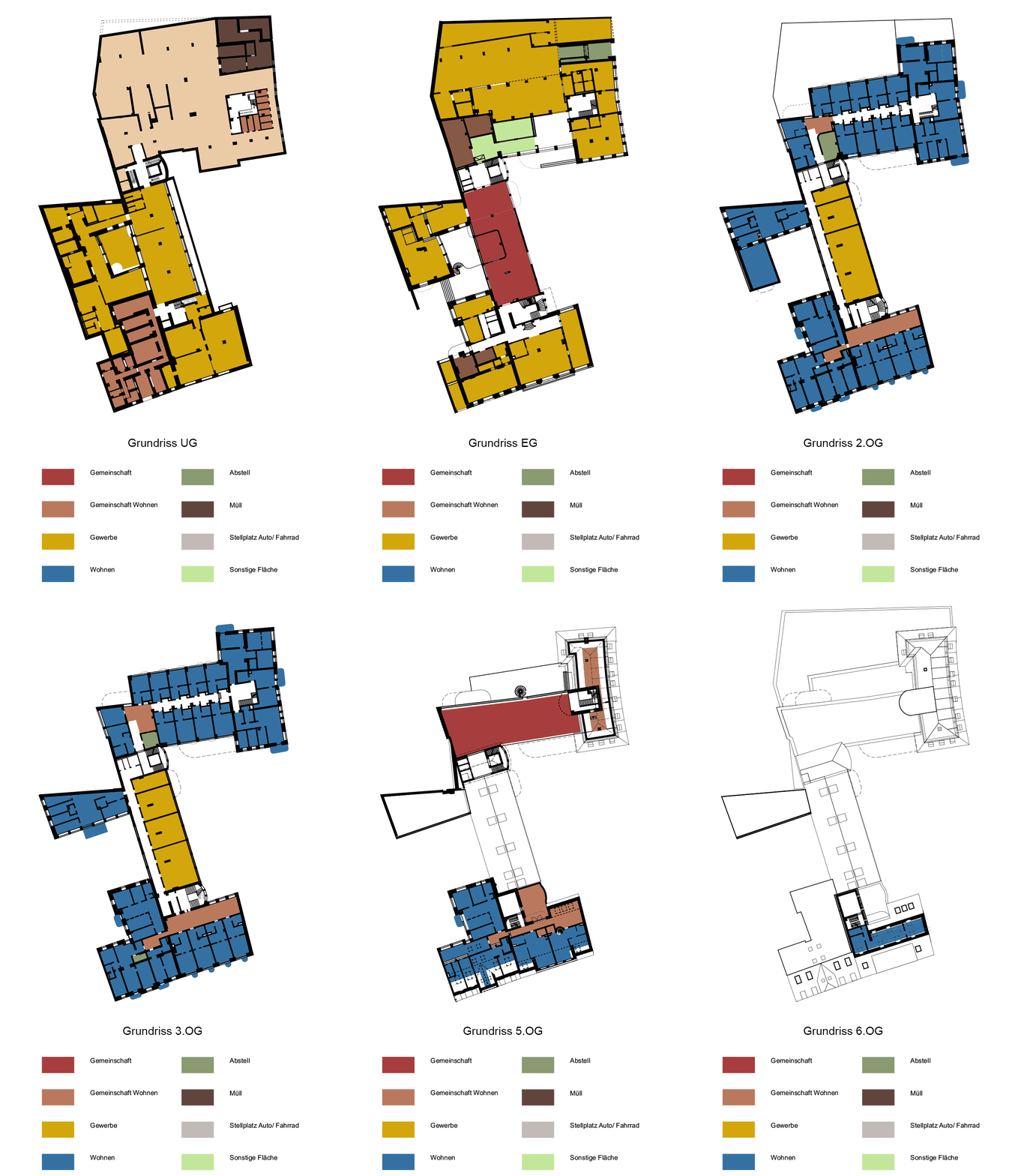
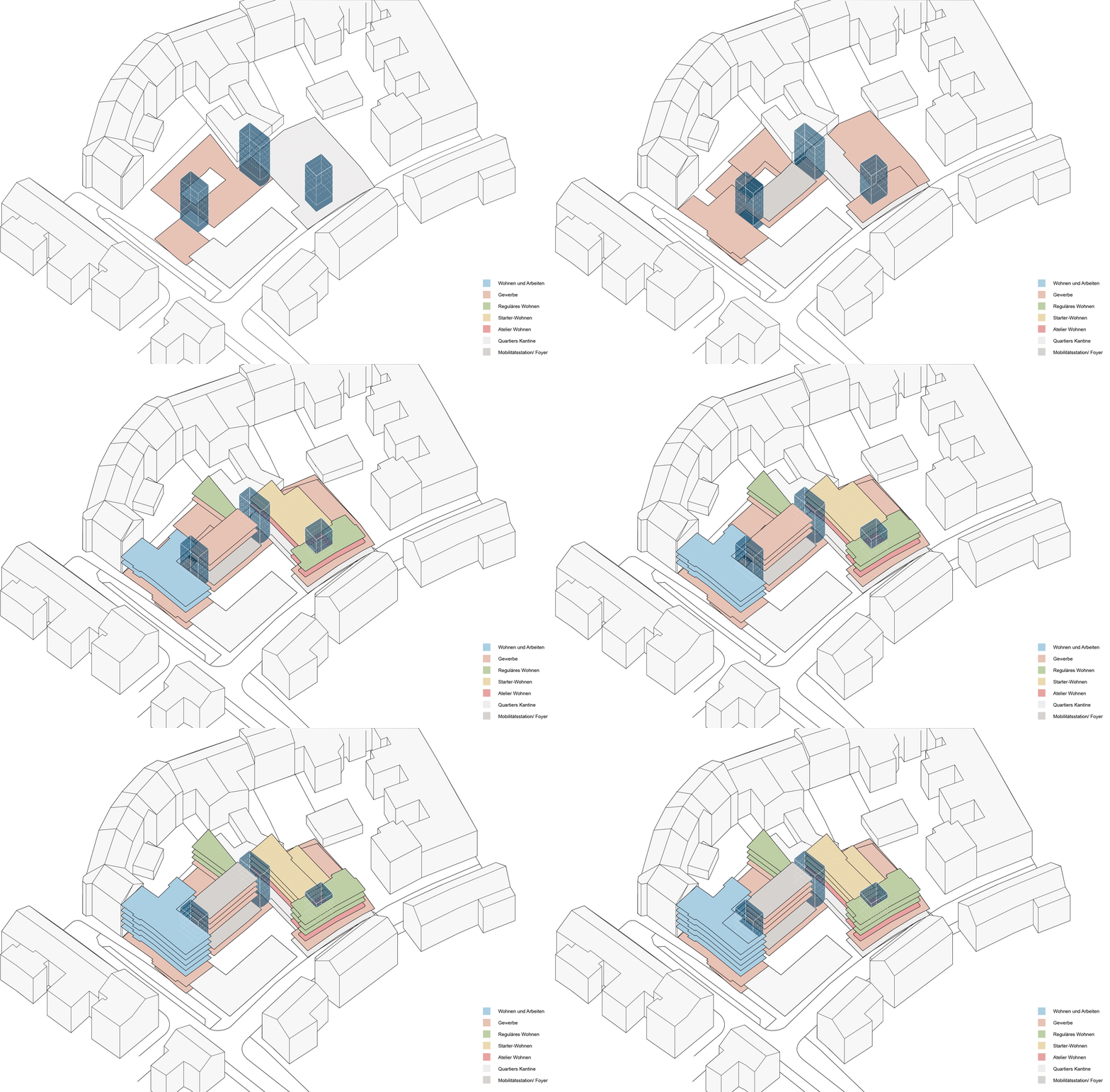
The floor plan design is also guided by sustainable principles. Everything is designed to generate maximum synergy effects from communal living, working, and commerce. The amount of space allocated to private apartments (living space per person) has been deliberately reduced in favor of high-quality communal areas. The life cycle of the neighbourhood and its adaptability to demographic change also play an important role here. Apartments of various sizes and for a wide range of requirements are planned, offering all residents a high degree of adaptability. The entire neighbourhood is designed to be as barrier-free as possible without being visually intrusive. The aim is to develop a resilient and diverse neighbourhood where both old and young people can find their place. The development areas are often designed as hybrid spaces with “lively,” overlapping uses.
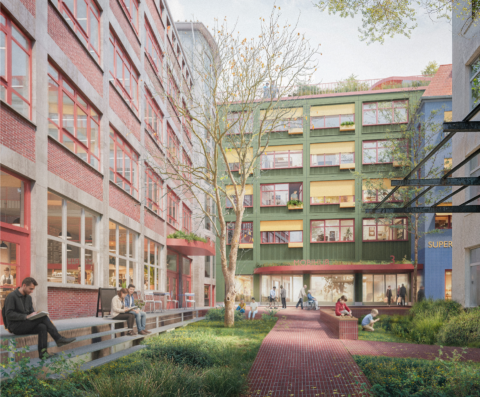
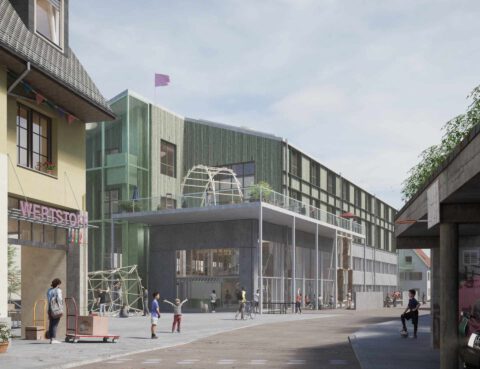
The courtyard facing Anglerstraße will serve as the main entrance and new lively center of the neighbourhood. Here you will find the entrances to the supermarket including a coffee shop and the spacious ground-level areas for communal use, as well as the stairwells and the new mobility station. The adjusted elevation in the courtyard now allows for ground-level access to the entire ground floor area. This creates a barrier-free and flowing connection from the inside to the outside. The central meeting place is the communal ground floor area of the rear building. It serves as an open space for encounters, collaborative work, events, and various activities. In the future, roof terraces will be created for residents as lively meeting places and, at the same time, as retreats for individual tenants. These will be accessible via the stairwells.
The project is one of the pilot projects of the Bavarian state government’s “Gebäudetyps-e” (building type e) initiative and is part of the “Wohnlabore” (living laboratories) pilot series in the state capital of Munich. It is funded as an individual project by the Bavarian urban development program.